Tag: authentic african art

  • The Bellows That Fed the Fire

    The Bellows That Fed the Fire

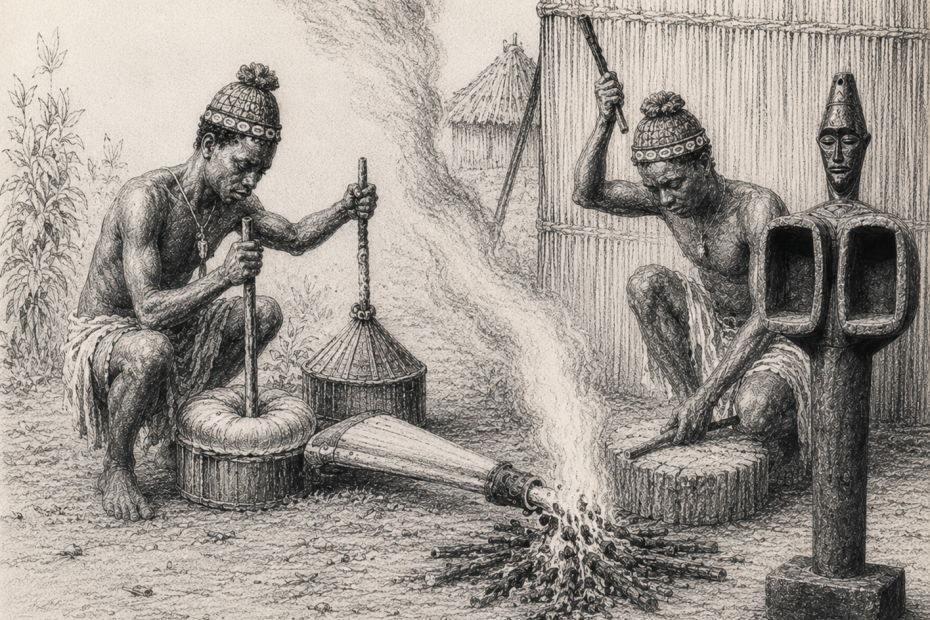
    When I first brought this old Kuba Lele blacksmith’s bellows into my Antwerp shop, it did not look like a sculpture waiting for a pedestal. It looked like something that had worked hard for a very long time. Dust still rested deep inside the chambers, the wood smelled faintly of smoke, and the black surface carried the soft sheen that only repeated human touch can create. I turned it over several times before placing it on a stand. The head was what stopped me. Those closed eyes did not seem carved for decoration; they seemed carved to remember.

    African Art Kuba Lele Blacksmiths Bellows

    In the Kasai region of the Democratic Republic of Congo, among the peoples linked to the Kuba kingdom and its related groups such as the Lele, blacksmiths occupied a place that was never entirely ordinary. They were the men who could persuade earth to become iron and iron to become useful. A hoe that opened the soil, a knife that cut meat, a spear that protected a village, a bracelet worn by a chief—all began with fire, breath, and metal. The forge was therefore not merely a workshop; it was a place of transformation.

    The Kuba kingdom developed one of the most sophisticated court cultures of Central Africa. Its rulers encouraged weaving, carving, music, ceremonial life, and the crafts that gave the kingdom both wealth and prestige. Among the remembered rulers stands Shamba Bolongongo, celebrated in Kuba tradition as a wise and peace-loving king associated with refinement, order, and the flourishing of the arts. The Lele, who lived within the broader Kuba cultural sphere, shared certain artistic ideas with their Kuba neighbors while preserving a more austere sculptural language of powerful silhouettes and restrained geometry.

    Old Central African traditions often speak of the world as something animated by hidden forces. Trees, rivers, animals, and ancestors could possess presence and intention. A blacksmith worked at the boundary between these visible and invisible worlds. He took ore from the ground, fed it to fire, and drew from it a new form. It is not difficult to understand why such work attracted stories.

    An elder from the Kasai might have told a tale like this.

    Long ago, in the time when the great Kuba kings were still remembered by name, a young hunter called Shamba wandered beyond the cultivated fields and entered the deep forest at dusk. He had grown up hearing stories of Shamba Bolongongo, the ruler who valued peace more than war and who protected the craftsmen whose work sustained the kingdom.

    As night fell, the hunter heard a strange sound—slow, rhythmic breathing, as if the forest itself were asleep. He followed the sound to a clearing where a fire glowed beneath a mound of clay. Beside it stood a tall figure with a face dark as charcoal and eyes half closed. The stranger worked a pair of wooden bellows. Each time he pressed them, the fire brightened; each time he released them, the flames sank back into shadow.

    Shamba asked, “Who keeps a fire alive in the middle of the forest?”

    The stranger replied, “I keep the breath that awakens iron.”

    He showed the hunter stones hidden along the riverbank and taught him how to build a furnace of clay. He taught him that fire grows weak when it is denied breath, and that breath must move in rhythm, like the heartbeat of a living being. Before dawn the stranger disappeared into the smoke, leaving the bellows beside the dying embers.

    Shamba returned to his village and shared what he had learned. Iron tools appeared where there had once been only stone and wood, and the people prospered. Yet he repeated one warning throughout his life: “Never mock the breath of the bellows. It is the breath that turns darkness into usefulness.”

    Whether such a tale was ever told exactly in this form matters less than the truth it carries. Across much of Central Africa, tools were not entirely separated from spirit, labor was not entirely separated from ritual, and breath itself was understood as a force that gives life. Looking at this bellows, I can easily imagine generations of hands pressing those chambers in steady rhythm while sparks rose into the night.

    Collectors sometimes ask me whether I prefer masks, figures, or utilitarian objects. I usually deal in masks and statues, and I confess that figurative sculpture remains what moves me most deeply. A powerful face, a charged posture, a figure shaped by ritual use—these are the objects that first drew me into African art more than thirty years ago. Bellows, stools, or other utilitarian pieces are less common in my collection and often much harder to find in convincing old condition.

    Perhaps that is why this bellows stayed with me. Although it was made to work rather than to be admired, it possesses an unmistakably figurative presence. The elongated head, the calm closed eyes, the pierced crest, and the broad twin chambers give it the authority of a standing figure. It stands today as sculpture, yet it was born as a tool, and that tension between usefulness and beauty is exactly what makes it memorable.

    FXE41968African Art Kuba Lele Blacksmiths Bellows

    This exceptional Kuba Lele blacksmith’s bellows, standing 85 cm high (92 cm including its display base), is now available in my collection.

    View the complete object, detailed photographs, condition report, and acquisition information in the African Art webshop.

    Kuba Lele Blacksmith’s Bellows – Democratic Republic of Congo

    Share and Enjoy !

    Shares
  • How to Collect African Art with an Experienced Eye – David Norden

    How to Collect African Art with an Experienced Eye – David Norden

    Welcome To the African Art World.

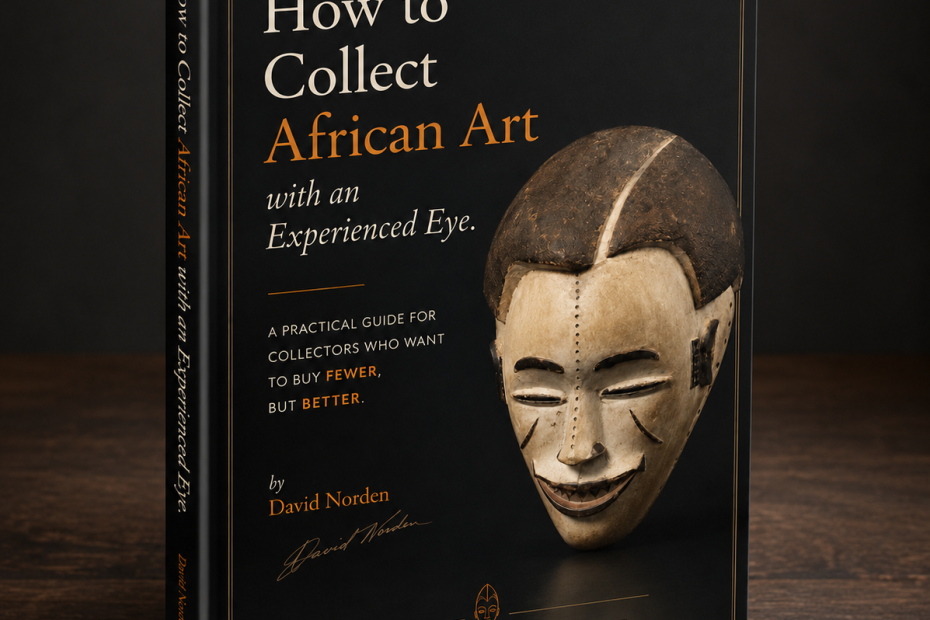
    How to collect African Art with an experienced Eye

    Most people begin collecting African art by asking the wrong questions.

    They ask about the tribe, the age, the provenance, or the price. Those things certainly matter, but they are not where true connoisseurship begins.

    The first question should always be: Is this a good piece of sculpture?

    After more than thirty years of handling thousands of African objects, visiting museums across Europe, studying important collections, and making both good and bad buying decisions, I have learned that exceptional works reveal themselves in ways that photographs, labels, and certificates alone never can. Quality lives in proportion, balance, surface, craftsmanship, expression, and the subtle presence that only the finest objects possess.

    An experienced eye is not a gift. It is something that can be developed through careful observation, comparison, and patience.

    That is the purpose of this experienced eye book.

    Rather than presenting a catalogue of ethnic groups or historical facts, this guide focuses on how to see. You will learn practical methods for judging craftsmanship, recognizing authentic age and patina, understanding what separates an ordinary object from an exceptional one, and avoiding many of the mistakes that beginning collectors often make.

    One of the most valuable ways to train your eye is by studying the very best examples. Throughout this guide we therefore examine masterpieces from major museum collections, including remarkable Fang, Baule, Djennenké, Kota, Bangwa, Kongo, Songye, and Yoruba sculptures. These objects are not included simply because they are famous, but because they demonstrate the qualities that collectors should learn to recognize wherever they encounter African art.

    Whether you are considering your very first mask or building a serious collection, the principles remain the same. The goal is not to buy more objects, but to buy better ones—pieces that continue to reward careful study for years to come.

    This is an Early Edition of How to Collect African Art with an Experienced Eye. At present it contains 45 illustrated pages, but it is intended to grow into a much more comprehensive guide. New chapters, museum case studies, photographs, and collecting insights will be added regularly as the project develops. As the content expands, the retail price will gradually increase, while everyone who already owns a copy will receive all future updates free of charge.

    My hope is that this book becomes more than an illustrated collector’s guide. I hope it helps you cultivate the most valuable tool any collector can possess: an experienced eye.

    David Norden

    African Art Dealer, Antwerp

    Since 1992

    How to collect African Art with an experienced Eye

    Share and Enjoy !

    Shares
  • The Mask That Smiled Back

    The Mask That Smiled Back

    There is an old story I once heard from a collector who spent years traveling through mountain villages between Nepal and Tibet.

    He told me that certain masks should never be looked at too quickly.

    “At first,” he said, “they are only wood.”

    But then, after some time, the face begins to change.

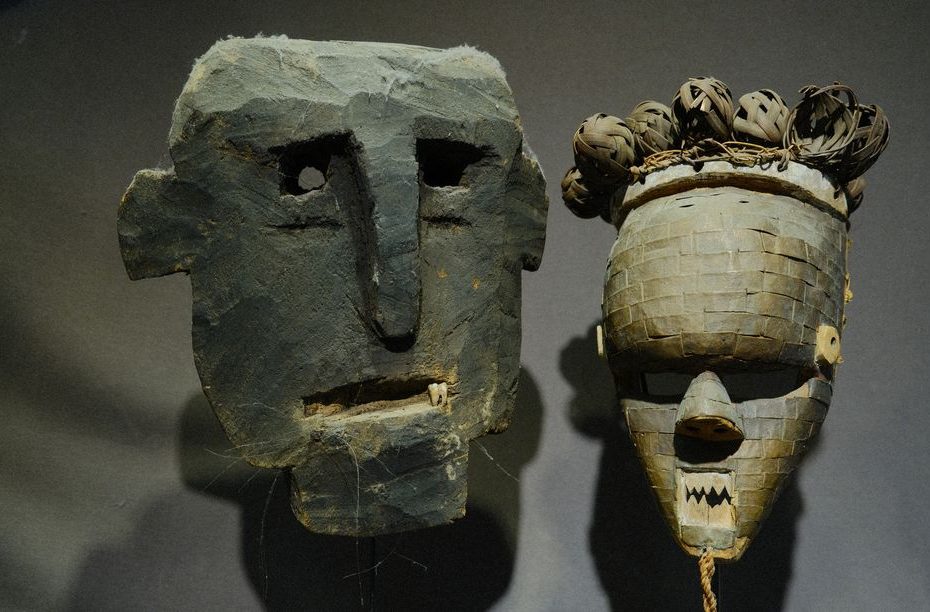
    One evening, while arranging objects in my gallery, I placed two masks beside each other almost accidentally. A Nepalese shamanic mask and a Salampasu mask from Congo.

    Different continents. Different beliefs. Different peoples.

    And yet, the room suddenly became strangely quiet.

    The Nepalese mask was the first to emerge from the darkness. Its face was dry and ancient, with deep shadows around the eyes and mouth. At first glance, it seemed almost humorous — a crooked grin, exaggerated teeth, a theatrical expression.

    Then I noticed the tooth.

    Not carved.

    Human.

    The collector’s story returned immediately.

    In Himalayan ritual traditions, masks were never merely decorations. They were instruments used by shamans during ceremonies of healing, protection, and exorcism. Some antique examples even incorporated real human or animal teeth into the carving itself, strengthening the presence of the spirit inhabiting the mask.

    The mouth was not symbolic.

    It was active.

    FXE41546African Masks

    Nearby, the Salampasu mask watched silently.

    Its mouth was entirely different — rectangular, aggressive, armed with rows of sharpened teeth beneath a massive domed forehead covered in metal strips. The woven beard ended in a tightly braided sphere like a final punctuation mark.

    The Salampasu people of Congo were known as hunters and warriors. Their masks belonged to initiation societies reserved for men, appearing during ceremonies marking passage into adulthood. Among the Salampasu, the sharpening of human teeth formed part of identity itself. The body became an extension of ritual force, much like the masks they carved.

    And suddenly the two objects no longer seemed far apart.

    One carried an actual human tooth.
    The other transformed human teeth into sculpture.

    Salampasu teeth

    Both understood something ancient:

    The mouth is power.

    The mouth speaks. Threatens. Invokes. Breathes life into chants and names. It is where invisible force leaves the body and enters the world.

    Perhaps this is why ritual masks remain so compelling even after leaving their original cultures. Long after the ceremonies disappear, something still survives inside the sculpture itself.

    Not literally perhaps.

    But enough to make us look twice.

    Later that evening, before turning off the lights, I glanced once more toward the wall.

    For a brief moment, the Nepalese mask almost appeared to smile.

    Happy and curious,

    David Norden

    Salampasu Mukinka Mask — D.R. Congo

    Raw Shamanic Himalayan Mask with Human Tooth


    Share and Enjoy !

    Shares
  • Two African Pieces on the Table

    Two African Pieces on the Table

    This morning, before opening the shop, I placed these two next to each other.

    Not because they belong to the same tradition. They clearly do not.

    But sometimes objects begin to speak differently when they share the same space for a while.

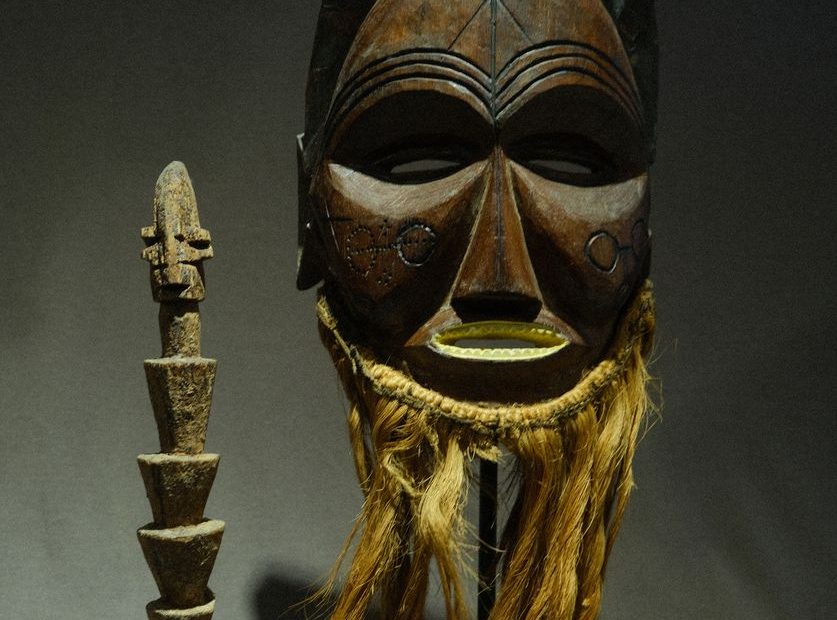
    One is a mask from Zambia, in the Mbunda style.
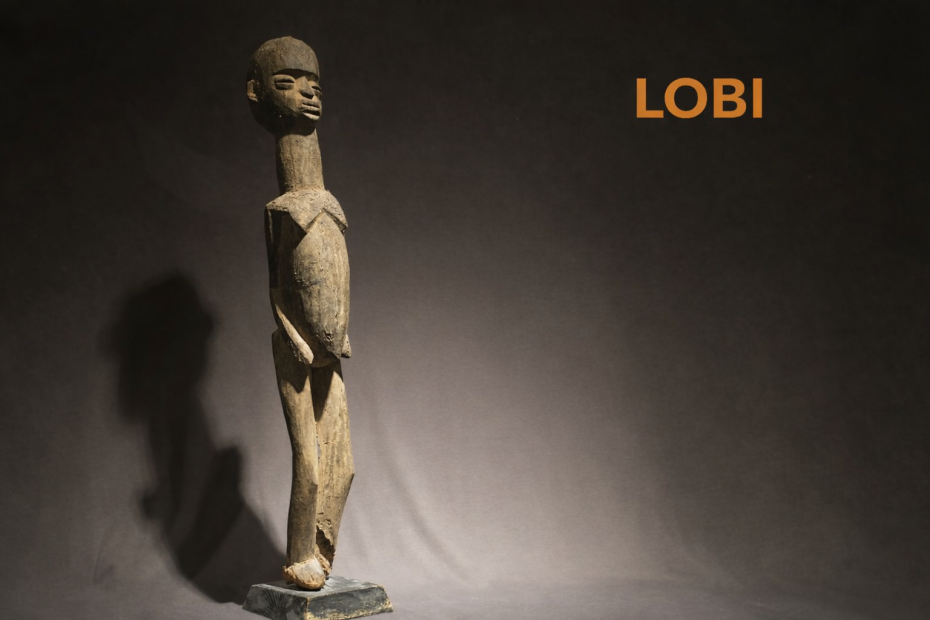
    The other, a small Lobi figure from Burkina Faso and Ivory Coast.

    The mask immediately takes control of the table.

    FXE49780African Art

    Its construction is unusually deliberate. The repeated lines above the eyes almost feel architectural, as if the face was assembled rather than carved. It reminded me of older Mbunda masks I had seen years ago — those powerful faces balancing authority and restraint.

    But what interested me most here was not the attribution.

    It was the tension.

    The mask feels calm, but not passive. The symmetry is controlled, though never rigid. Even the surface has settled in a convincing way, without the heavy-handed restoration or artificial aging one so often encounters today.

    You can view the mask here:
    Mask in the Mbunda Style — Zambia

    The small Lobi figure reacted differently.

    FXE49773African Art

    At first glance, it almost disappears next to the mask.

    But after some time, it became the piece I kept looking back at.

    The composition is extremely reduced — almost like a narrow ladder with a head placed on top. Very little is described. And yet the figure holds together remarkably well.

    There are traces of sacrificial material still attached to the surface, forming a dense encrusted patina that gives the object its physical weight and history.

    It is not a spectacular piece.

    Which may be exactly why it works.

    You can view the Lobi figure here:
    Lobi Figure — Burkina Faso / Ivory Coast

    After thirty years of handling African objects, I increasingly notice that the pieces which stay with me are not always the loudest ones.

    Often they are simply objects that continue to hold the eye after the first impression has passed.

    These two did.

    Dogon figure — Mali

    Mask in the Mbunda Style — Zambia


    Share and Enjoy !

    Shares
  • African Art Gallery — Step Inside the David Norden Cavern

    African Art Gallery — Step Inside the David Norden Cavern

    African Art Gallery — Step Inside the David Norden Cavern

    When people search for an African art gallery, they are often looking for beauty.
    But seasoned collectors are looking for something else entirely: truth, age, rarity, and presence.

    The other day, something happened in my Antwerp gallery that made me smile.

    The director of the African Art department at the Musée du quai Branly in Paris walked in.
    He looked around, paused, and said:

    “This is amazing, it looks like the Alibaba cavern.”

    I told him:
    “No, this is the David Norden cavern.”

    And in a way, that says everything.

    The Difference Between Display and Selection

    Many galleries present African art.
    Few truly select it.

    An experienced eye does not start with aesthetics.
    It starts with questions:

    • Has this object lived a life before arriving here?
    • Does the surface show real use, or artificial aging?
    • Is the form consistent with known hands and traditions?
    • Does it hold presence when you stand in front of it?

    These are not things you can fake convincingly.
    And they are not things you can always explain quickly either.

    A Cavern, Not a Showroom

    A true African art gallery is not always minimal, white, and silent.

    Sometimes, it is layered.
    Dense.
    Full of discoveries.

    You don’t take it in at once—you enter it.
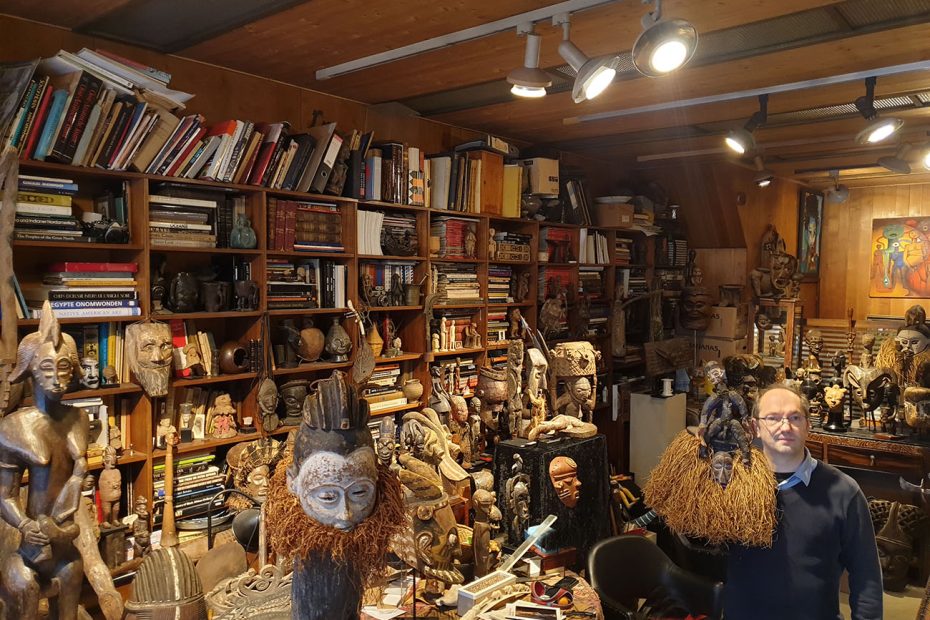
    It took me 33 years to build it.

    That is how I have always built my space:
    not as a showroom, but as a place where objects live together until the right collector finds them.

    Yes, it may feel like a cavern.
    But every piece in it has been chosen, one by one, over 33 years.

    Not only private collectors buy from me—museums do as well.

    For example, I sold a fine Mende statue, together with a related textile and a painting representing one of the first American female anthropologists working in the region in the 1950s, to the African Art gallery’s from Yale   https://artgallery.yale.edu/research-and-learning/curatorial-areas/african-art

    Discover David Norden’s African Art Gallery Collection

    If you want to explore a small selection, you can start here:
    👉 https://www.buyAfricanAntiques.com/shop

    What you see there is a carefully selected group of pieces.

    But the full collection is something else entirely.

    Many objects never make it online.
    They are part of a deeper selection—available to those who take the time to ask, to look, and to engage.

    If something speaks to you, the best way is simple:

    • Send me a message to ask for more information or arrange a wire transfer
    • Use the online shop to purchase directly
    • Or arrange an appointment to see it in Antwerp

    The gallery is often open without one—
    but the real experience is always better when there is time and attention.

    Buying African Art Is Buying an Eye

    Collectors sometimes think they are buying an object.
    But over time, they realize they are buying something else:

    They are buying someone else’s judgment, refined over decades.

    That is what turns an African art gallery into something worth returning to.

    Not just what is there—
    but how it got there.

    A Quiet Suggestion for Collectors

    If you are building a collection, don’t rush.

    Visit African art galleries.
    Visit museums.
    Buy books.

    Look, compare, and then return again.

    Over time, try to understand what you are really seeing:
    Is the object alive, or does it feel empty?
    Does it create a strong emotional response, or is it just a pale copy—made quickly, without depth?

    Ask yourself:
    Did the artist take the time to bring this piece to life?
    Or was it simply produced?

    Because in African art, the difference is not subtle.
    A true piece carries presence.
    A lesser one only imitates it.


    African Antiques From Antwerp — One Eye, 30 Years of Selection
    Not an inventory. A perspective. Collected slowly, chosen carefully, offered with certainty.

    Happy and curious,
    David Norden

    Share and Enjoy !

    Shares
  • How to Train Your Eye in African Art: 3 Practical Tips for Collectors

    How to Train Your Eye in African Art: 3 Practical Tips for Collectors

    Chibinda Ilunga figure, Chokwe, Angola — Museum RietbergThis article is based on a recent newsletter I sent to collectors. 


    Over the years, I’ve noticed that most collectors are not lacking interest — they are lacking orientation.

    Where do you look?
    What do you trust?
    And how do you train your eye?

    In this guide, I share three practical directions that I personally use — and that can quietly transform the way you see African art.


    1. Train Your Eye: Use Museum Collections

    Figure of the culture hero Chibinda Ilunga, Workshop of the Chokwe region, Angola, around 1850 Wood, Museum Rietberg, 2007.1, Gift acquired through Novartis 5 2007.1

    If there is one habit I would recommend to any collector, it is this: spend time with museum collections.

    Not only in person — but also online.

    Today, many major institutions offer access to thousands of documented objects. You can study proportions, surfaces, patina, and even small details that rarely appear in books.

    In the guide below, you’ll find direct and active links to museum databases, along with a selection of objects that I personally find particularly interesting.

    Over time, something shifts — you begin to recognise what feels right… and what doesn’t.

    → Explore museum collections

    Collector insight:
    The more time you spend with strong, documented objects, the more confident your decisions become when a good piece appears.


    2. Understand What You Are Really Looking At

    One of the most common mistakes I see is confusion between authentic objects and decorative pieces.

    The difference is not always obvious — especially at the beginning.

    But authentic objects tend to have a certain internal coherence:
    the proportions make sense, the wear follows use, the surface has depth, and the object carries a presence that is difficult to imitate.

    In the article below, I explain how I approach this distinction in practice:

    → Read the article on authenticity

    Collector insight:
    Once you have seen enough authentic pieces, decorative ones start to feel strangely empty — even when they look convincing at first glance.


    Ibibio chanel mask

    Ibibio “Chanel” mask — Nigeria

    A Piece That Caught My Eye

    While writing this, I was reminded of a mask I have kept in the collection for some time — an Ibibio “Chanel” mask.

    At first glance, it may seem unusual or even playful. But if you take a closer look, you begin to see the coherence in the carving, the balance in the proportions, and the way the surface has evolved through handling and use.

    It is also a good example of how African artists could absorb and reinterpret external influences, while remaining rooted in their own visual language.

    This is exactly the kind of object where experience matters — not because it is obvious, but because it reveals itself over time.

    → View the Ibibio mask


    3. Be Careful with Labels

    African art is often simplified — sometimes too much.

    Certain names are used so loosely that they can become misleading.

    Take the Kuba, for example.

    Behind this single label lies a complex network of workshops, styles, and neighbouring cultures. Not everything labelled “Kuba” is what you might expect — and understanding that can completely change how you evaluate an object.

    In the article, I also touch on the figure traditionally associated with the founding of the Kuba Kingdom, and why that history still matters when looking at objects today.

    If you want to look beyond the label and discover the story behind it:

    → Read the Kuba article

    Collector insight:
    Collectors who rely too much on names often miss good objects — or overpay for average ones.


    A Final Thought

    Collecting is not about owning many objects.

    It is about learning to recognise the right ones — and having the confidence to act when you see them.

    Even after 30 years, I still return to museum collections, compare objects, and refine my eye.

    If you would like to explore pieces selected through that same process:


    Happy and curious,
    David Norden

    African Antiques From Antwerp — One Eye, 30 Years of Selection
    Personally chosen with curiosity and experience — so you can collect with confidence.

    Share and Enjoy !

    Shares
  • Authentic African Art: Masks, Figures and Ritual Objects for Collectors

    Authentic African Art: Masks, Figures and Ritual Objects for Collectors

    Traditional African art is one of the most powerful artistic traditions in the world. Across hundreds of cultures and thousands of communities, artists created masks, sculptures, and ritual objects that served social, spiritual, and political purposes.

    Unlike modern decorative art, authentic African art was created to function inside living traditions. Masks danced in ceremonies, figures protected villages, and ritual objects mediated between the living and the ancestors.

    For collectors today, these objects offer something rare:
    a chance to hold a piece of cultural history shaped by belief, ritual, and time.

    For more than 30 years, I have helped collectors discover authentic traditional African art through my gallery in Antwerp and through my website:

    Browse the collection →
    https://buyafricanantiques.com/shop/


    African Masks: The Living Faces of Ritual

    Among the most recognizable forms of African tribal art are masks.

    But masks were never simply sculptures.
    They were part of performances involving costume, dance, music, and community participation.

    When worn during ceremonies, a mask allowed the dancer to embody:

    • ancestral spirits

    • mythological beings

    • protective forces

    • social characters within the community

    Many of the most striking African masks combine stylized abstraction with deep symbolic meaning.

    Example from the collection

    Bena Biombo Chameleon Helmet Mask

    https://buyafricanantiques.com/product/bena-biombo-mask/

    This rare helmet mask from the Bena Biombo people of the Congo features distinctive chameleon-like eyes symbolizing transformation and adaptability. Masks like this were used during royal funerary ceremonies and masquerades that connected the living community with ancestral spirits. ‘read also the article about the Kuba tribe since they are not what you think. 

    Other masks currently available include:

    Each mask reflects the unique artistic language of its culture.


    African Sculptures and Figures

    Across many African traditions, carved figures were used as spiritual intermediaries.

    These sculptures could represent:

    • ancestors

    • protective spirits

    • fertility forces

    • ritual guardians

    Rather than decorative statues, these figures were often kept in shrines, consulted by diviners, or used to protect families and villages.

    Example: Lobi Ritual Sculpture

    Double Head Dayir Lobi Figure – Burkina Faso

    https://buyafricanantiques.com/product/double-head-dayir-lobi-figure-burkina-faso/

    This impressive sculpture represents the ancestral couple of the Lobi clan and was traditionally placed in shrine spaces where it protected the community and embodied ancestral authority.

    Another fascinating example of Lobi artistic tradition is this iron sculpture:

    Lobi Iron Bird

    https://buyafricanantiques.com/product/a-lobi-iron-bird/

    Hand-hammered by a Lobi blacksmith, the bird represents the remarkable metalworking skills of West African artisans and reflects the symbolic role animals play in African cosmology.

    Other sculptural objects currently available include:

    Each object carries its own cultural narrative and history of use.


    The Materials of African Tribal Art

    African artists worked with a wide range of materials depending on regional traditions and available resources.

    Art form Typical materials Cultural role
    Masks Wood, pigments, raffia Ritual dances and masquerades
    Figures Wood, iron, terracotta Ancestors, protective spirits
    Metal objects Iron, bronze, brass Prestige objects and ritual implements
    Dolls and figures Wood and beads Fertility and spiritual symbolism

    These materials were rarely chosen for decoration alone.
    They were selected for their symbolic meaning and ritual function.


    How African Art Influenced Modern Art

    When European artists encountered African masks and sculptures in the early twentieth century, the impact was profound.

    Artists such as Picasso and Modigliani were inspired by the bold geometry, stylized faces, and expressive power of African sculpture. These encounters helped shape movements such as Cubism and modernism.

    But what fascinated these artists was not merely style.

    It was the realization that in African cultures art was inseparable from life, ritual, and belief.


    Collecting Authentic African Art Today

    Today, the biggest challenge for collectors is distinguishing authentic traditional objects from decorative reproductions.

    Many pieces offered online were made for the tourist market and were never used in African communities.

    Recognizing genuine objects requires experience:

    • knowledge of carving traditions

    • understanding of surface and patina

    • familiarity with ritual use and cultural context

    After more than three decades working with African art, I still find that the most reliable guide is simply this:

    having seen thousands of objects over many years.

    That experience shapes the selection you see on my website.


    Explore Authentic African Masks and Sculptures

    If you would like to explore authentic African art currently available, you can browse the collection here:

    View the shop →
    https://buyafricanantiques.com/shop/

    You will find:

    • traditional African masks

    • ancestral figures

    • ritual sculptures

    • rare tribal objects from across the continent

    Each piece is carefully selected and described with its cultural context.


    A Personal Invitation to Collectors

    If you are looking for a particular type of African mask or figure, feel free to contact me.

    After more than 30 years in this field, I may know where it is hiding.

    Many collectors who visit the site are not simply buying an object —
    they are building a relationship with a tradition.

    And sometimes the right piece appears only when someone is looking with the right eye.

    Happy collecting,

    David Norden
    BuyAfricanAntiques.com
    Antwerp

    Share and Enjoy !

    Shares
  • Collecting African Art Without Regret — Even in a Changing Market

    Collecting African Art Without Regret — Even in a Changing Market

    Hi  African Art collector ,

    Some dealers would like you to believe that all African art is rare and priceless.
    But we should remember that this is the art of an entire continent, home to hundreds of cultures and carving traditions — meaning there is truly something meaningful to collect at every level.

    While many of the pieces I offer are valued in the thousands of euros, today I would like to focus on a selection of small, beautiful, and affordable African antiques — all priced below €1000 — which I have personally selected.

    None of these objects were collected by me in Africa — in fact, I have never been to Africa. As I often say: “You don’t need to go to the Middle Ages to collect medieval art.”
    What matters is experience, knowledge, and careful selection.

    Over the years, many clients have become friends. I try to guide collectors in the same way I would advise someone close to me — helping them build a collection they will enjoy living with for years.

    A few years ago, a long-time client told me — half joking, half serious — that with prices rising so quickly, he might stop collecting African art altogether and start collecting Barbie dolls instead.

    At the time, the market felt overheated. Everything looked expensive. Everyone sounded confident.

    What many collectors were really afraid of wasn’t price — it was getting it wrong.

    Today, with the benefit of hindsight, something has become very clear:
    not all African art will rise, and not all African art will fall.
    Only the best pieces remain convincing, in any market.

    A strong collection is not built by buying what is cheap, but by choosing objects that create an emotional response — because you will always forget the price you paid, while the quality you chose remains.

    How these pieces are chosen

    In today’s art market, many objects pass through layers of buyers, consultants, and assistants before reaching a gallery.

    My business works differently.

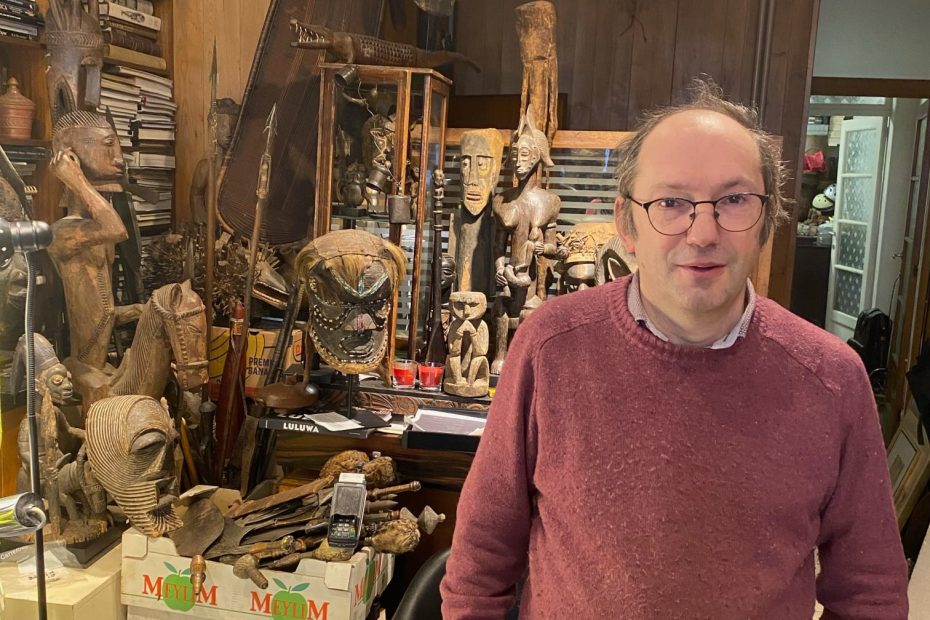
    For more than 30 years, I have personally selected every object I offer. No junior buyers, no assistants sent out to source material, no anonymous purchasing trips. If a piece is here, it is because I chose it myself.

    And that matters.

    African art is not decorative production. These objects were used, handled, repaired, and lived with. Recognizing the difference between a powerful authentic object and a clever imitation takes experience — and mistakes learned from decades of looking.

    This applies just as much to an affordable object as to a major piece.

    Why affordable doesn’t mean ordinary

    Every object in my shop follows the same standards, regardless of price. Each piece comes with:

    • A confirmed tribal origin, provenance, and cultural background explaining its original use
    • Clear explanations of the traditions surrounding the object, and whenever possible historical photographs or maps
    • Over 30 years of experience behind each selection — objects must carry emotion and genuine carving skill, because an object only has a soul when it was made for a purpose, not to please passing tourists
    • All packing and shipping handled in-house, allowing me to personally ensure safe delivery

    Collector’s note

    You will always forget the price you paid — but your collection will always reflect the quality you chose.

    Below you’ll find this week’s affordable discoveries: honest objects with history, character, and craftsmanship — ready to quietly earn their place in a collection.

    See the Affordable African Art selection from this week.

    ChatGPT Image 8 feb 2026, 14 58

    Warm regards,
    David Norden
    African Antiques — Antwerp
    www.buyAfricanAntiques.com

    A Seated Dogon Figure -Mali

    Lega Rungu Bone Spoon

    Ekoi (Ejagham) Igbo/Idoma Ancestor Head – Upper Cross River Region

    Thai Gilt Bronze Seated Buddha, 19th Century (13 cm)

    Wooden Whistle with Miniature Pende Mask

    Yoruba Igbomina Ere Ibeji Female Twin Figure – Ila-Orangun, Nigeria

    Yoruba Ere Ibeji Male Twin Figure – Oyo Region Nigeria – 1930s – 26 cm

    Yoruba Ere Ibeji Female Twin Figure – Nigeria – Ritual Sculpture – 25 cm

    Baule Standing Figure — 34 cm

    Ancestor Figure — Kom–Oku Region, Western Cameroon Grassfields — ca. 1930

    Kuba / Shoowa Box with Expressive Face — DR Congo

    Wishing you a happy and curious Valentine,

    David Norden

    African Antiques From Antwerp — One Eye, 30 Years of Selection
    Personally chosen with curiosity and experience — so you can collect with confidence, not guesswork.

    Share and Enjoy !

    Shares
  • A Large Encrusted Lobi Figure: Why Some African Ritual Objects Are Not Easy to Sell

    A Large Encrusted Lobi Figure: Why Some African Ritual Objects Are Not Easy to Sell

    Not everything is easy to sell.
    I hesitated.

    I’ve kept this Lobi figure for many years.

    At first, very simply, because it is big.
    Eighty-one centimeters high, heavy, not easy to handle. For my in-house expeditions, it was never a convenient object. It always required more space, more care, more effort.

    But that was not the real reason.

    Large encrusted Lobi shrine figure, Burkina Faso, front view

    There is an elegance in its rudeness that gave me pleasure from the beginning.
    The expression is not pleasing. The arms and legs are very thin, almost fragile, while the belly is bulging and heavy. The proportions are not meant to comfort the eye. They create tension.

    It is not an object that tries to seduce.

    Lobi African Art

    Lobi figures like this one were kept in shrine houses, usually placed slightly aside from the village. Their role was protection. These shrine houses are not clean or ordered places. They are often messy. You can feel the traces of offerings — chicken blood, residue, layers of use accumulated over time.

    This figure carries that history quietly.

    Lobi belly African Art

    I also kept it because of its authenticity.
    Because nothing here has been softened or corrected.
    Because it has not been made easier to live with.

    And yes — because living with it gave me pleasure. Not decorative pleasure, but the pleasure of presence. Of an object that resists you a little, and asks for time.

    Lobi head-African Art

    After many years, I decided it was time to let it go.

    If this Lobi figure speaks to you, you can find a link to the sales page below.
    If you prefer a more detailed approach, you can also contact me directly and I will send you a PDF with a complete description, additional images, and provenance information.

    Not everything is easy to sell.
    Some objects ask you to hesitate first.

    David Norden

    A Large Encrusted Lobi Figure

    Large Encrusted Lobi Shrine Figure

    Share and Enjoy !

    Shares
  • Traditional African art collectors

    Traditional African art collectors

    Traditional African art collectors form a dedicated and knowledgeable community passionate about preserving the cultural heritage, artistry, and spiritual depth of Africa’s traditional societies. Their collections focus on authentic, ritual objects—masks, figures, and ceremonial artifacts—created for real use within African communities, not modern reproductions or decorative imitations.

    Who Are Traditional African Art Collectors?

    Traditional African art collectors are often seasoned connoisseurs, museum curators, and discerning private buyers who share a deep respect for the authenticity and cultural context of each object. Many have decades of experience, traveling to meet dealers, visiting museum archives, and studying specific ethnic traditions such as the Baule of Côte d’Ivoire, the Songye and Luba of the Congo, or the Yoruba of Nigeria.

    For them, each piece is a bridge between past and present—an artifact that carries the history, symbolism, and craftsmanship of its people.

    What Do They Collect?

    Traditional African art collectors typically seek:

    • Ritual masks used in initiation ceremonies, festivals, and spiritual dances.

    • Ancestral figures representing revered spirits or family lineages.

    • Fetishes and power figures (nkisi, minkisi, bocio) believed to offer protection or healing.

    • Prestige objects such as stools, staffs, and ceremonial items linked to leadership or sacred rituals.

    These works are valued not only for their aesthetic qualities but also for their historical and ethnographic importance.

    Why Collect Traditional African Art?

    For many, collecting is about stewardship—preserving authentic works so they remain intact for future generations. Traditional African art collectors are drawn to the rich patinas, the tactile signs of ceremonial use, and the symbolic forms that merge art and life.

    Others view collecting as an intellectual journey, learning about African history, symbolism, and the influence of these works on modern art movements worldwide.

    Some collectors are working on themes like “Maternity”, “Dolls”, “african weapons” , “Ivory charms”. Some collectors are more focused on provenance, and other on the shapes inspiring artists

    Where Traditional African Art Collectors Meet

    The global community of traditional African art collectors gathers online in discussion forums or at major fairs, gallery events, and museum programs. Some of the most important meeting points include:

    • Parcours des Mondes (Paris) – The world’s largest fair dedicated to tribal art.

    • BRAFA Art Fair (Brussels) – An elite art fair where major dealers showcase museum-quality African works.

    • Tribal Art London – A vibrant UK event attracting both seasoned and new collectors.

    • San Francisco Tribal & Textile Arts Show – A key U.S. venue for high-quality African art.

    • The Amsterdam African Art Fair at De Duif – A growing European event in a spectacular venue, bringing together respected dealers and serious collectors in the Netherlands.

    Private gatherings, museum friends’ groups, and specialized publications like Tribal Art Magazine also provide opportunities for networking and exchange.

    The Importance of Authenticity

    The defining trait of a true traditional African art collector is an uncompromising focus on authenticity. Serious collectors ensure:

    • Clear provenance and documentation.

    • Evidence of ritual use and traditional materials.

    • Expert verification from reputable dealers and scholars.

    Authentic works were created for use within the communities that produced them—imbued with meaning, symbolism, and purpose.

    Becoming a Traditional African Art Collector

    If you’re new to this field, start by learning: visit museum collections, attend fairs, and speak with trusted dealers who can guide you. Building a collection is not only about acquiring objects—it’s about developing knowledge, cultivating relationships, and becoming part of a living tradition of preservation and appreciation.


    About the Author
    David Norden has spent more than 30 years specializing in authentic traditional African art. From his Antwerp gallery and buyAfricanAntiques.com, he connects serious collectors with masks, figures, and artifacts of cultural integrity, offering expertise, provenance, and personal guidance.

    Share and Enjoy !

    Shares