Description
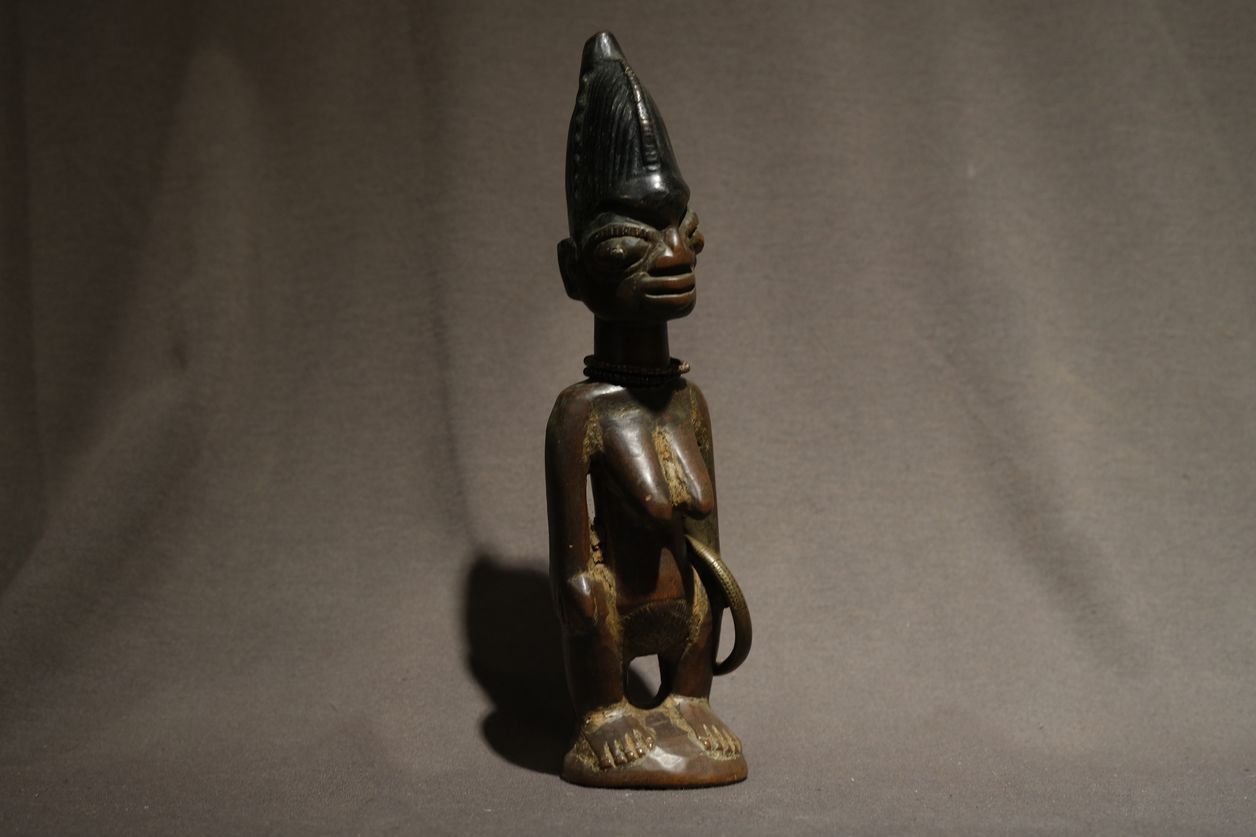
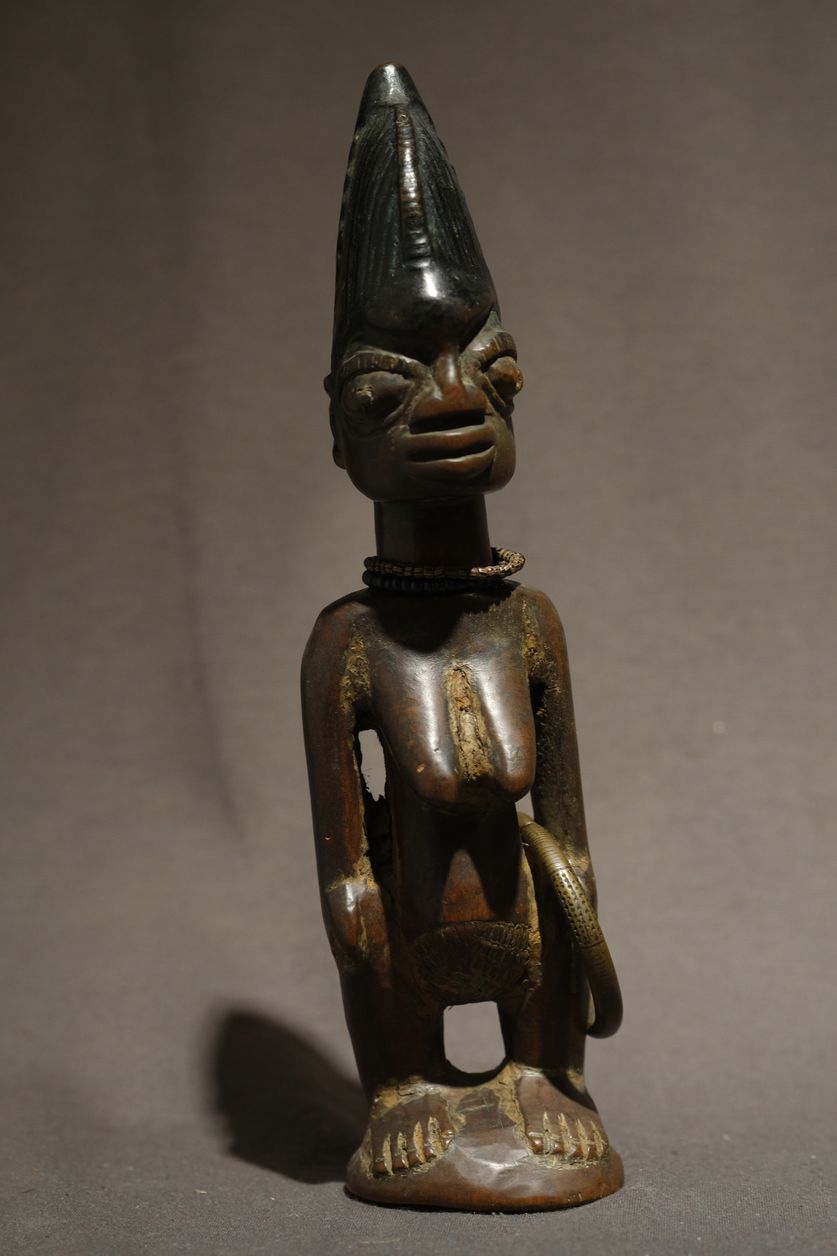
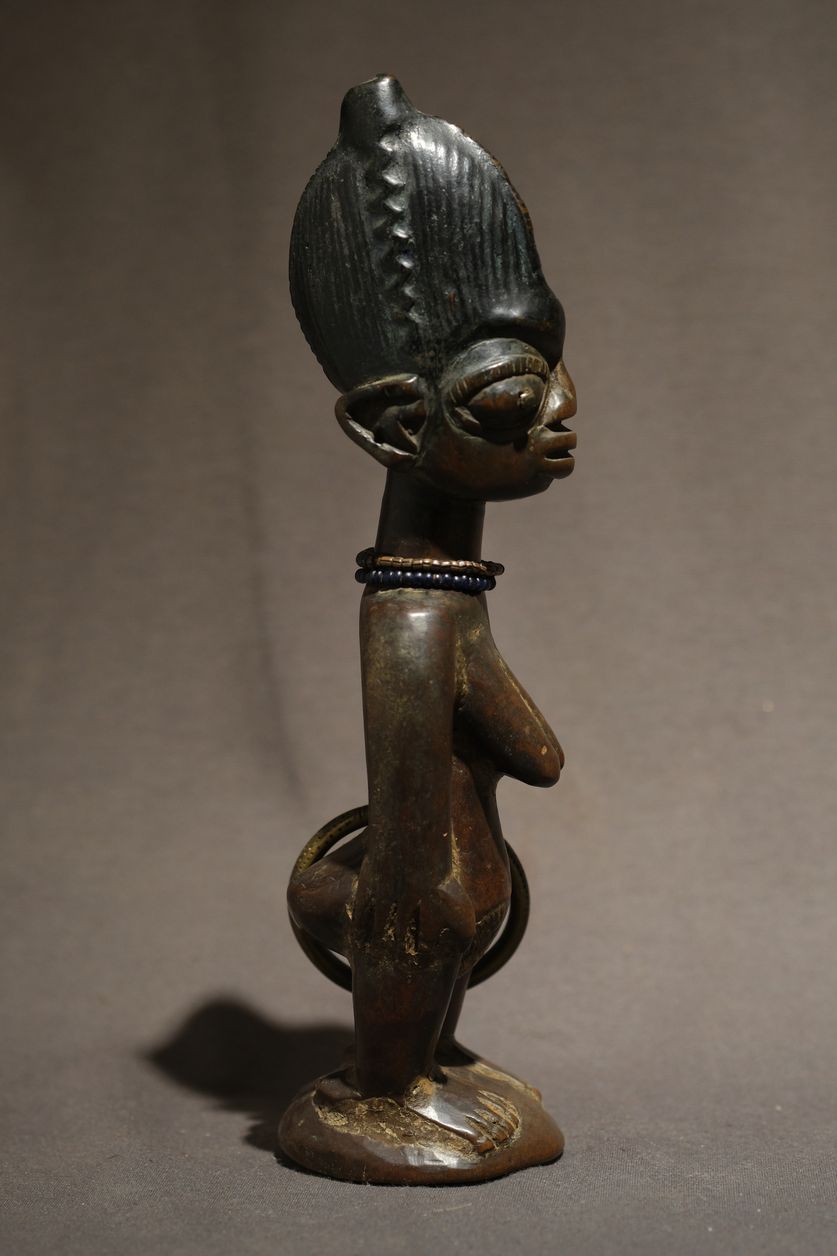
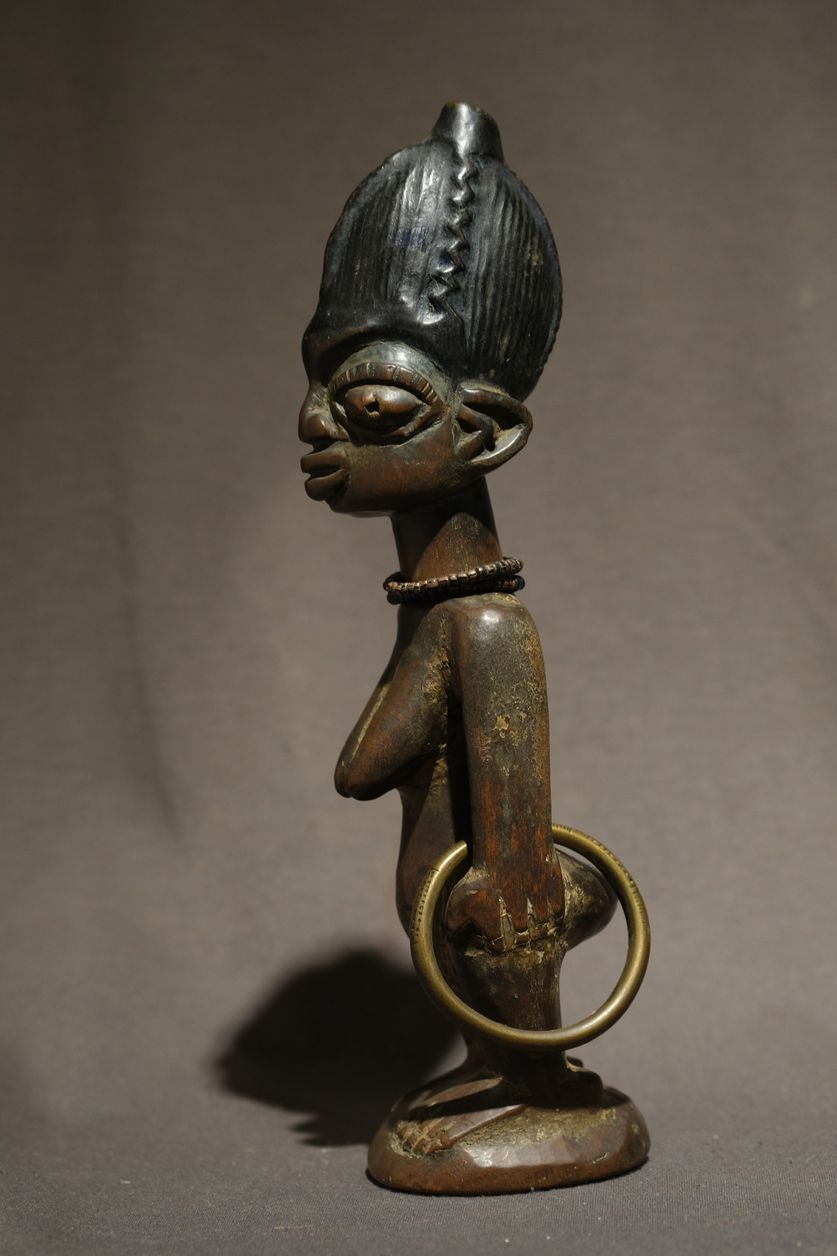
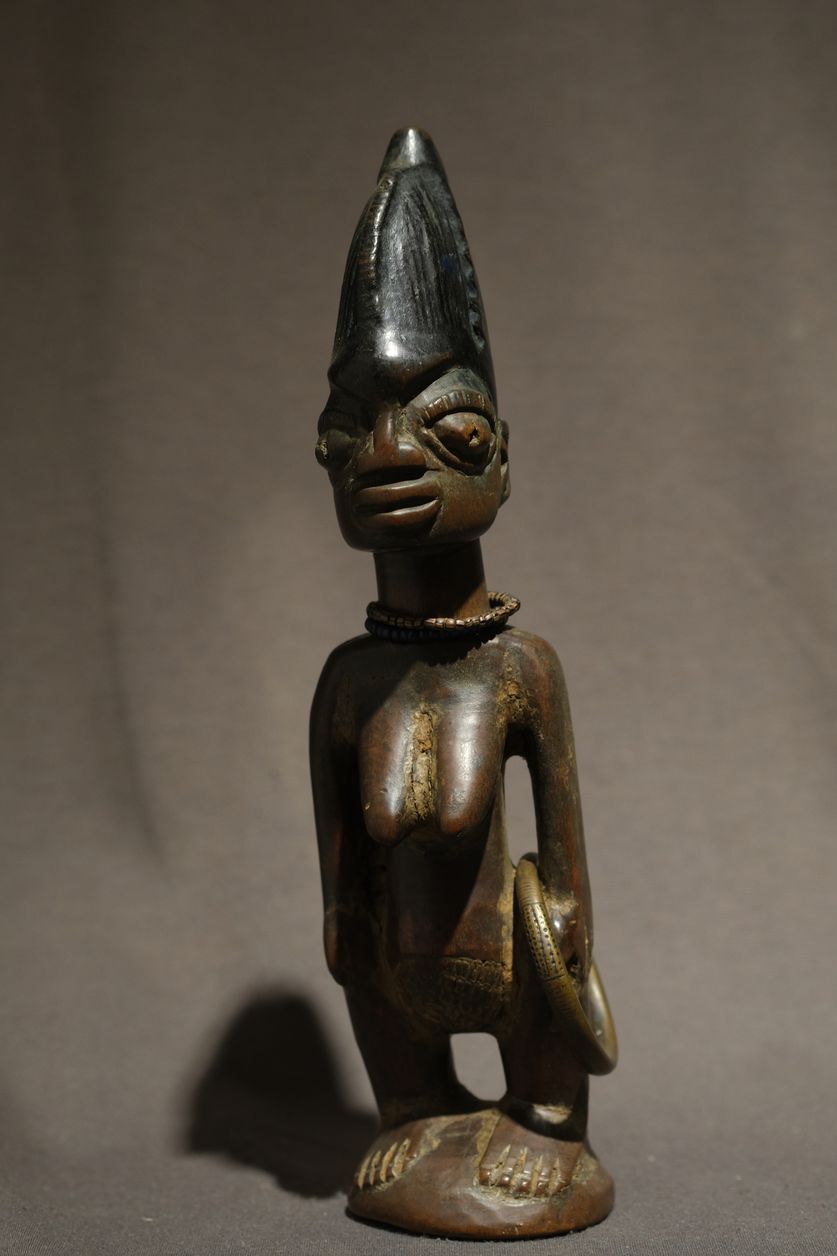
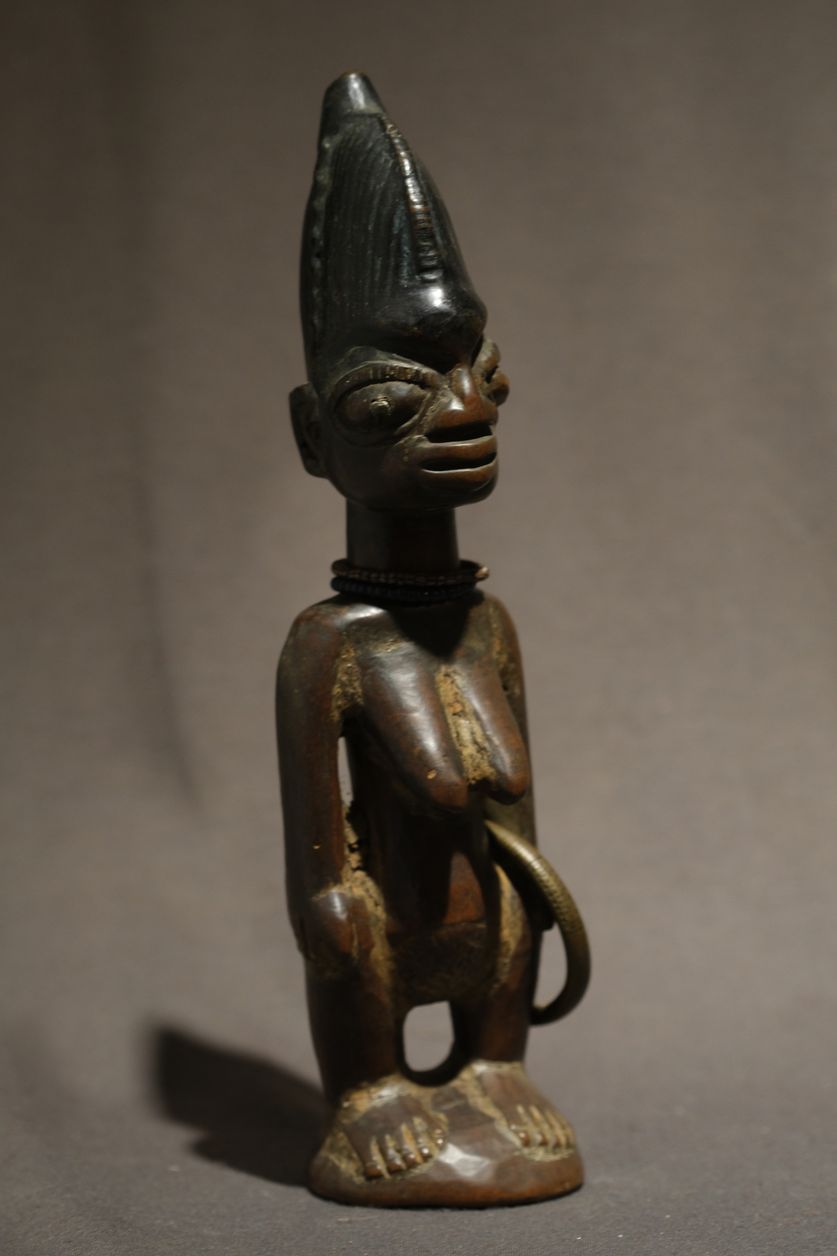
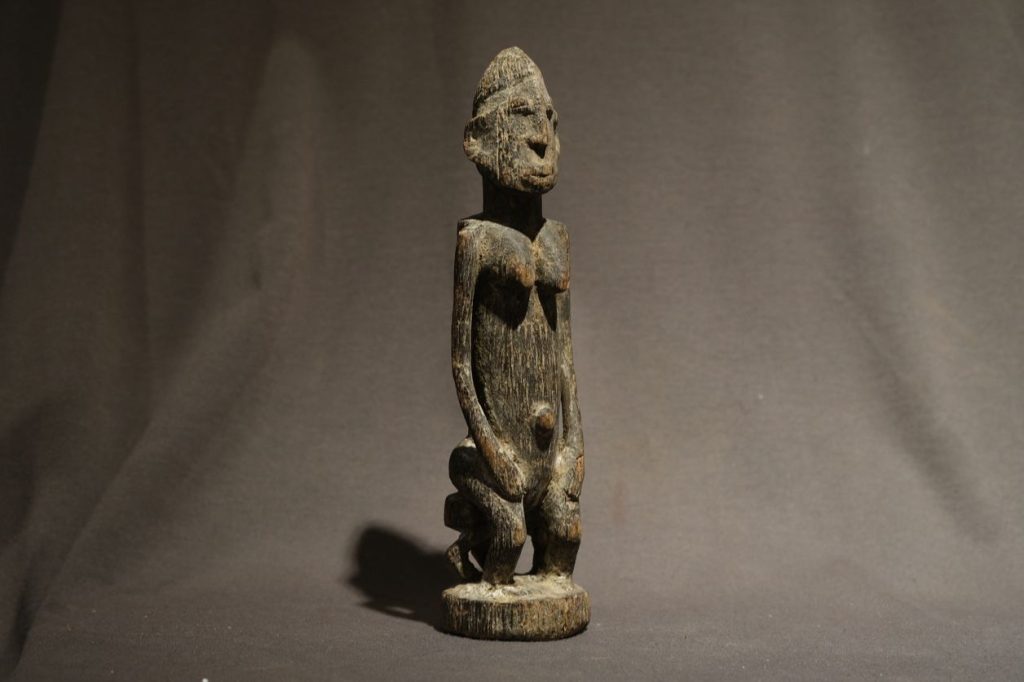
This finely carved 26cm female twin figure (Ere Ibeji) originates from the Yoruba peoples of the Igbomina subgroup, likely from the Ila-Orangun area in southwestern Nigeria. The sculpture dates from approximately 1875–1925 and stands 26 cm high. It comes from a Belgian succession.
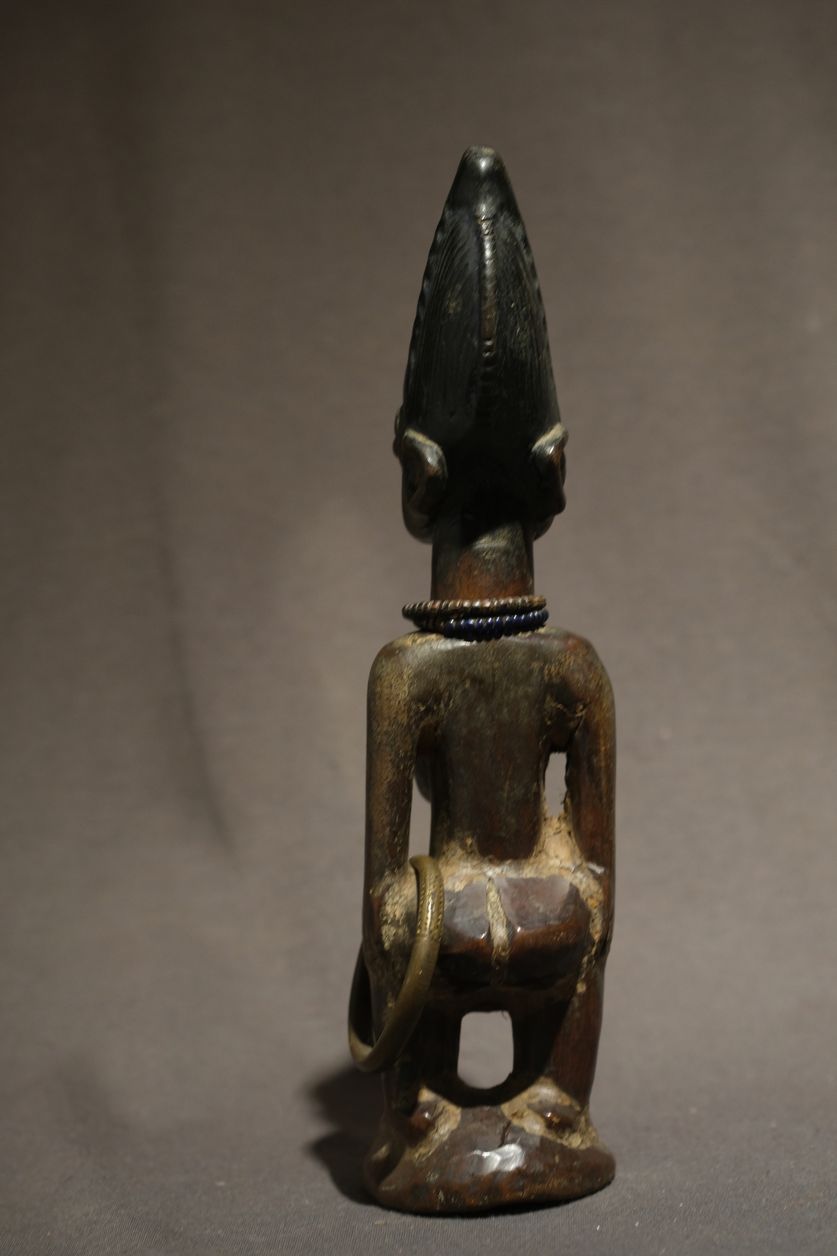
The figure displays the compact proportions, frontal stance, and tall, sharply tapered coiffure characteristic of Igbomina carving traditions. It is adorned with a copper alloy ring and small glass bead rings around the neck, elements associated with ritual care and embellishment. The pronounced breasts, and big buttocks carved prominently on the back, reflect a traditional Yoruba ideal of beauty, fertility, and vitality.
Traces of Reckitt’s blue and tukula powder remain visible on the surface, and the sculpture shows clear evidence of prolonged ritual use and repeated handling, resulting in a deep, nuanced patina and areas of wear consistent with manipulation over time.
The brass ring is a status symbol for wealthy families.
Among the Yoruba, twins (ibeji) are believed to possess powerful spiritual qualities. When one twin dies, an Ere Ibeji figure is commissioned to serve as a physical vessel for the spirit of the deceased child. The figure is cared for by the family—washed, anointed, adorned, and symbolically fed—maintaining a living relationship between the household and the spirit world. Rather than representing an individual likeness, such figures embody idealized beauty, balance, and spiritual continuity, qualities clearly expressed in this example.
A well-preserved and convincing ritual sculpture, combining strong regional style with visible traces of authentic use.


Reviews
There are no reviews yet.