
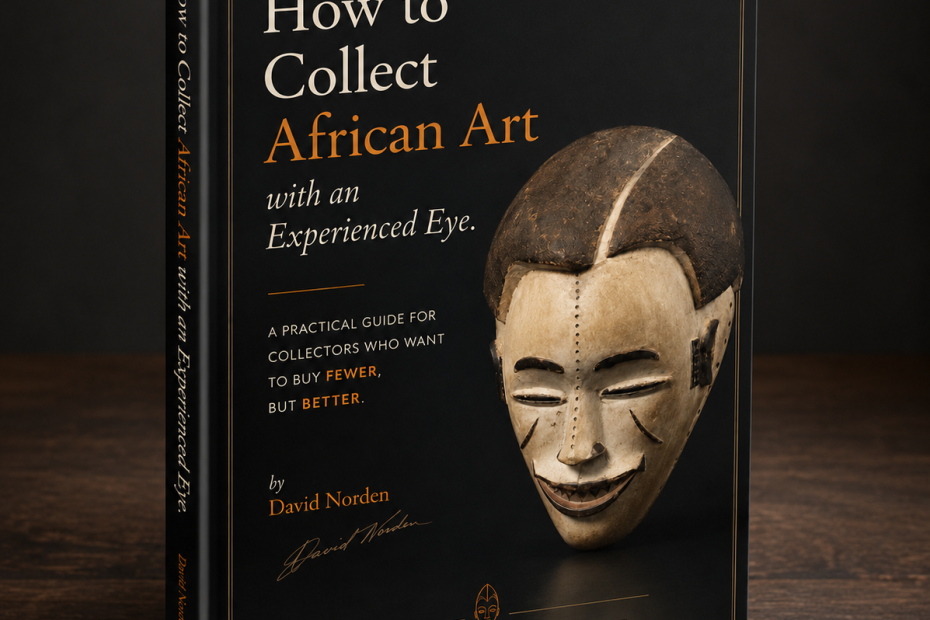
Welcome To the African Art World.
Most people begin collecting African art by asking the wrong questions.
They ask about the tribe, the age, the provenance, or the price. Those things certainly matter, but they are not where true connoisseurship begins.
The first question should always be: Is this a good piece of sculpture?
After more than thirty years of handling thousands of African objects, visiting museums across Europe, studying important collections, and making both good and bad buying decisions, I have learned that exceptional works reveal themselves in ways that photographs, labels, and certificates alone never can. Quality lives in proportion, balance, surface, craftsmanship, expression, and the subtle presence that only the finest objects possess.
An experienced eye is not a gift. It is something that can be developed through careful observation, comparison, and patience.
That is the purpose of this experienced eye book.
Rather than presenting a catalogue of ethnic groups or historical facts, this guide focuses on how to see. You will learn practical methods for judging craftsmanship, recognizing authentic age and patina, understanding what separates an ordinary object from an exceptional one, and avoiding many of the mistakes that beginning collectors often make.
One of the most valuable ways to train your eye is by studying the very best examples. Throughout this guide we therefore examine masterpieces from major museum collections, including remarkable Fang, Baule, Djennenké, Kota, Bangwa, Kongo, Songye, and Yoruba sculptures. These objects are not included simply because they are famous, but because they demonstrate the qualities that collectors should learn to recognize wherever they encounter African art.
Whether you are considering your very first mask or building a serious collection, the principles remain the same. The goal is not to buy more objects, but to buy better ones—pieces that continue to reward careful study for years to come.
This is an Early Edition of How to Collect African Art with an Experienced Eye. At present it contains 45 illustrated pages, but it is intended to grow into a much more comprehensive guide. New chapters, museum case studies, photographs, and collecting insights will be added regularly as the project develops. As the content expands, the retail price will gradually increase, while everyone who already owns a copy will receive all future updates free of charge.
My hope is that this book becomes more than an illustrated collector’s guide. I hope it helps you cultivate the most valuable tool any collector can possess: an experienced eye.
David Norden
African Art Dealer, Antwerp
Since 1992