
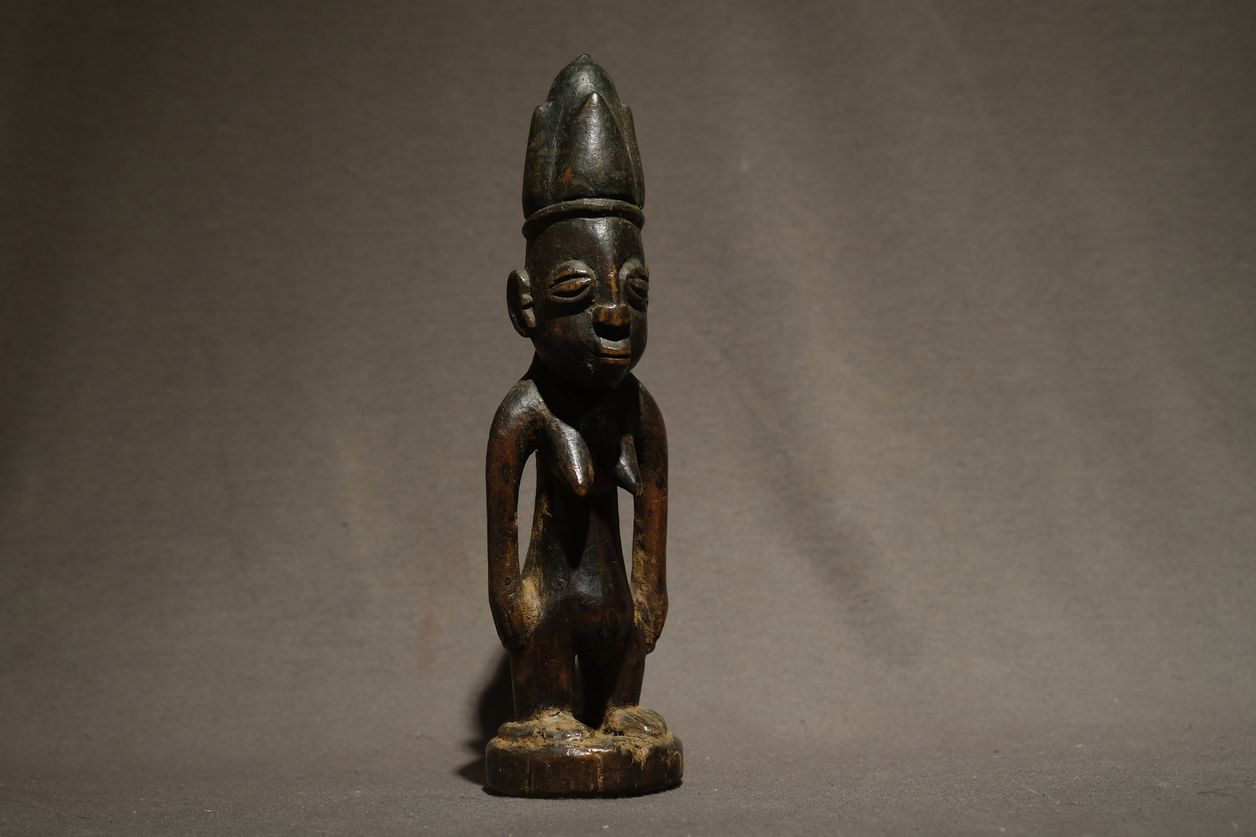
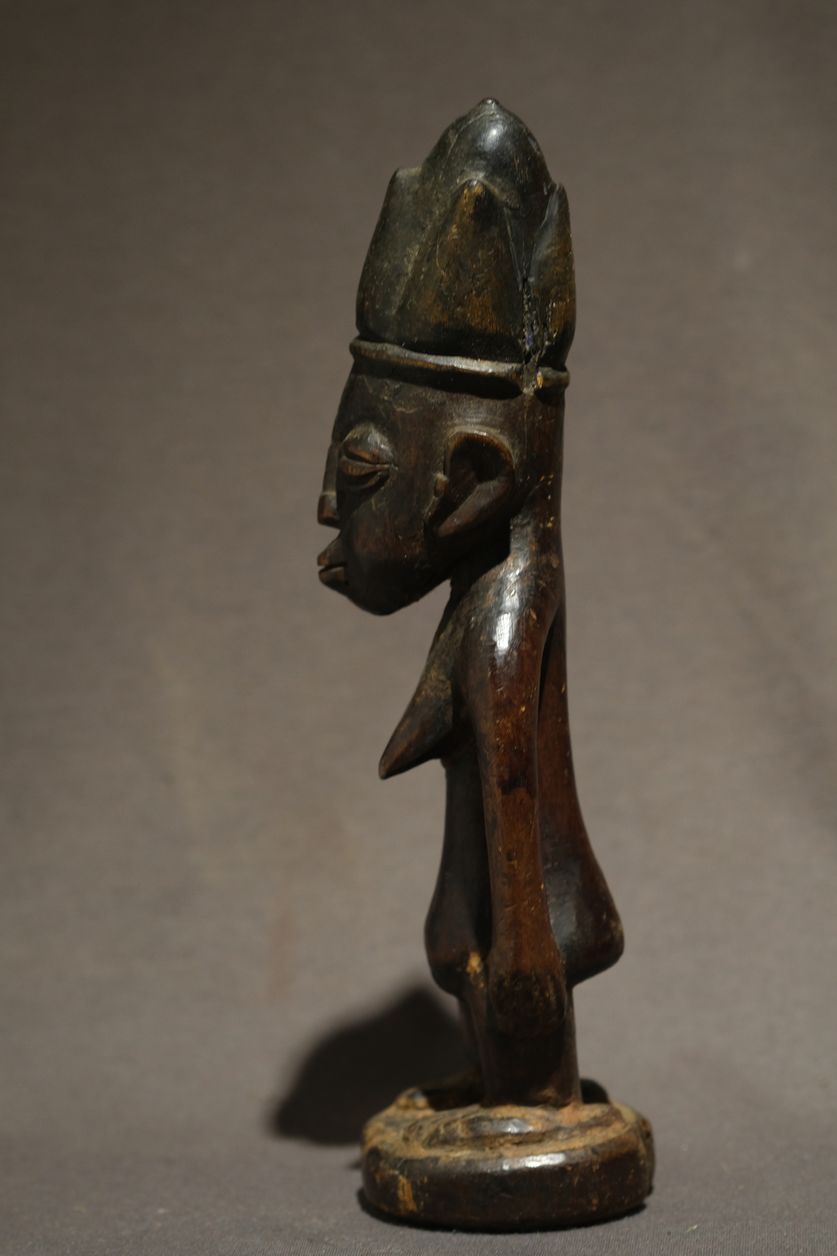
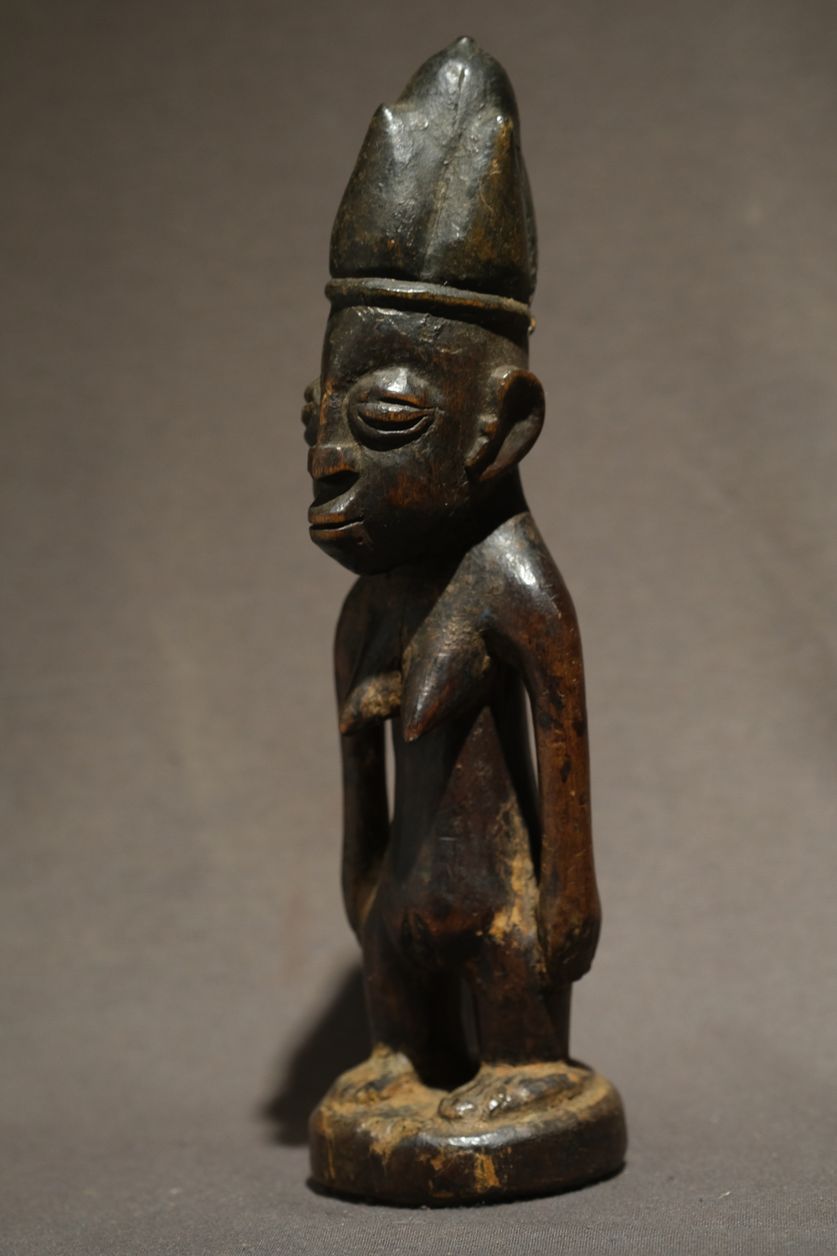
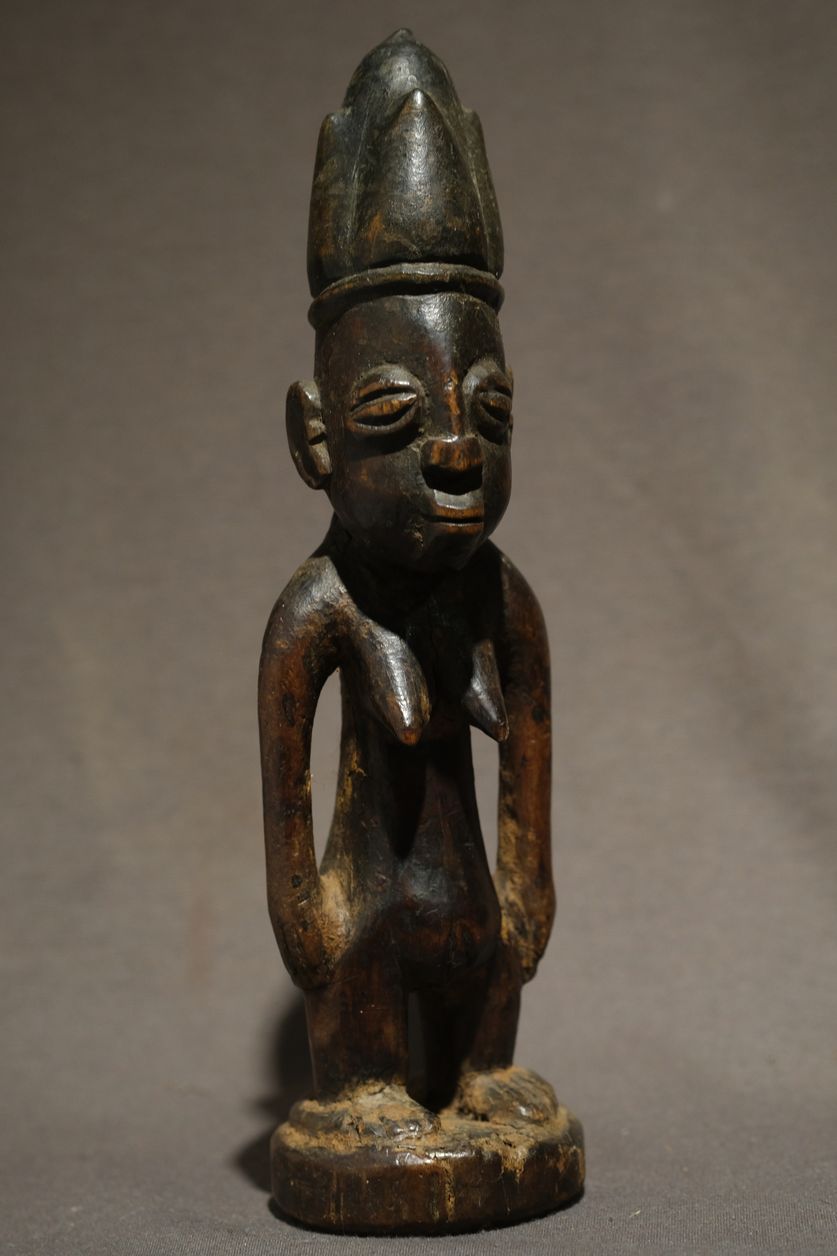
This carved female twin figure (Ere Ibeji) belongs to the Yoruba cultural tradition of southwestern Nigeria and dates to the early–mid 20th century. The figure stands 25 cm high and comes from a Belgian succession.
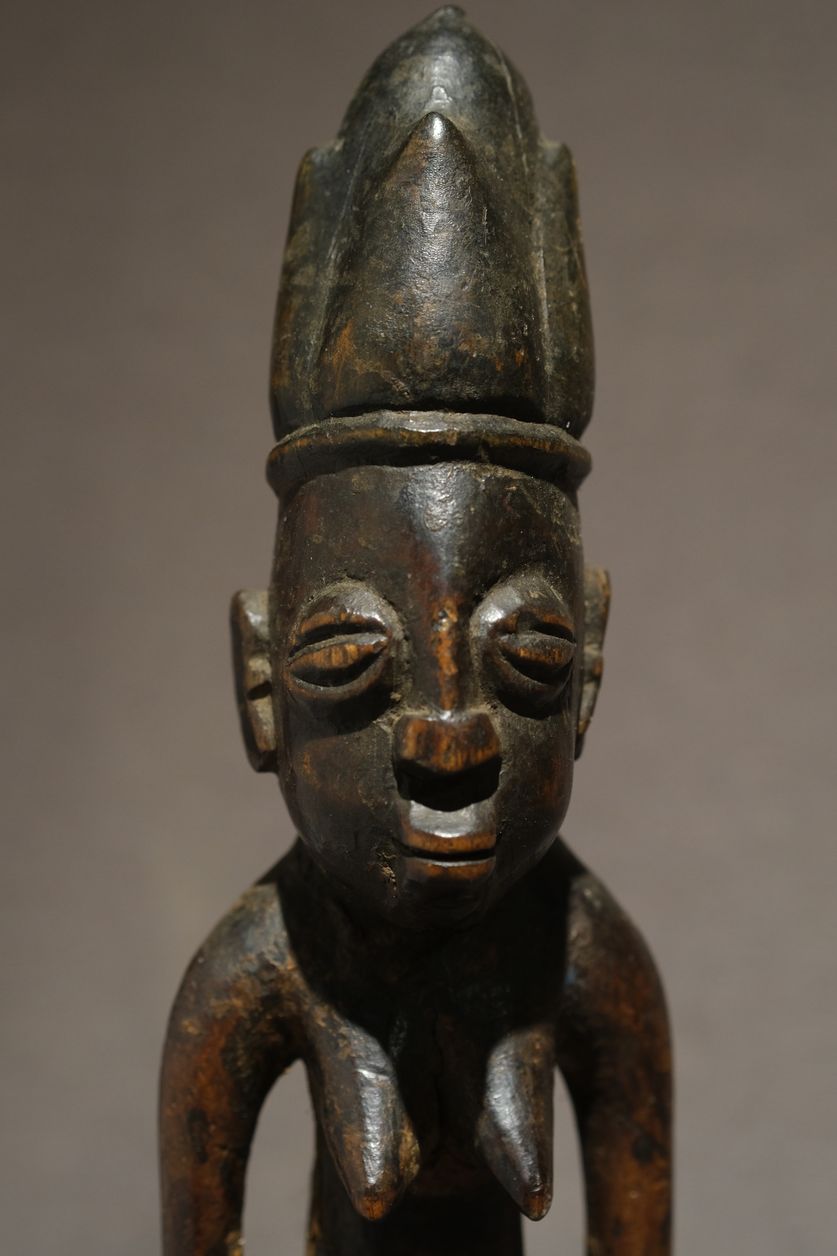
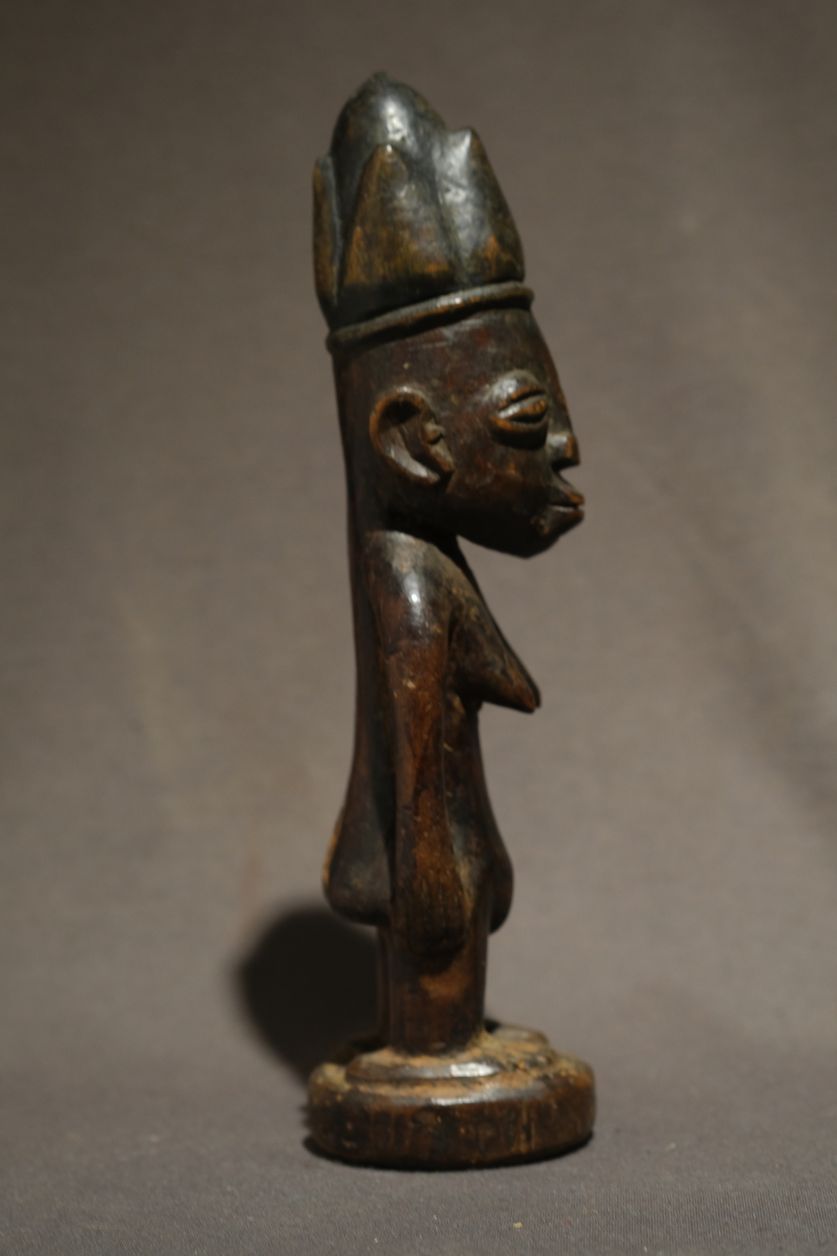
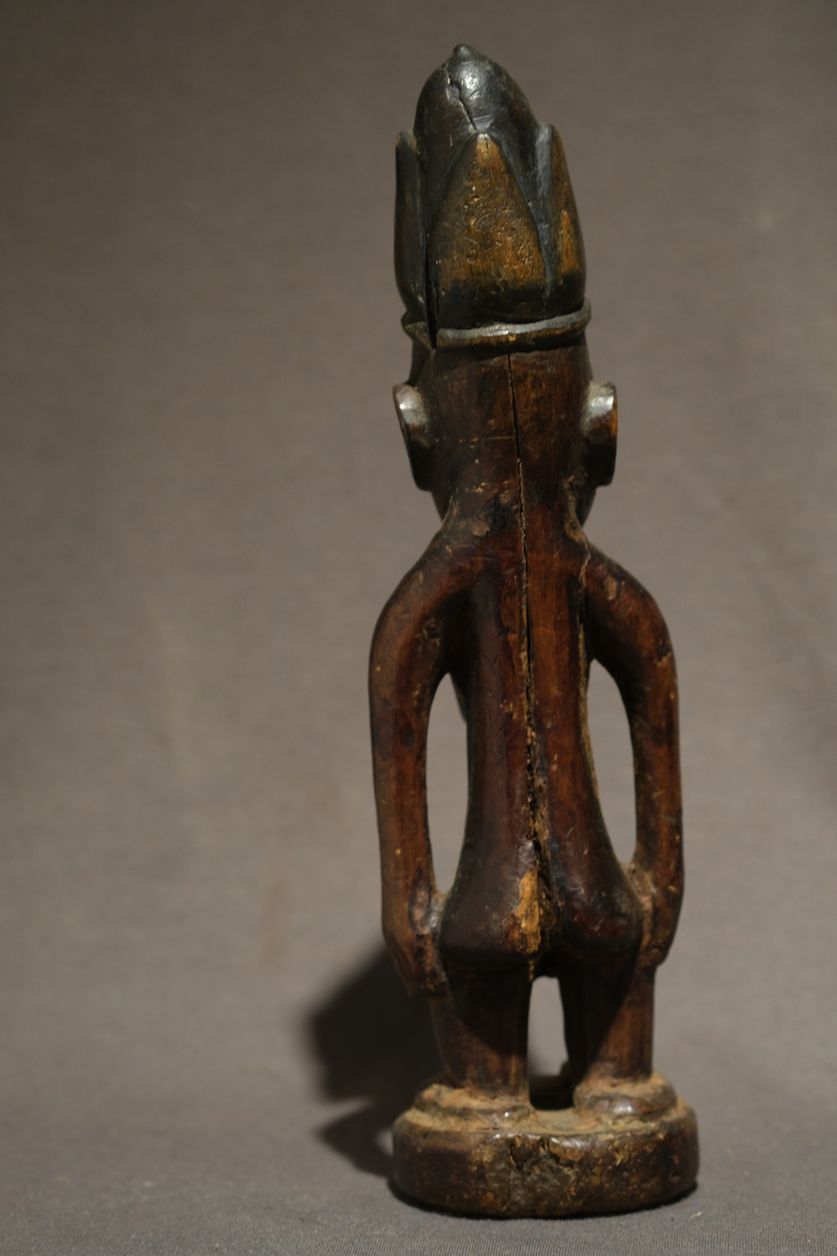
The sculpture shows a calm frontal stance with arms held close to the body and a tall, tiered coiffure. The face is softly modeled with half-closed eyes and a composed expression, conveying inner balance and presence — a valued aesthetic quality in Yoruba carving. The elongated torso and clearly defined breasts express ideals of vitality and mature beauty. The rounded base and compact proportions give the figure a stable, grounded posture.
The surface displays a deep, layered patina with visible deposits and wear around the feet, hands, and lower body, consistent with ritual handling, anointing, and long devotional use. These tactile traces are essential markers of authenticity and lived function.
Among the Yoruba, twins (ibeji) are believed to carry special spiritual power. When one twin dies, a carved Ere Ibeji figure is commissioned to house and honor the spirit of the deceased child. The figure is kept within the family, washed, fed symbolically, and cared for, maintaining an active bond between the living and the spiritual world. Such figures represent not portrait likeness but idealized life force, continuity, and protection.
Owning an Ere Ibeji like this offers more than aesthetic value: it brings into a collection an object with documented ritual purpose, visible history of touch, and a quiet sculptural presence that reads immediately as authentic and intimate — qualities increasingly sought after by serious collectors of African art.


Reviews
There are no reviews yet.