
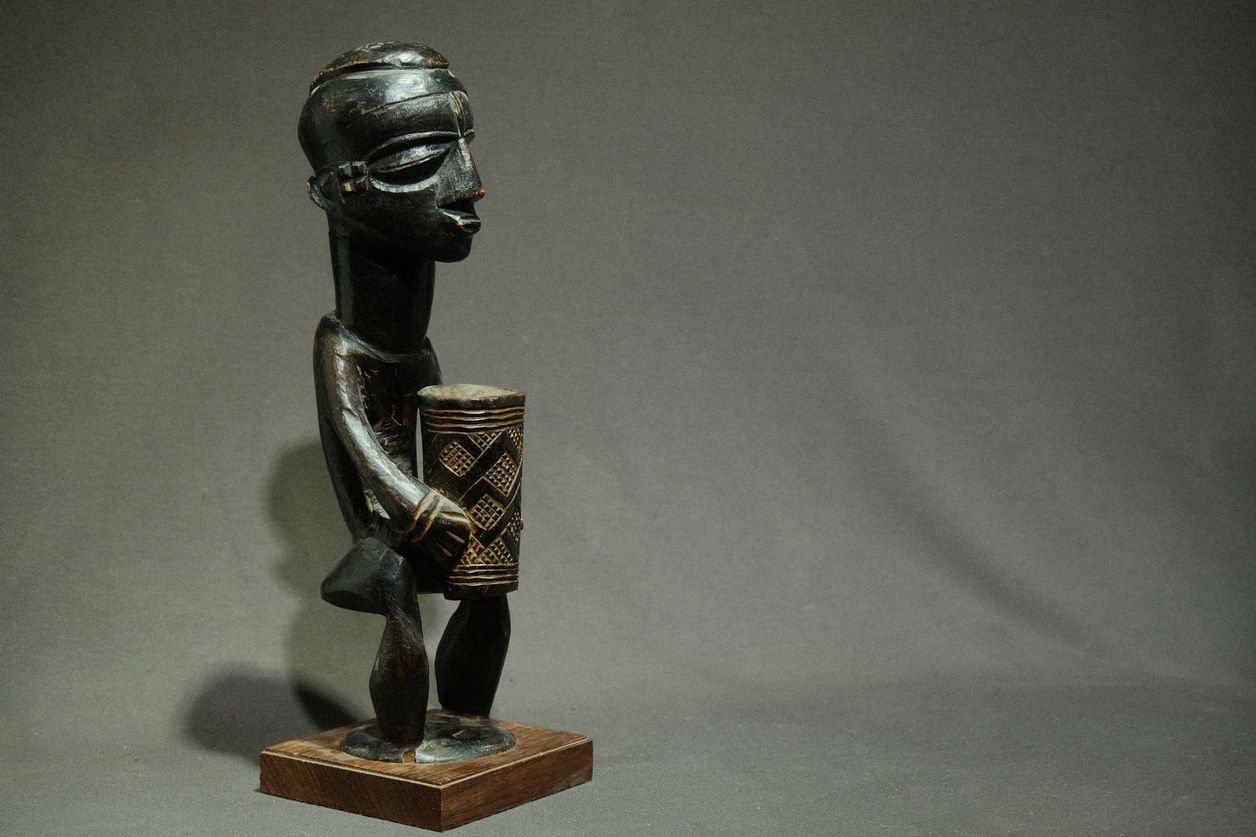
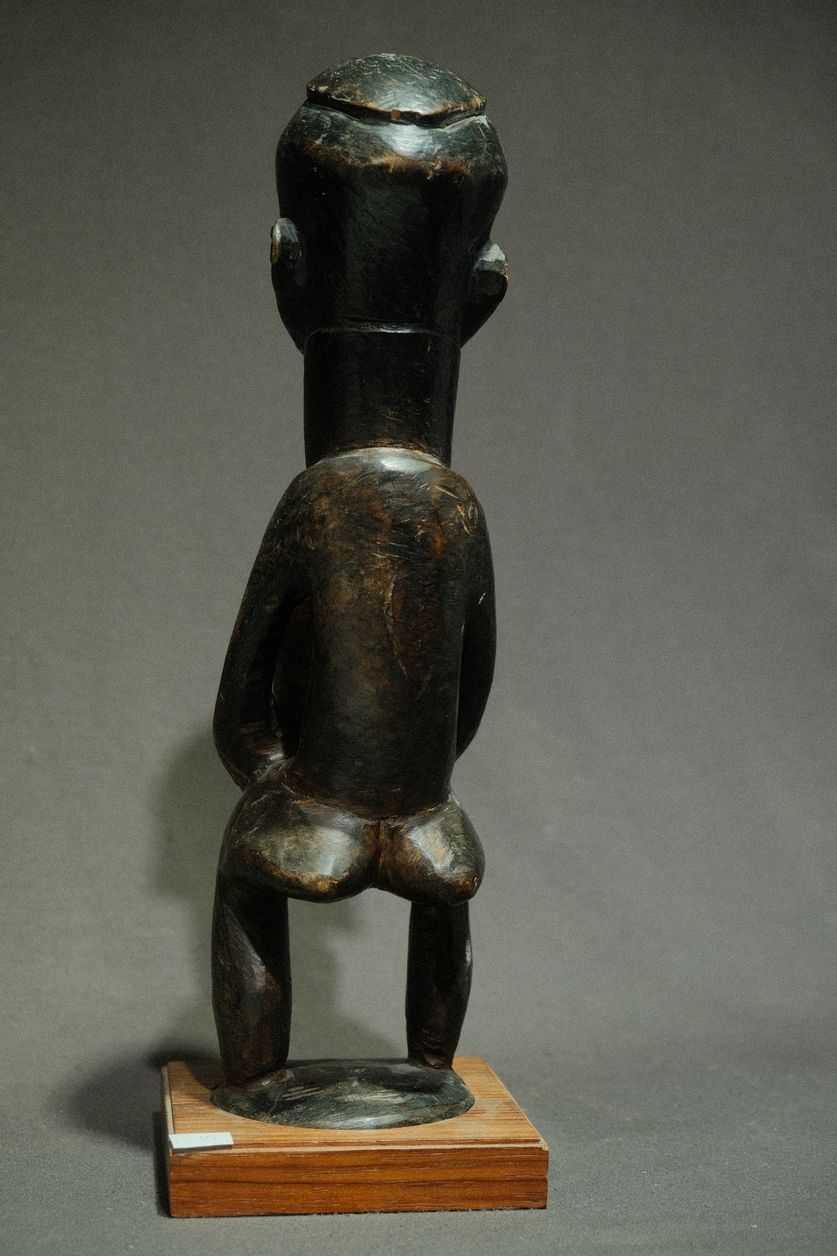
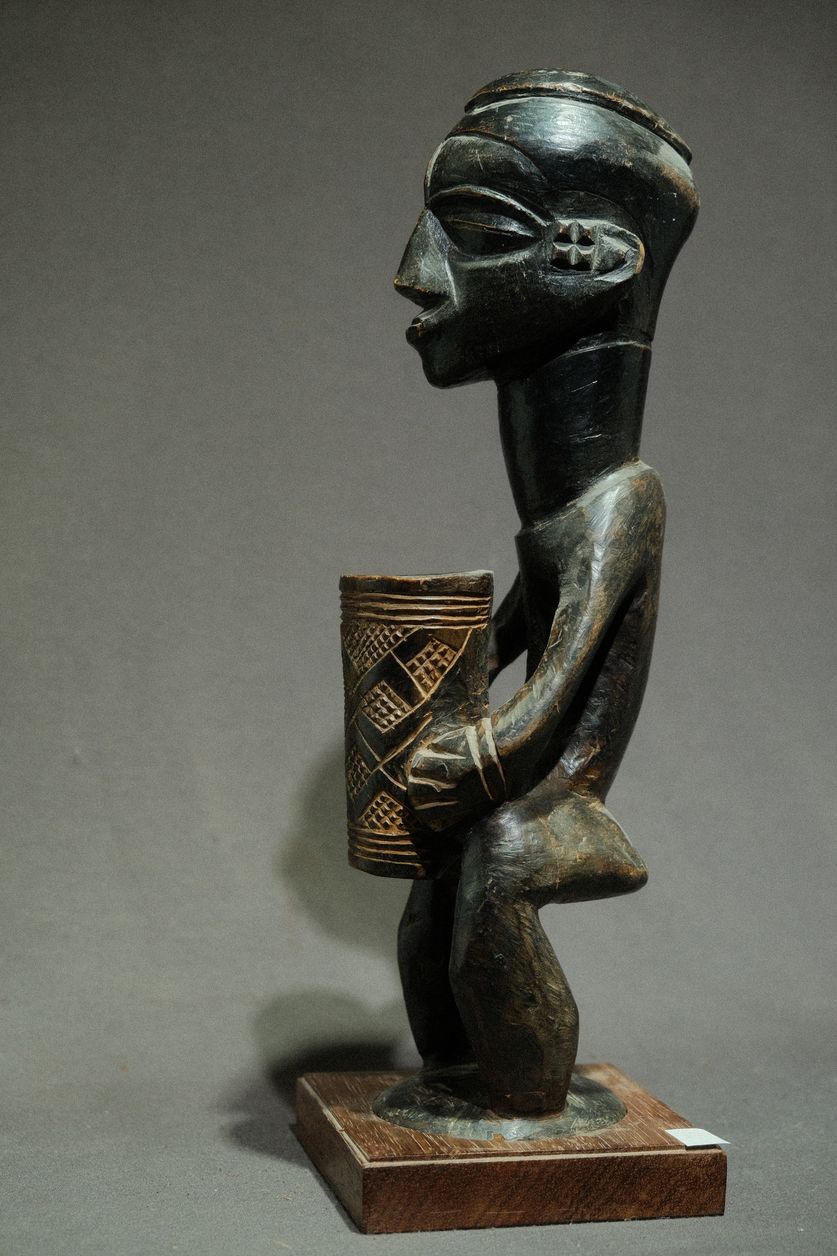
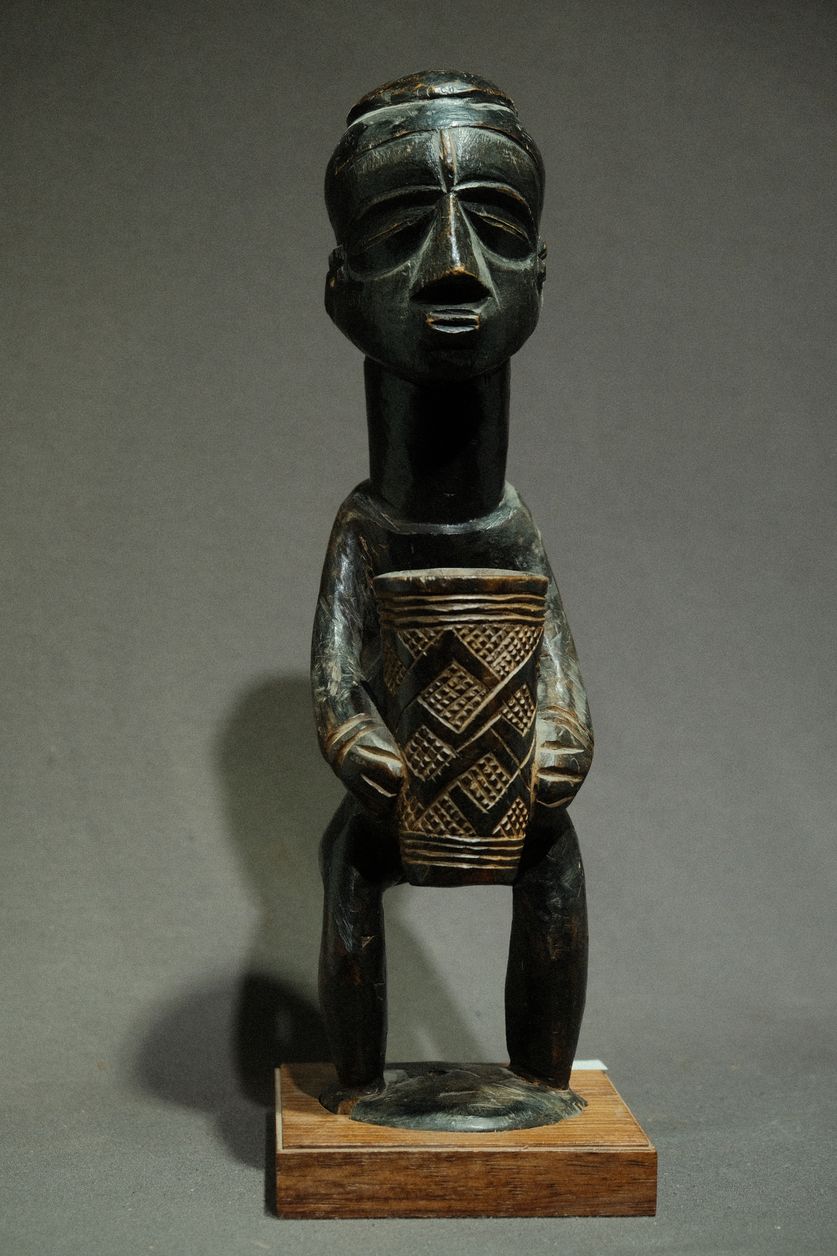
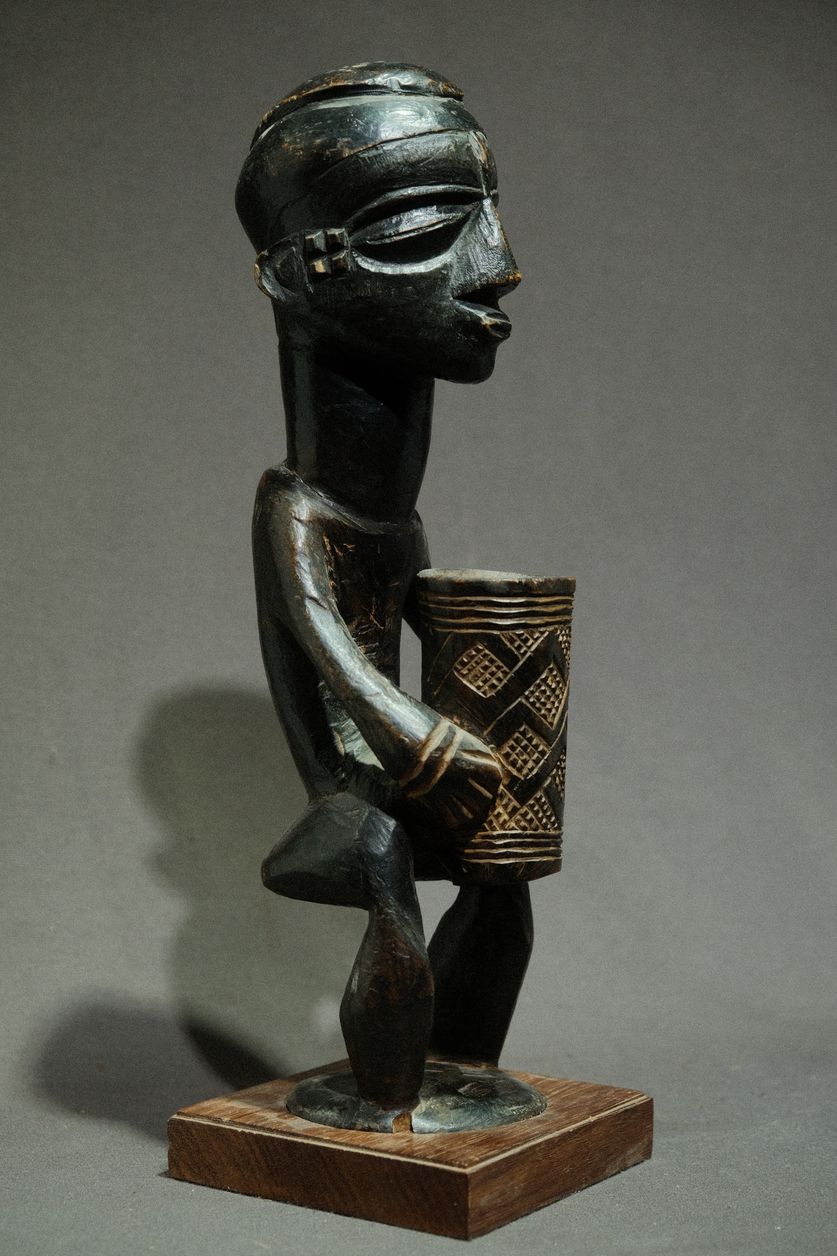
This finely carved Kuba Cup Bearer is an elegant example of the sophisticated court sculpture produced within the Kuba Kingdom of the present-day Democratic Republic of the Congo. Standing with slightly flexed legs and an elongated neck, the figure presents a beautifully carved palm wine cup, combining sculptural refinement with the visual authority characteristic of Kuba royal art.
The serene face, almond-shaped eyes, carefully modelled coiffure and restrained proportions reflect the refined aesthetic that made Kuba sculpture one of the most celebrated artistic traditions of Central Africa. The sculptor achieved an exceptional sense of balance by contrasting the monumentality of the head with the compact body and the richly ornamented vessel.
The figure is best understood as a Kuba court figure holding a palm wine cup. Palm wine occupied an important place within the ceremonial life of the Kuba court, where elaborately carved vessels were prestige objects reserved for kings, nobles and titled officials during audiences, rituals and celebrations.
The cup itself is decorated with finely carved geometric bwiin (buina) patterns, motifs closely related to the celebrated Kuba tradition of woven textiles, basketry and decorative arts. These intricate designs demonstrate the Kuba artists’ remarkable ability to translate textile ornament into sculpture.
An especially interesting aspect of this piece is its possible dual function. While first conceived as an impressive court sculpture representing prestige and authority, it may also have served as an actual drinking vessel. Examples of Kuba cup bearers are known in which the upper cup was used ceremonially, blurring the distinction between sculpture and functional object. It is precisely this combination of symbolism and utility that makes these works so fascinating.
Another notable feature is that the sculpture remains complete with its original carved cup and integral base. Comparable figures are sometimes encountered with the lower section altered or missing, suggesting they were once mounted differently or suffered losses over time. The preservation of the complete composition considerably enhances both its aesthetic integrity and its rarity.
The sculpture has developed a deep, lustrous patina through age and handling. Wear is entirely consistent with long use and confirms its authenticity. A stable age crack is visible beneath the base, a common characteristic of old hardwood carvings that does not affect the stability of the object.
Provenance
- Eugène Reuse (1900–1904)
- Jan Kusters Collection
- Private Belgian collection
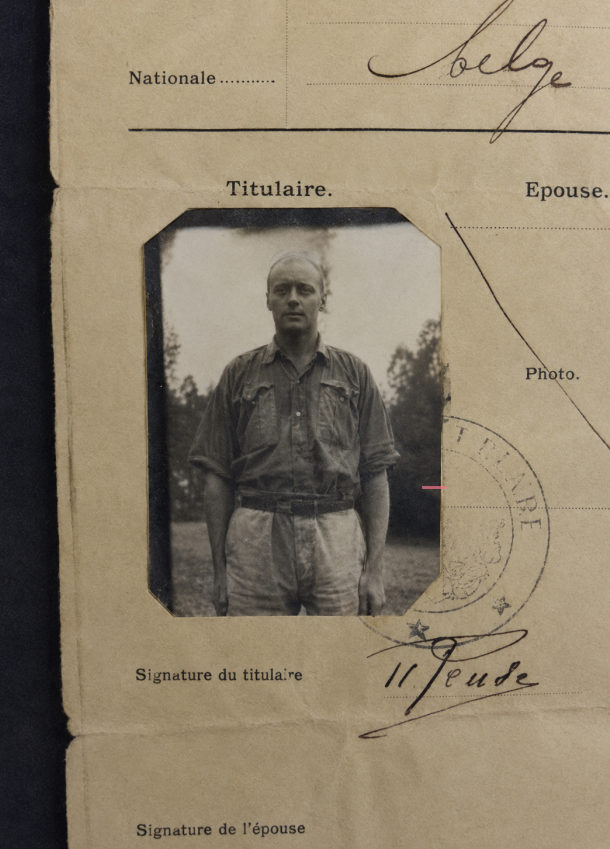
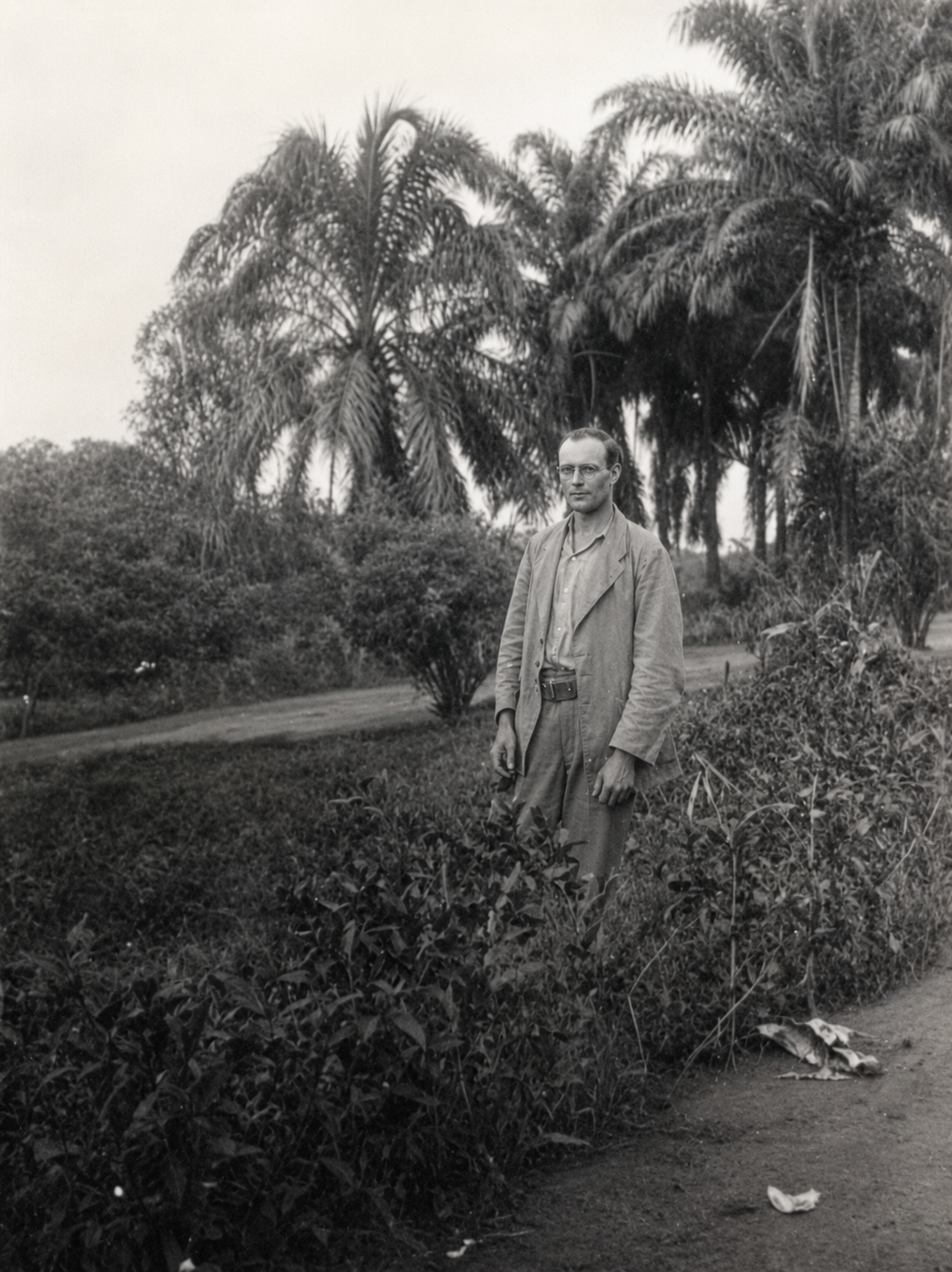
The provenance of this sculpture is particularly significant. It was formerly owned by Eugène Reuse, one of the earliest Belgian colonial administrators active in the Congo at the beginning of the twentieth century. Objects preserved from these pioneering collections are increasingly sought after, as they were collected during the earliest decades of European contact with the Kuba Kingdom and often remained in private hands for generations.
Its later presence in the respected Jan Kusters Collection further strengthens its collecting history and desirability.
Condition
Very good antique condition.
- Excellent dark, glossy patina.
- Minor wear consistent with age and traditional use.
- Stable age crack to the underside of the base.
- Complete with original carved cup and integral base.
- Mounted on a custom wooden display stand.
Why Collect This Piece?
Kuba cup bearers rank among the most refined forms of Central African court sculpture. They combine elegant proportions, sophisticated carving and historical significance in a single object. Their association with royal ceremonial life makes them far more than decorative sculptures—they embody the prestige, hierarchy and artistic excellence of one of Africa’s most accomplished kingdoms.
This example is particularly desirable because of its early provenance, complete preservation and the intriguing possibility that it functioned both as a court sculpture and as a ceremonial drinking vessel.
Specifications
- Culture: Kuba
- Country: Democratic Republic of the Congo
- Material: Hardwood
- Height: 37 cm (39 cm including stand)
- Period: End XIXth – Early 20th century
- Provenance: Ex. Eugène Reuse (1900–1904); Jan Kusters Collection
- Stand: Included


Reviews
There are no reviews yet.