Tag: african art dealer

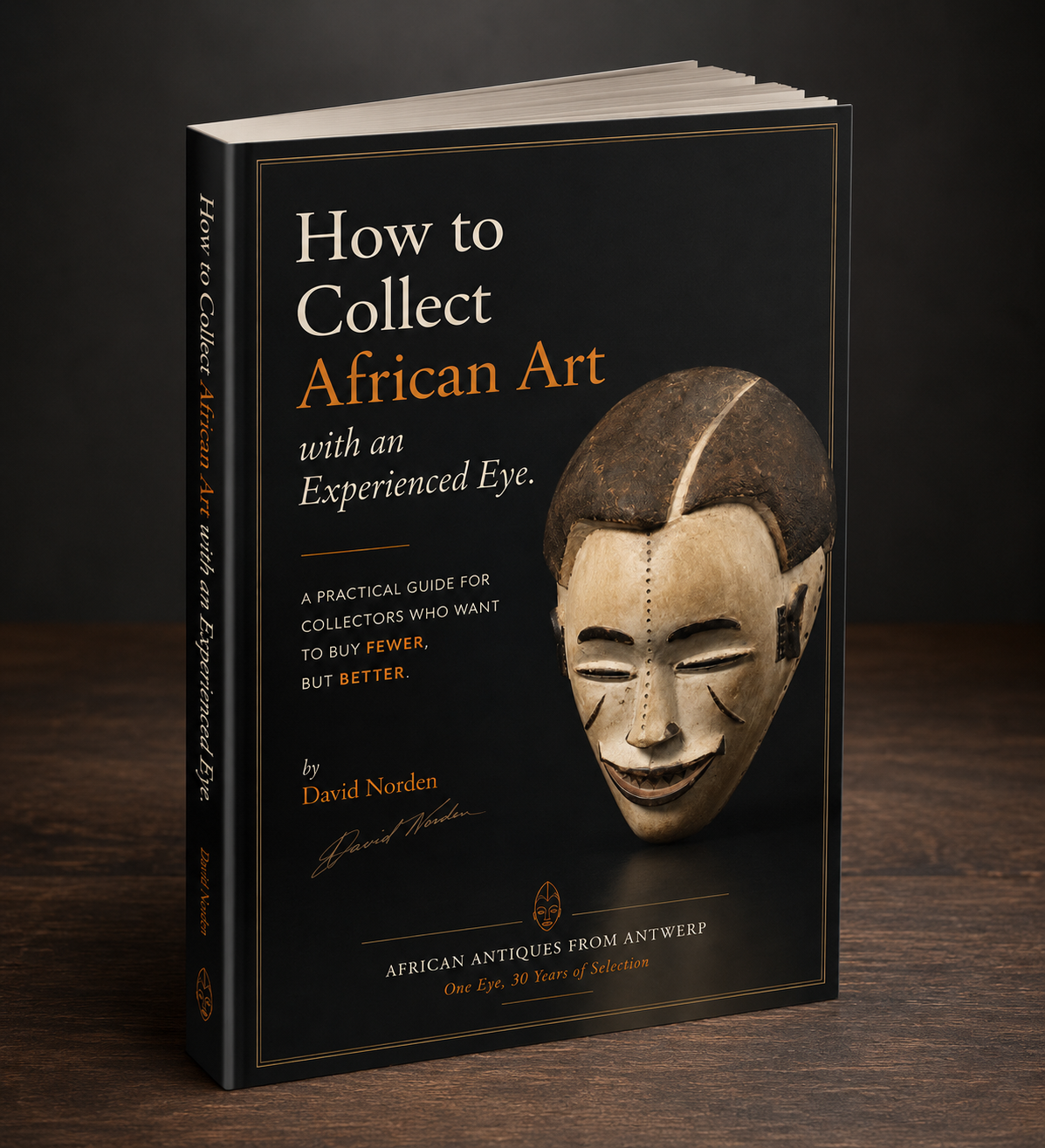
  • How to Collect African Art with an Experienced Eye – David Norden

    How to Collect African Art with an Experienced Eye – David Norden

    Welcome To the African Art World.

    How to collect African Art with an experienced Eye

    Most people begin collecting African art by asking the wrong questions.

    They ask about the tribe, the age, the provenance, or the price. Those things certainly matter, but they are not where true connoisseurship begins.

    The first question should always be: Is this a good piece of sculpture?

    After more than thirty years of handling thousands of African objects, visiting museums across Europe, studying important collections, and making both good and bad buying decisions, I have learned that exceptional works reveal themselves in ways that photographs, labels, and certificates alone never can. Quality lives in proportion, balance, surface, craftsmanship, expression, and the subtle presence that only the finest objects possess.

    An experienced eye is not a gift. It is something that can be developed through careful observation, comparison, and patience.

    That is the purpose of this experienced eye book.

    Rather than presenting a catalogue of ethnic groups or historical facts, this guide focuses on how to see. You will learn practical methods for judging craftsmanship, recognizing authentic age and patina, understanding what separates an ordinary object from an exceptional one, and avoiding many of the mistakes that beginning collectors often make.

    One of the most valuable ways to train your eye is by studying the very best examples. Throughout this guide we therefore examine masterpieces from major museum collections, including remarkable Fang, Baule, Djennenké, Kota, Bangwa, Kongo, Songye, and Yoruba sculptures. These objects are not included simply because they are famous, but because they demonstrate the qualities that collectors should learn to recognize wherever they encounter African art.

    Whether you are considering your very first mask or building a serious collection, the principles remain the same. The goal is not to buy more objects, but to buy better ones—pieces that continue to reward careful study for years to come.

    This is an Early Edition of How to Collect African Art with an Experienced Eye. At present it contains 45 illustrated pages, but it is intended to grow into a much more comprehensive guide. New chapters, museum case studies, photographs, and collecting insights will be added regularly as the project develops. As the content expands, the retail price will gradually increase, while everyone who already owns a copy will receive all future updates free of charge.

    My hope is that this book becomes more than an illustrated collector’s guide. I hope it helps you cultivate the most valuable tool any collector can possess: an experienced eye.

    David Norden

    African Art Dealer, Antwerp

    Since 1992
    How to collect African Art with an experienced Eye

    Share and Enjoy !

    Shares
  • The Mask That Smiled Back

    The Mask That Smiled Back

    There is an old story I once heard from a collector who spent years traveling through mountain villages between Nepal and Tibet.

    He told me that certain masks should never be looked at too quickly.

    “At first,” he said, “they are only wood.”

    But then, after some time, the face begins to change.

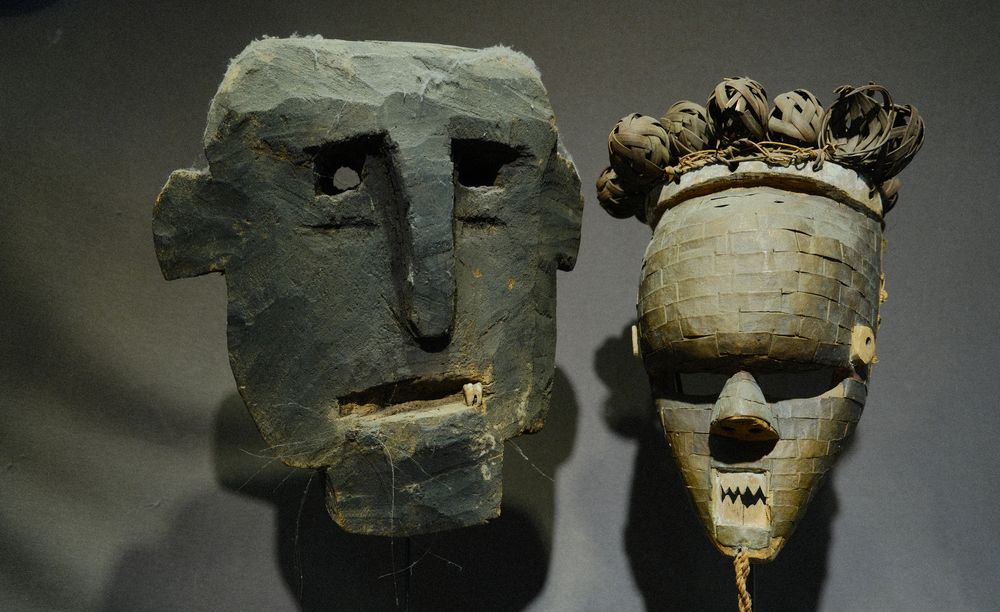
    One evening, while arranging objects in my gallery, I placed two masks beside each other almost accidentally. A Nepalese shamanic mask and a Salampasu mask from Congo.

    Different continents. Different beliefs. Different peoples.

    And yet, the room suddenly became strangely quiet.

    The Nepalese mask was the first to emerge from the darkness. Its face was dry and ancient, with deep shadows around the eyes and mouth. At first glance, it seemed almost humorous — a crooked grin, exaggerated teeth, a theatrical expression.

    Then I noticed the tooth.

    Not carved.

    Human.

    The collector’s story returned immediately.

    In Himalayan ritual traditions, masks were never merely decorations. They were instruments used by shamans during ceremonies of healing, protection, and exorcism. Some antique examples even incorporated real human or animal teeth into the carving itself, strengthening the presence of the spirit inhabiting the mask.

    The mouth was not symbolic.

    It was active.

    FXE41546African Masks

    Nearby, the Salampasu mask watched silently.

    Its mouth was entirely different — rectangular, aggressive, armed with rows of sharpened teeth beneath a massive domed forehead covered in metal strips. The woven beard ended in a tightly braided sphere like a final punctuation mark.

    The Salampasu people of Congo were known as hunters and warriors. Their masks belonged to initiation societies reserved for men, appearing during ceremonies marking passage into adulthood. Among the Salampasu, the sharpening of human teeth formed part of identity itself. The body became an extension of ritual force, much like the masks they carved.

    And suddenly the two objects no longer seemed far apart.

    One carried an actual human tooth.
    The other transformed human teeth into sculpture.

    Salampasu teeth

    Both understood something ancient:

    The mouth is power.

    The mouth speaks. Threatens. Invokes. Breathes life into chants and names. It is where invisible force leaves the body and enters the world.

    Perhaps this is why ritual masks remain so compelling even after leaving their original cultures. Long after the ceremonies disappear, something still survives inside the sculpture itself.

    Not literally perhaps.

    But enough to make us look twice.

    Later that evening, before turning off the lights, I glanced once more toward the wall.

    For a brief moment, the Nepalese mask almost appeared to smile.

    Happy and curious,

    David Norden

    Salampasu Mukinka Mask — D.R. Congo

    Raw Shamanic Himalayan Mask with Human Tooth


    Share and Enjoy !

    Shares
  • Two African Pieces on the Table

    Two African Pieces on the Table

    This morning, before opening the shop, I placed these two next to each other.

    Not because they belong to the same tradition. They clearly do not.

    But sometimes objects begin to speak differently when they share the same space for a while.

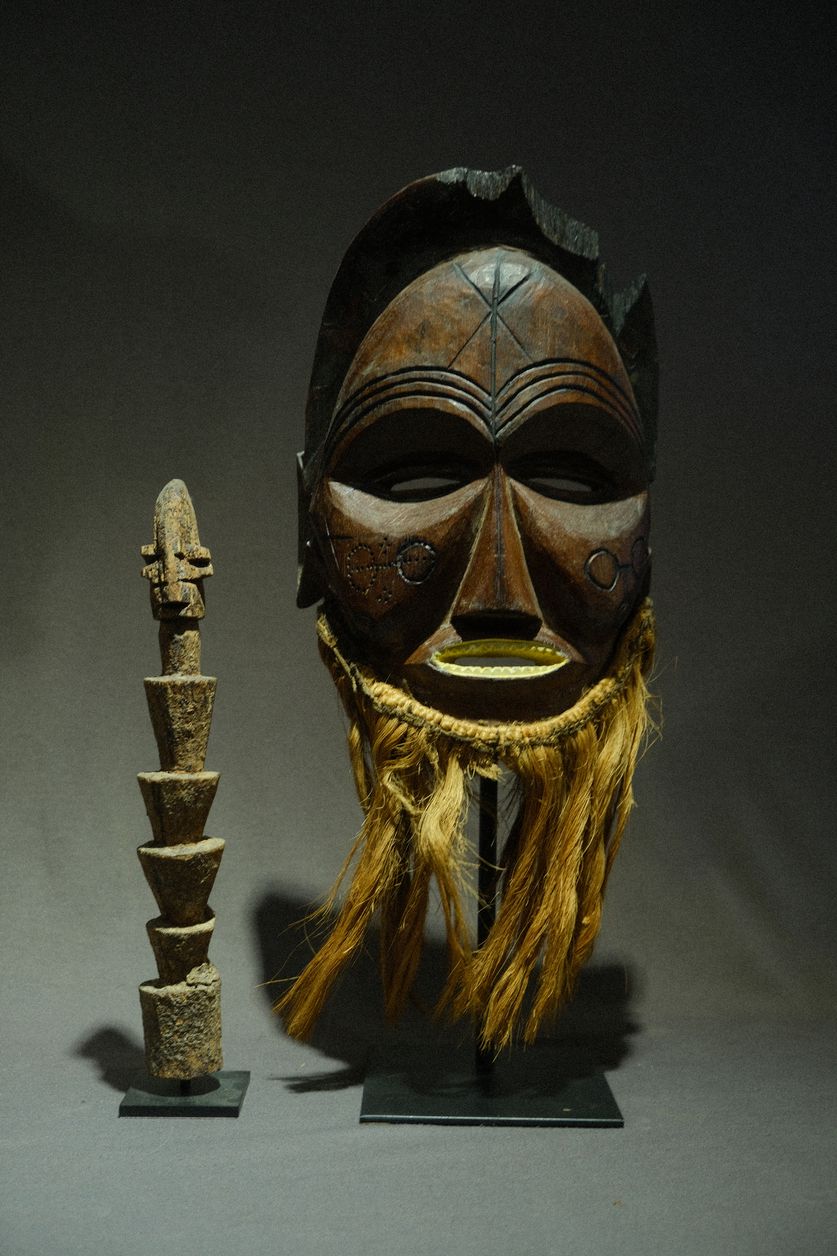
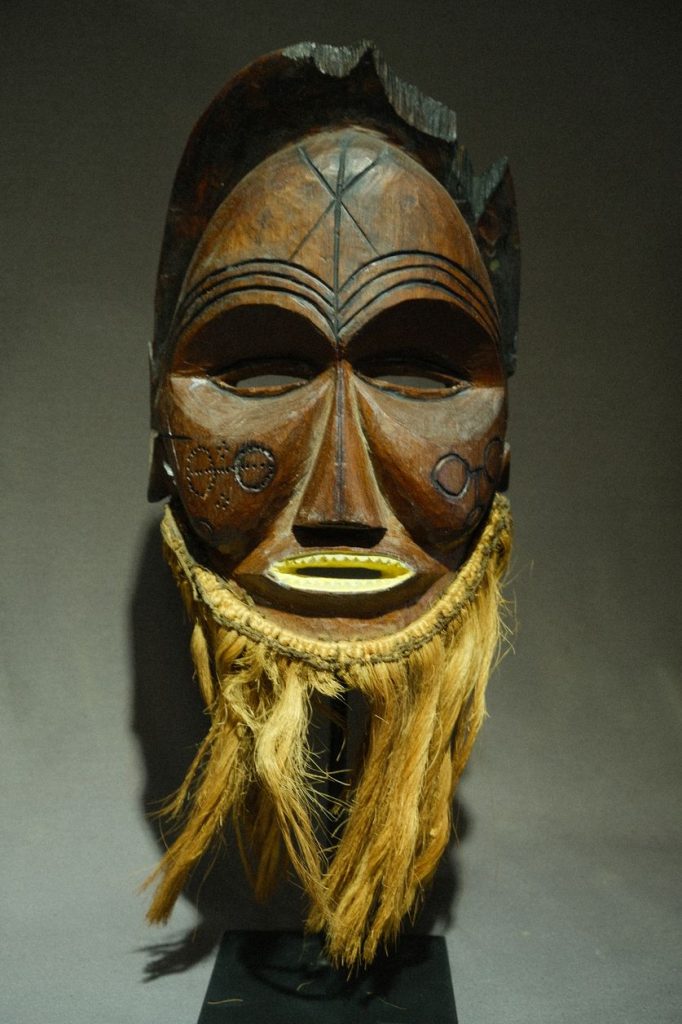
    One is a mask from Zambia, in the Mbunda style.
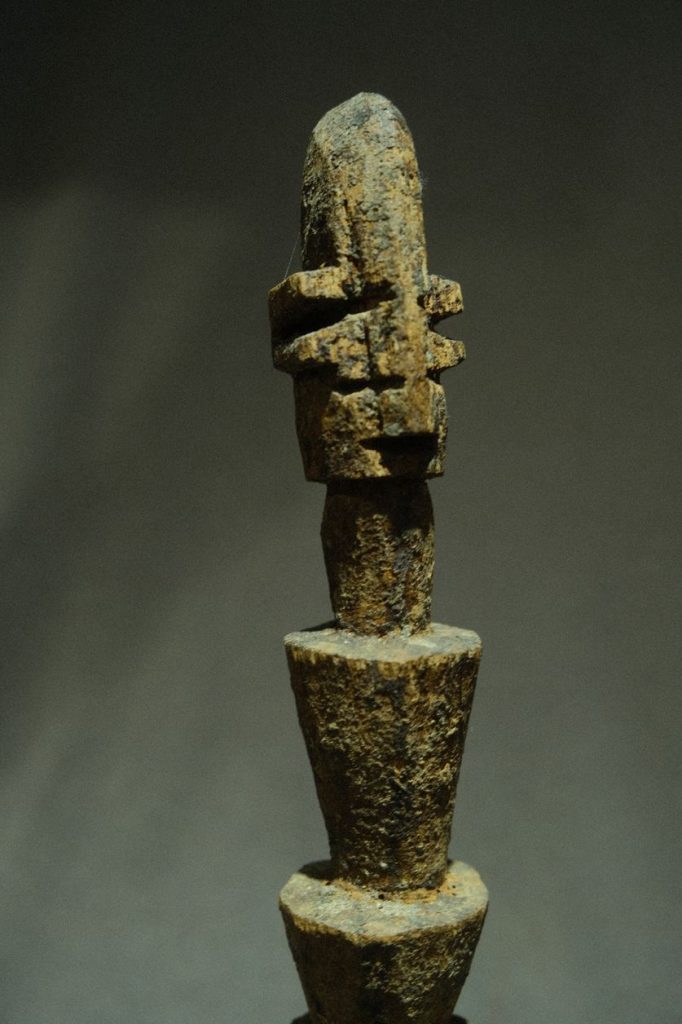
    The other, a small Lobi figure from Burkina Faso and Ivory Coast.

    The mask immediately takes control of the table.

    FXE49780African Art

    Its construction is unusually deliberate. The repeated lines above the eyes almost feel architectural, as if the face was assembled rather than carved. It reminded me of older Mbunda masks I had seen years ago — those powerful faces balancing authority and restraint.

    But what interested me most here was not the attribution.

    It was the tension.

    The mask feels calm, but not passive. The symmetry is controlled, though never rigid. Even the surface has settled in a convincing way, without the heavy-handed restoration or artificial aging one so often encounters today.

    You can view the mask here:
    Mask in the Mbunda Style — Zambia

    The small Lobi figure reacted differently.

    FXE49773African Art

    At first glance, it almost disappears next to the mask.

    But after some time, it became the piece I kept looking back at.

    The composition is extremely reduced — almost like a narrow ladder with a head placed on top. Very little is described. And yet the figure holds together remarkably well.

    There are traces of sacrificial material still attached to the surface, forming a dense encrusted patina that gives the object its physical weight and history.

    It is not a spectacular piece.

    Which may be exactly why it works.

    You can view the Lobi figure here:
    Lobi Figure — Burkina Faso / Ivory Coast

    After thirty years of handling African objects, I increasingly notice that the pieces which stay with me are not always the loudest ones.

    Often they are simply objects that continue to hold the eye after the first impression has passed.

    These two did.

    Dogon figure — Mali

    Mask in the Mbunda Style — Zambia


    Share and Enjoy !

    Shares
  • African Art Gallery — Step Inside the David Norden Cavern

    African Art Gallery — Step Inside the David Norden Cavern

    African Art Gallery — Step Inside the David Norden Cavern

    When people search for an African art gallery, they are often looking for beauty.
    But seasoned collectors are looking for something else entirely: truth, age, rarity, and presence.

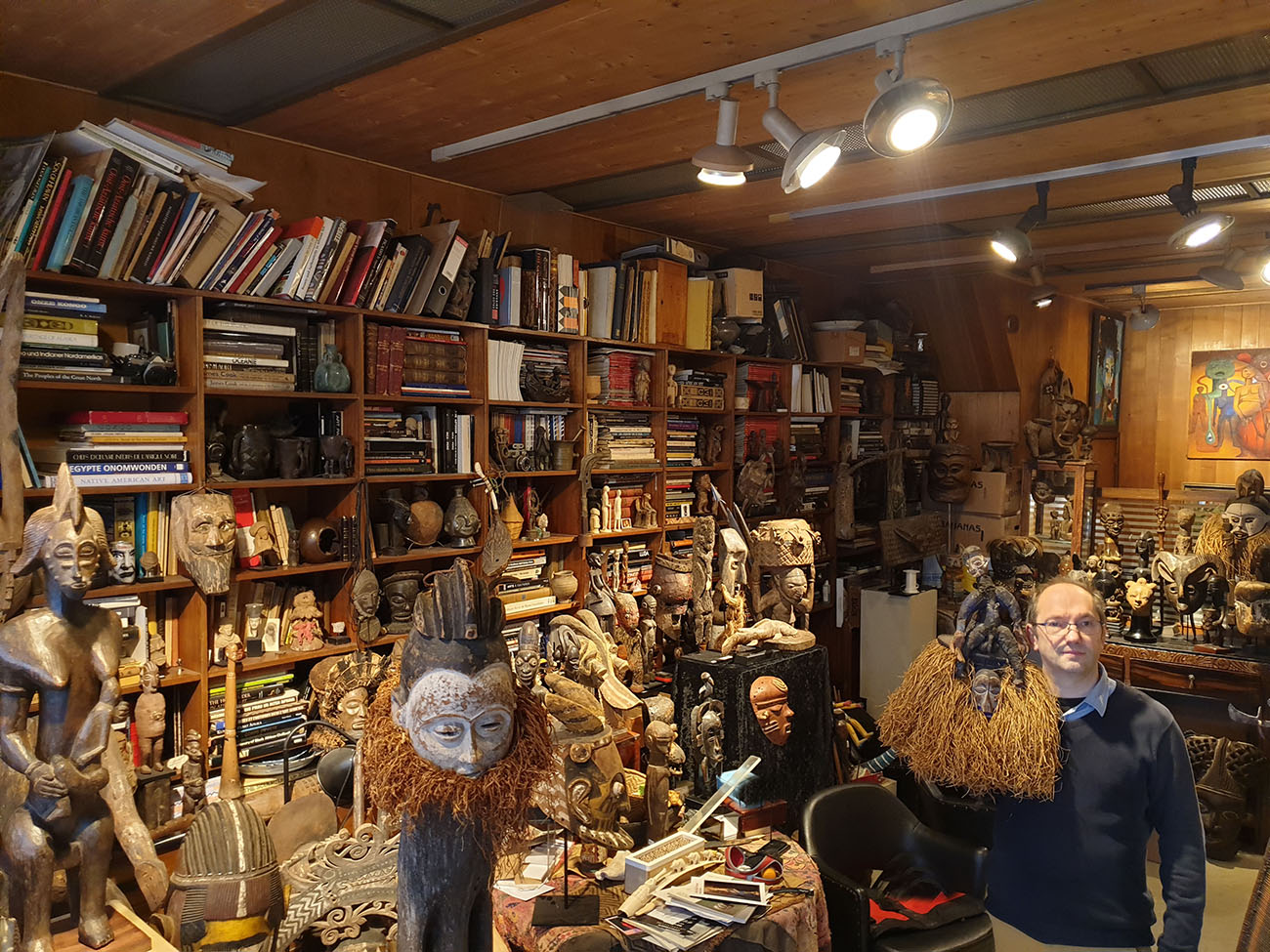
    The other day, something happened in my Antwerp gallery that made me smile.

    The director of the African Art department at the Musée du quai Branly in Paris walked in.
    He looked around, paused, and said:

    “This is amazing, it looks like the Alibaba cavern.”

    I told him:
    “No, this is the David Norden cavern.”

    And in a way, that says everything.

    The Difference Between Display and Selection

    Many galleries present African art.
    Few truly select it.

    An experienced eye does not start with aesthetics.
    It starts with questions:

    • Has this object lived a life before arriving here?
    • Does the surface show real use, or artificial aging?
    • Is the form consistent with known hands and traditions?
    • Does it hold presence when you stand in front of it?

    These are not things you can fake convincingly.
    And they are not things you can always explain quickly either.

    A Cavern, Not a Showroom

    A true African art gallery is not always minimal, white, and silent.

    Sometimes, it is layered.
    Dense.
    Full of discoveries.

    You don’t take it in at once—you enter it.
    It took me 33 years to build it.

    That is how I have always built my space:
    not as a showroom, but as a place where objects live together until the right collector finds them.

    Yes, it may feel like a cavern.
    But every piece in it has been chosen, one by one, over 33 years.

    Not only private collectors buy from me—museums do as well.

    For example, I sold a fine Mende statue, together with a related textile and a painting representing one of the first American female anthropologists working in the region in the 1950s, to the African Art gallery’s from Yale   https://artgallery.yale.edu/research-and-learning/curatorial-areas/african-art

    Discover David Norden’s African Art Gallery Collection

    If you want to explore a small selection, you can start here:
    👉 https://www.buyAfricanAntiques.com/shop

    What you see there is a carefully selected group of pieces.

    But the full collection is something else entirely.

    Many objects never make it online.
    They are part of a deeper selection—available to those who take the time to ask, to look, and to engage.

    If something speaks to you, the best way is simple:

    • Send me a message to ask for more information or arrange a wire transfer
    • Use the online shop to purchase directly
    • Or arrange an appointment to see it in Antwerp

    The gallery is often open without one—
    but the real experience is always better when there is time and attention.

    Buying African Art Is Buying an Eye

    Collectors sometimes think they are buying an object.
    But over time, they realize they are buying something else:

    They are buying someone else’s judgment, refined over decades.

    That is what turns an African art gallery into something worth returning to.

    Not just what is there—
    but how it got there.

    A Quiet Suggestion for Collectors

    If you are building a collection, don’t rush.

    Visit African art galleries.
    Visit museums.
    Buy books.

    Look, compare, and then return again.

    Over time, try to understand what you are really seeing:
    Is the object alive, or does it feel empty?
    Does it create a strong emotional response, or is it just a pale copy—made quickly, without depth?

    Ask yourself:
    Did the artist take the time to bring this piece to life?
    Or was it simply produced?

    Because in African art, the difference is not subtle.
    A true piece carries presence.
    A lesser one only imitates it.


    African Antiques From Antwerp — One Eye, 30 Years of Selection
    Not an inventory. A perspective. Collected slowly, chosen carefully, offered with certainty.

    Happy and curious,
    David Norden

    Share and Enjoy !

    Shares