
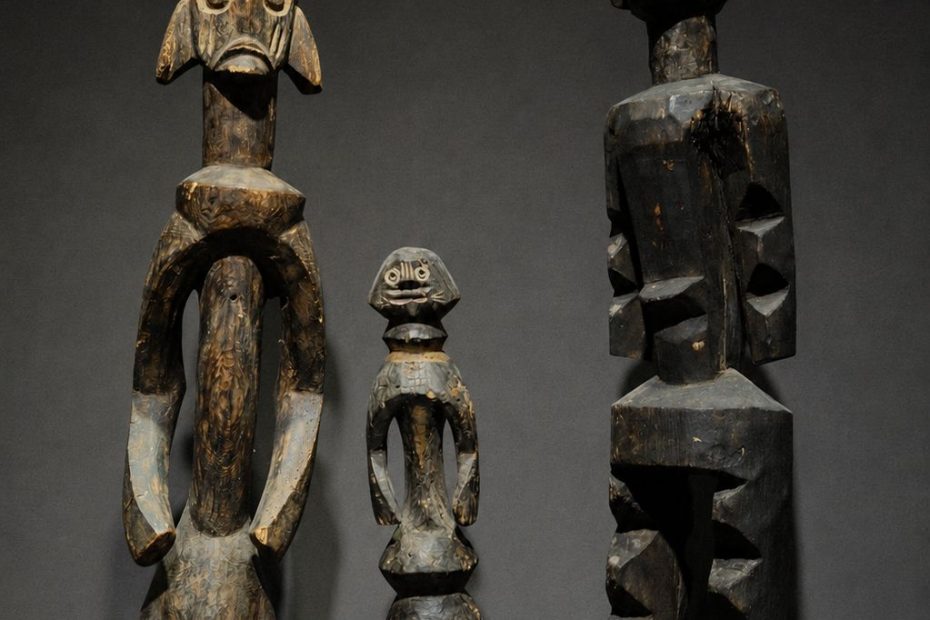
Not long ago, a client entered my gallery and paused in front of a small group of figures from northeastern Nigeria. After looking at them for a while, he smiled and said:
“They remind me of Japanese robots.”
It was not the first time I had heard such a remark. Over the years, visitors have compared certain Mumuye figures to robots, science-fiction characters, and occasionally even scenes from Star Wars. Looking at their elongated bodies, angular forms and almost articulated limbs, one understands why.
Yet perhaps the opposite is closer to the truth. Our robots and imaginary worlds sometimes look like African sculpture.
African art is not merely an ethnographic curiosity. Its forms influenced twentieth-century modernism and continue to resonate in contemporary visual culture. The same qualities that fascinated Picasso and Modigliani — abstraction, geometry and expressive power — still speak to us today through cinema, science fiction and design.
In 1984, a journalist writing for The New York Times suggested that one celebrated Mumuye figure may have inspired the helmeted head of Darth Vader. George Lucas himself later explained that the famous helmet was based on Japanese samurai armour, but the comparison remains interesting. Even if there was no direct influence, the visual similarities are striking.
The Mumuye and Their Sculptures
The Mumuye are an agricultural people living in the rocky hills south of the Benue River in northeastern Nigeria. Comprising several related groups sharing a common language and traditions, they remained relatively isolated until the middle of the twentieth century.
Their sculptures were not created as decorative objects. Most were associated with medicine, divination and protection. They belonged to healers, diviners, rainmakers, blacksmiths and other influential individuals. Some were kept in sanctuaries known as tsafi, where initiation ceremonies also took place.
Anthropologist Mette Bovin recorded that certain figures, known as janari — “figures that speak” — could be used to restore harmony, ward off epidemics, identify thieves and help maintain social order. A single sculpture might serve different purposes during its existence, making it difficult to assign one fixed function to a particular figure.
One of the more intriguing interpretations concerns the angular arms and stepped zigzag legs found on many examples. According to Bovin, these forms may symbolize lightning and the swift action of spiritual forces. The sculptures were conceived as vigilant beings, ready to intervene on behalf of their owners. White kaolin circles around the eyes emphasized their ability to perceive what ordinary people could not.
Why Collectors Continue to Appreciate Mumuye Sculpture
When Western collectors first encountered Mumuye sculpture in the 1950s and 1960s, they were struck by its originality. Unlike many sculptural traditions with strongly codified forms, Mumuye artists explored an astonishing variety of proportions and compositions.
Some figures are compact and powerful, others slender and elongated. Helmet-like coiffures alternate with openwork ears. No two figures are exactly alike. What collectors have long appreciated is this sense of freedom and individuality.
More than half a century after their discovery by Western collectors, Mumuye figures remain among the most distinctive sculptural traditions of Africa. Their originality still feels fresh.
An Experienced Eye
When visitors tell me that a Mumuye figure reminds them of a robot, I always find the comparison interesting.
Not because these sculptors were anticipating science fiction, but because our visual world has changed. During the twentieth century, artists, designers and filmmakers became increasingly comfortable with abstraction and simplified forms. The qualities that attracted Picasso and Modigliani to African sculpture are now familiar to all of us.
Perhaps that explains why a visitor entering an antique shop in Antwerp in 2026 can look at a sculpture made in northeastern Nigeria generations ago and think of Japanese robots or Star Wars.
For me, such reactions are another reminder that African sculpture deserves to be approached not only as ethnographic material, but also as art.
Three Close Encounters
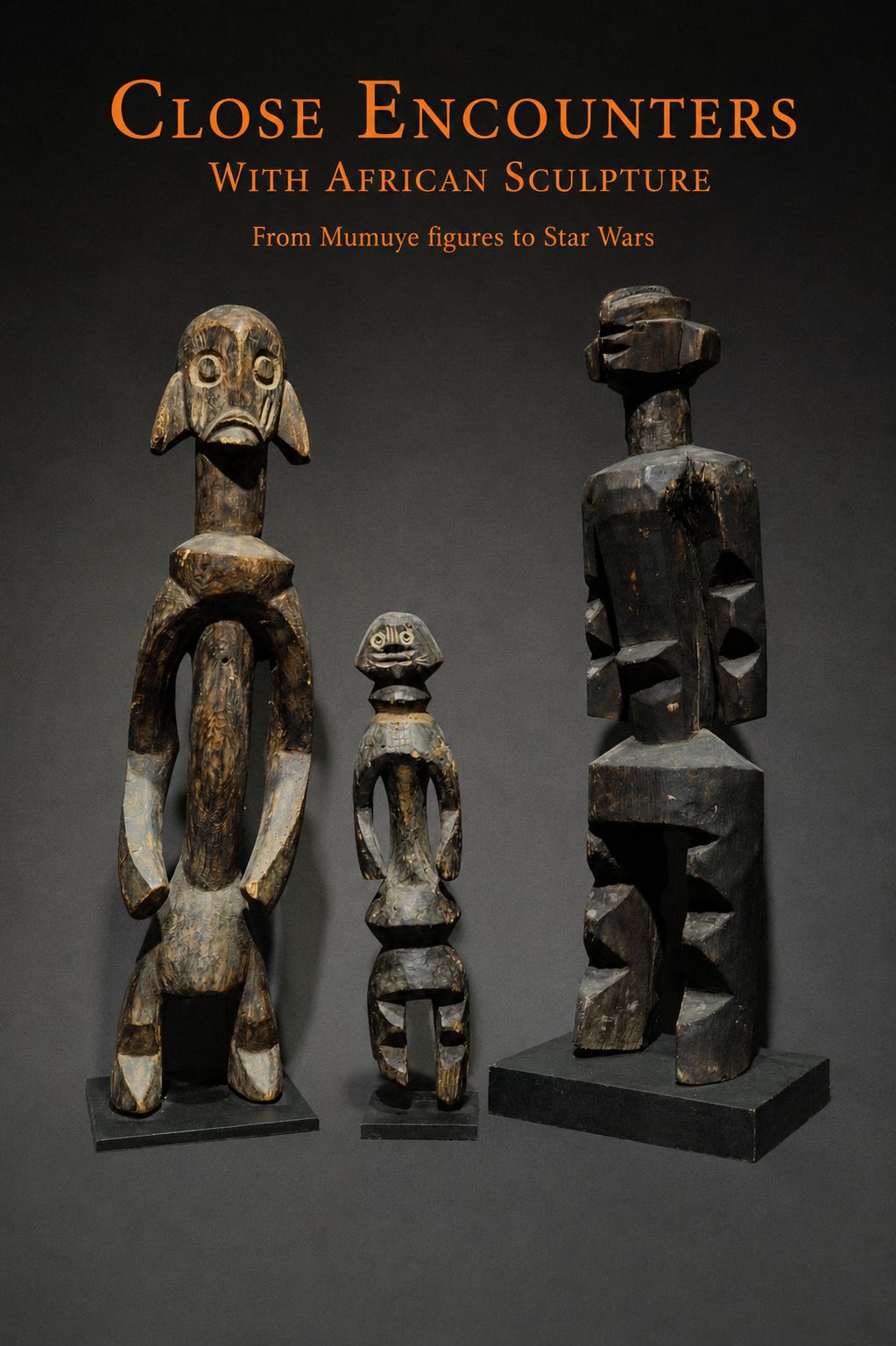
The three figures illustrated below have been living together in my gallery for some time. Seen side by side, their personalities become immediately apparent.
The figure on the left, with its large circular eyes and elongated body, possesses a quiet elegance and simplicity. The smaller central figure has a more playful character, while the larger figure on the right — probably Montol rather than Mumuye — has a more architectural quality, with powerful geometric volumes and deeply carved forms.
Looking closely at their faces, one begins to understand why visitors occasionally think of robots or science-fiction characters. Yet these works were created by artists from northeastern Nigeria generations before the age of cinema.
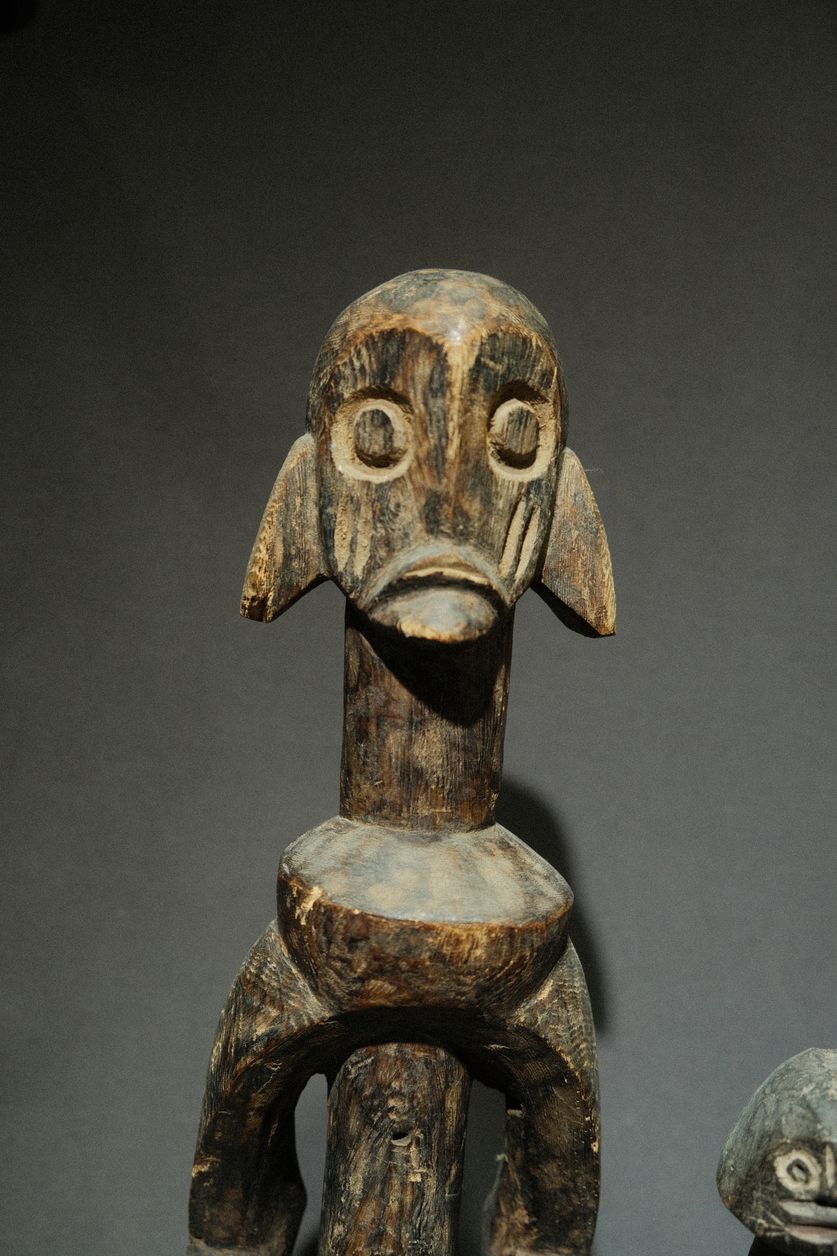
Mumuye figure, Nigeria
Height: 45 cm
Price: €1,450
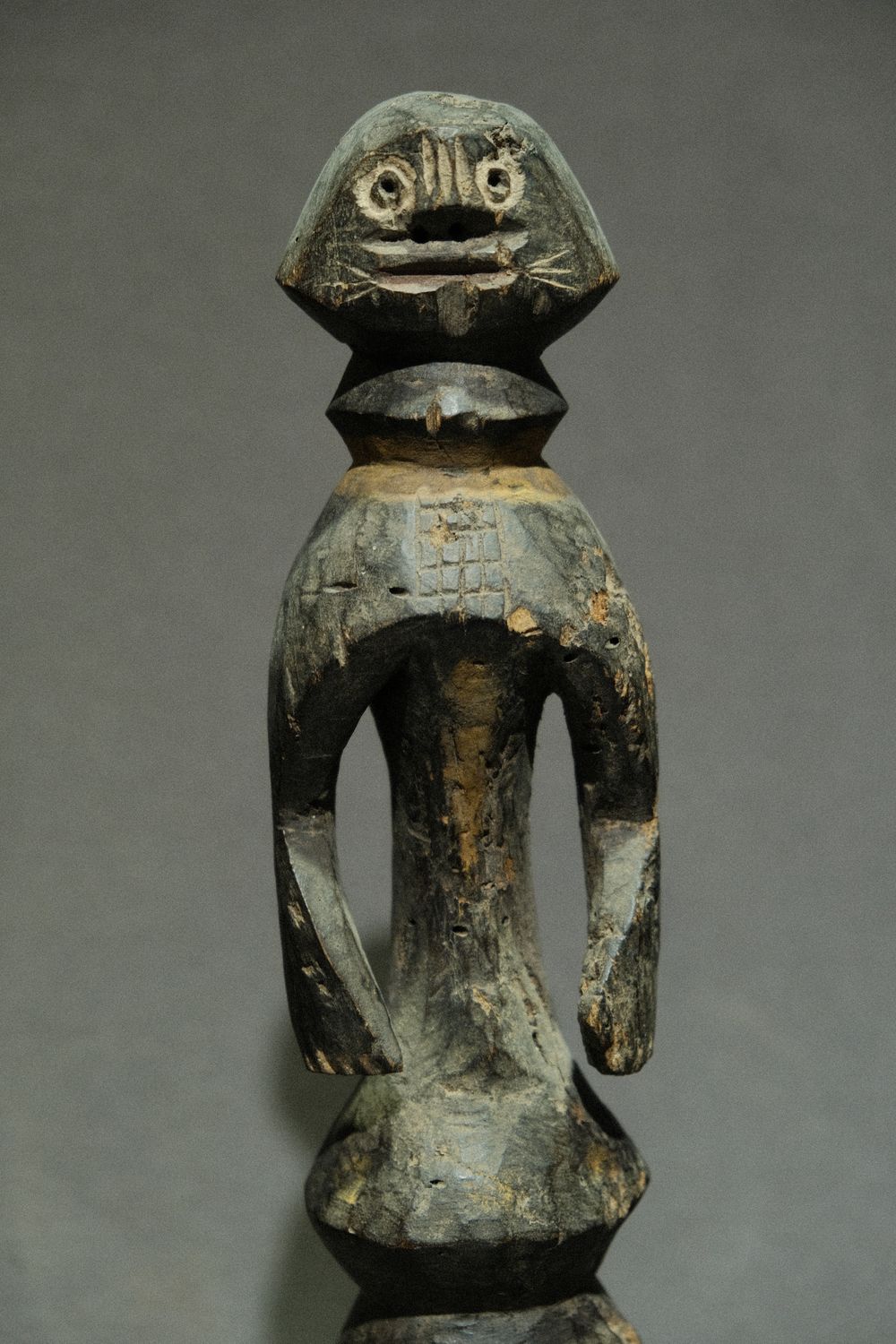
Mumuye figure, Nigeria
Height: 34 cm
Price: €950
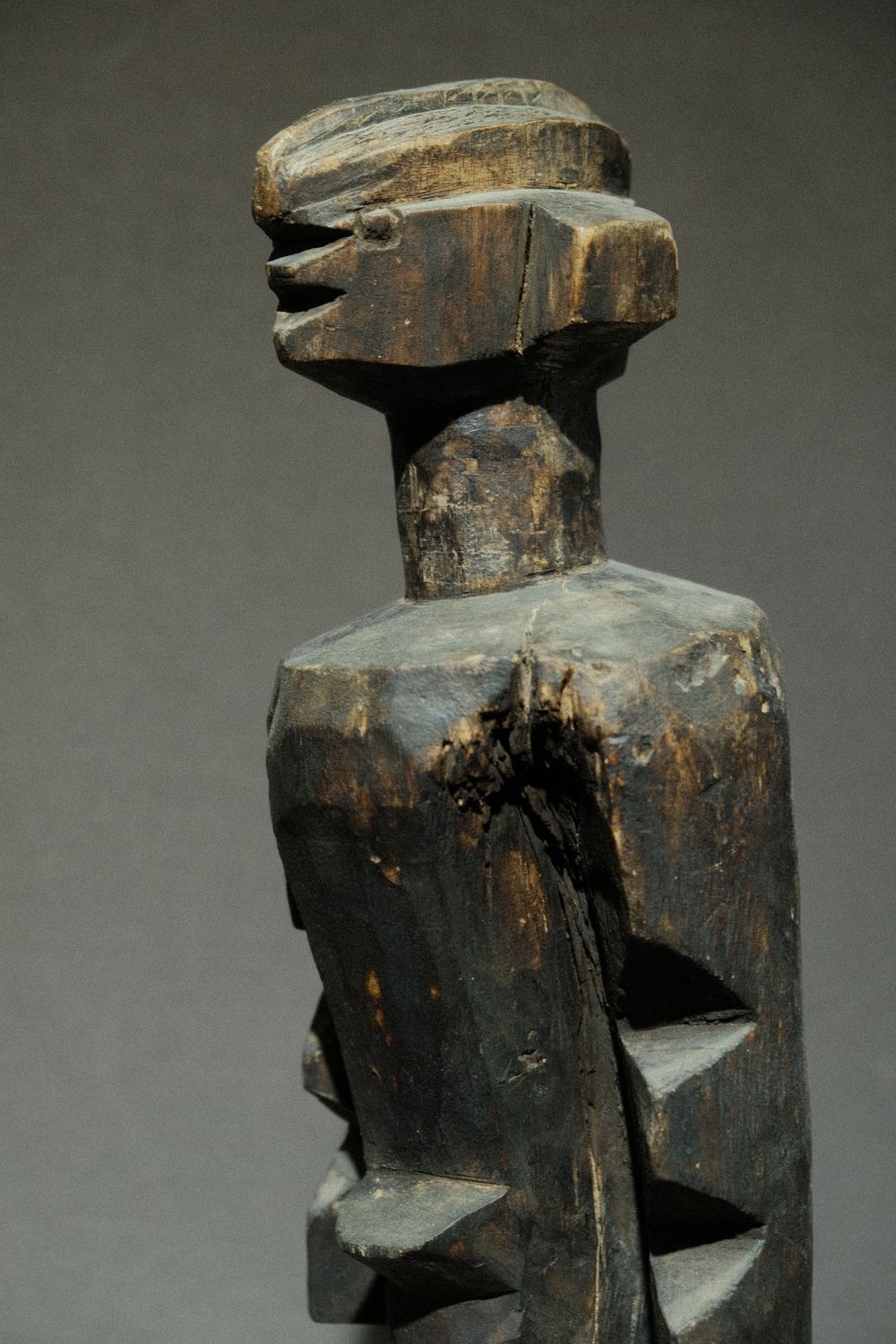
Montol figure, Nigeria (?)
Height: 54 cm
Price: €1,950
Happy and curious,
David Norden
African Antiques From Antwerp — One Eye, 30 Years of Selection
For collectors building a serious collection: buy fewer, but better.