Tag: David Norden

  • How to Collect African Art with an Experienced Eye – David Norden

    How to Collect African Art with an Experienced Eye – David Norden

    Welcome To the African Art World.

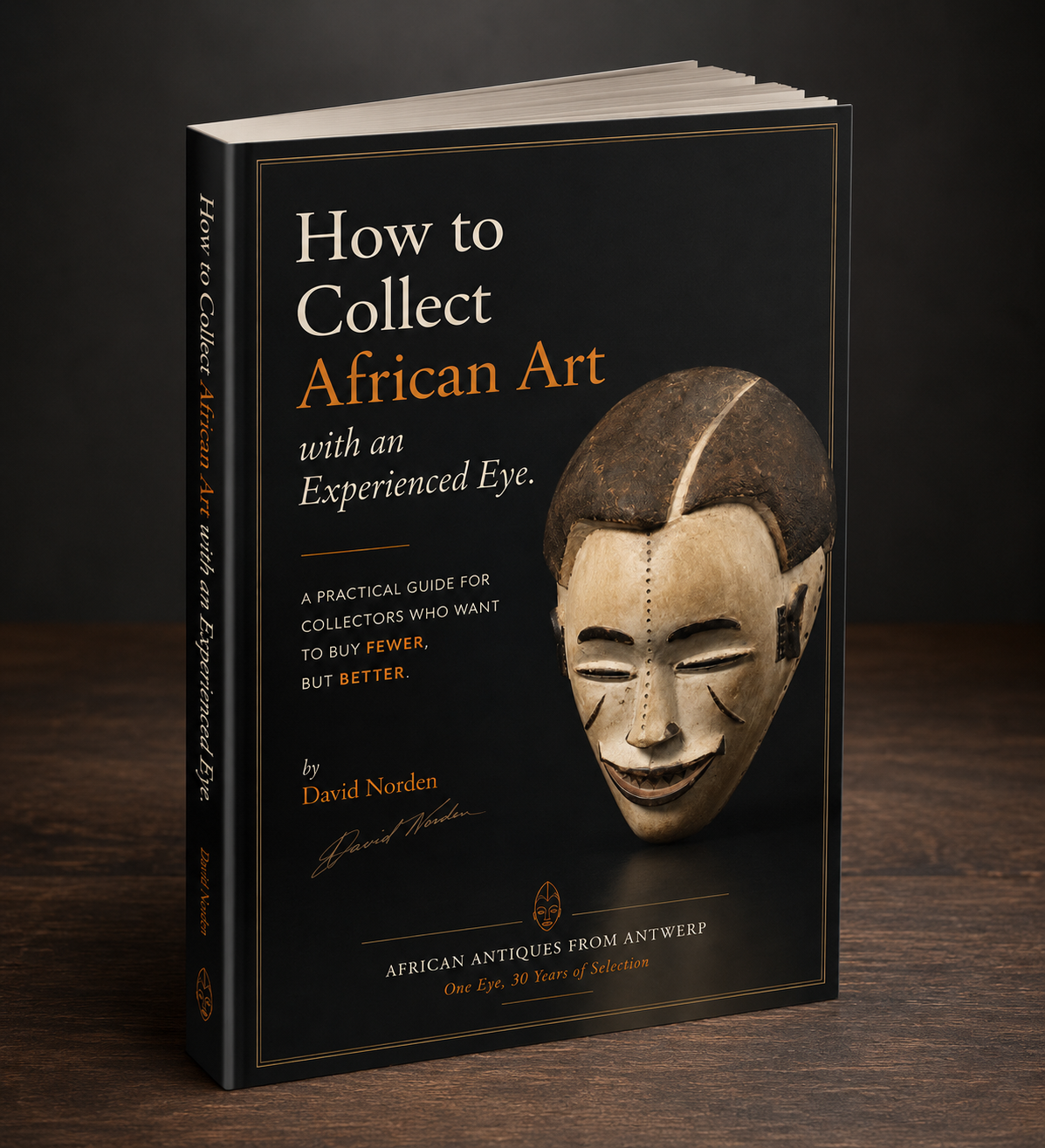
    How to collect African Art with an experienced Eye

    Most people begin collecting African art by asking the wrong questions.

    They ask about the tribe, the age, the provenance, or the price. Those things certainly matter, but they are not where true connoisseurship begins.

    The first question should always be: Is this a good piece of sculpture?

    After more than thirty years of handling thousands of African objects, visiting museums across Europe, studying important collections, and making both good and bad buying decisions, I have learned that exceptional works reveal themselves in ways that photographs, labels, and certificates alone never can. Quality lives in proportion, balance, surface, craftsmanship, expression, and the subtle presence that only the finest objects possess.

    An experienced eye is not a gift. It is something that can be developed through careful observation, comparison, and patience.

    That is the purpose of this experienced eye book.

    Rather than presenting a catalogue of ethnic groups or historical facts, this guide focuses on how to see. You will learn practical methods for judging craftsmanship, recognizing authentic age and patina, understanding what separates an ordinary object from an exceptional one, and avoiding many of the mistakes that beginning collectors often make.

    One of the most valuable ways to train your eye is by studying the very best examples. Throughout this guide we therefore examine masterpieces from major museum collections, including remarkable Fang, Baule, Djennenké, Kota, Bangwa, Kongo, Songye, and Yoruba sculptures. These objects are not included simply because they are famous, but because they demonstrate the qualities that collectors should learn to recognize wherever they encounter African art.

    Whether you are considering your very first mask or building a serious collection, the principles remain the same. The goal is not to buy more objects, but to buy better ones—pieces that continue to reward careful study for years to come.

    This is an Early Edition of How to Collect African Art with an Experienced Eye. At present it contains 45 illustrated pages, but it is intended to grow into a much more comprehensive guide. New chapters, museum case studies, photographs, and collecting insights will be added regularly as the project develops. As the content expands, the retail price will gradually increase, while everyone who already owns a copy will receive all future updates free of charge.

    My hope is that this book becomes more than an illustrated collector’s guide. I hope it helps you cultivate the most valuable tool any collector can possess: an experienced eye.

    David Norden

    African Art Dealer, Antwerp

    Since 1992
    How to collect African Art with an experienced Eye

    Share and Enjoy !

    Shares
  • The Mask That Smiled Back

    The Mask That Smiled Back

    There is an old story I once heard from a collector who spent years traveling through mountain villages between Nepal and Tibet.

    He told me that certain masks should never be looked at too quickly.

    “At first,” he said, “they are only wood.”

    But then, after some time, the face begins to change.

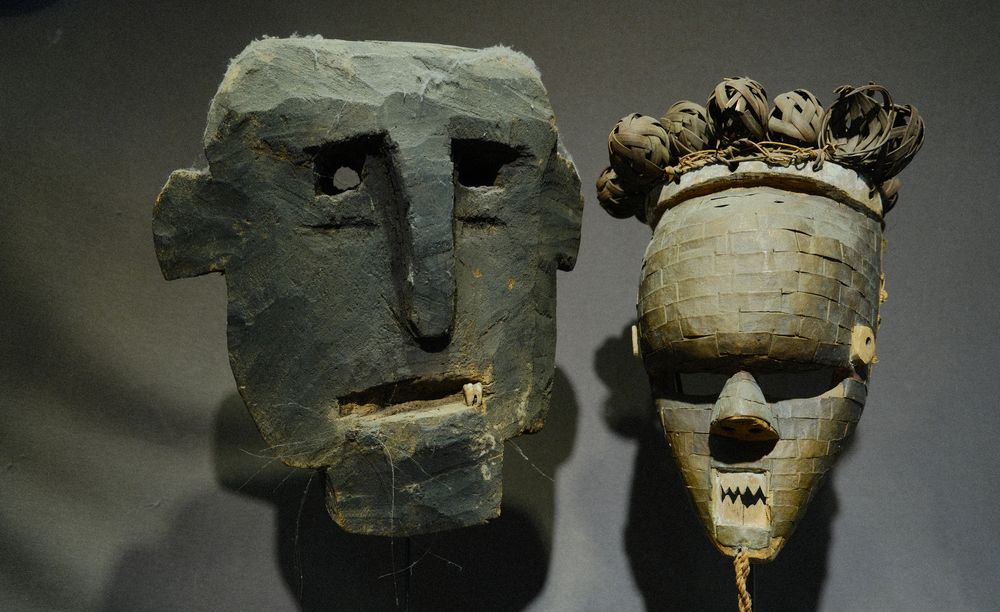
    One evening, while arranging objects in my gallery, I placed two masks beside each other almost accidentally. A Nepalese shamanic mask and a Salampasu mask from Congo.

    Different continents. Different beliefs. Different peoples.

    And yet, the room suddenly became strangely quiet.

    The Nepalese mask was the first to emerge from the darkness. Its face was dry and ancient, with deep shadows around the eyes and mouth. At first glance, it seemed almost humorous — a crooked grin, exaggerated teeth, a theatrical expression.

    Then I noticed the tooth.

    Not carved.

    Human.

    The collector’s story returned immediately.

    In Himalayan ritual traditions, masks were never merely decorations. They were instruments used by shamans during ceremonies of healing, protection, and exorcism. Some antique examples even incorporated real human or animal teeth into the carving itself, strengthening the presence of the spirit inhabiting the mask.

    The mouth was not symbolic.

    It was active.

    FXE41546African Masks

    Nearby, the Salampasu mask watched silently.

    Its mouth was entirely different — rectangular, aggressive, armed with rows of sharpened teeth beneath a massive domed forehead covered in metal strips. The woven beard ended in a tightly braided sphere like a final punctuation mark.

    The Salampasu people of Congo were known as hunters and warriors. Their masks belonged to initiation societies reserved for men, appearing during ceremonies marking passage into adulthood. Among the Salampasu, the sharpening of human teeth formed part of identity itself. The body became an extension of ritual force, much like the masks they carved.

    And suddenly the two objects no longer seemed far apart.

    One carried an actual human tooth.
    The other transformed human teeth into sculpture.

    Salampasu teeth

    Both understood something ancient:

    The mouth is power.

    The mouth speaks. Threatens. Invokes. Breathes life into chants and names. It is where invisible force leaves the body and enters the world.

    Perhaps this is why ritual masks remain so compelling even after leaving their original cultures. Long after the ceremonies disappear, something still survives inside the sculpture itself.

    Not literally perhaps.

    But enough to make us look twice.

    Later that evening, before turning off the lights, I glanced once more toward the wall.

    For a brief moment, the Nepalese mask almost appeared to smile.

    Happy and curious,

    David Norden

    Salampasu Mukinka Mask — D.R. Congo

    Raw Shamanic Himalayan Mask with Human Tooth


    Share and Enjoy !

    Shares
  • Two African Pieces on the Table

    Two African Pieces on the Table

    This morning, before opening the shop, I placed these two next to each other.

    Not because they belong to the same tradition. They clearly do not.

    But sometimes objects begin to speak differently when they share the same space for a while.

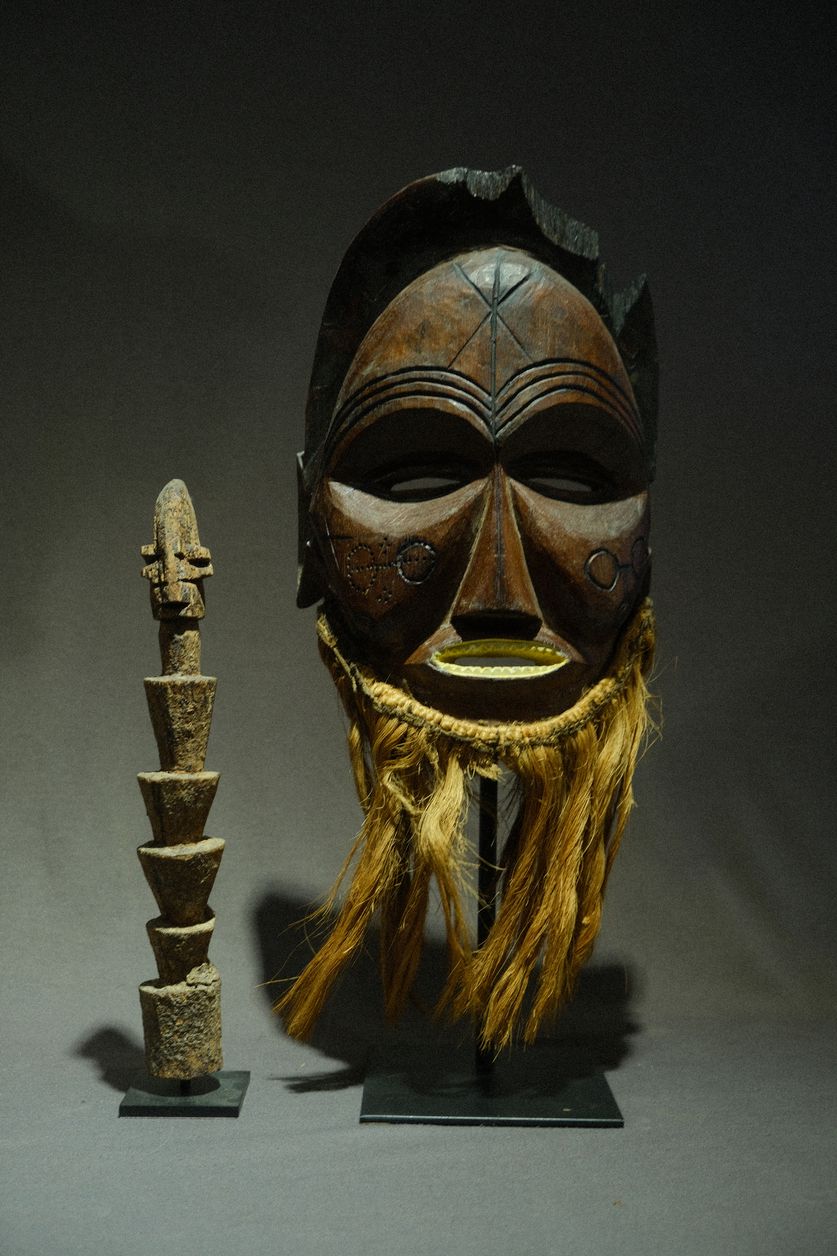
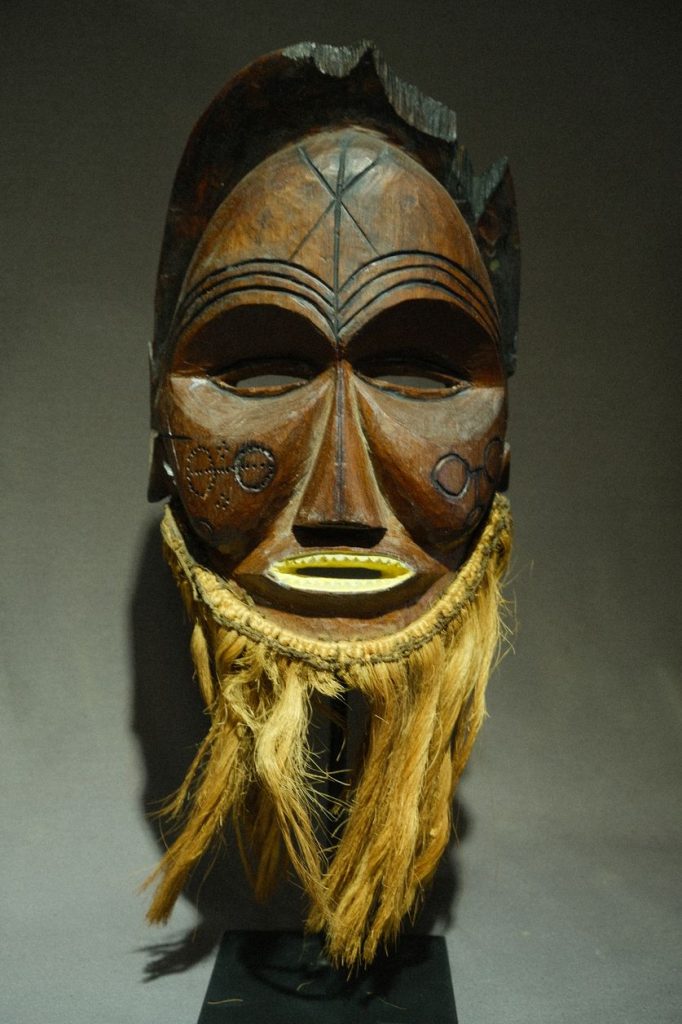
    One is a mask from Zambia, in the Mbunda style.
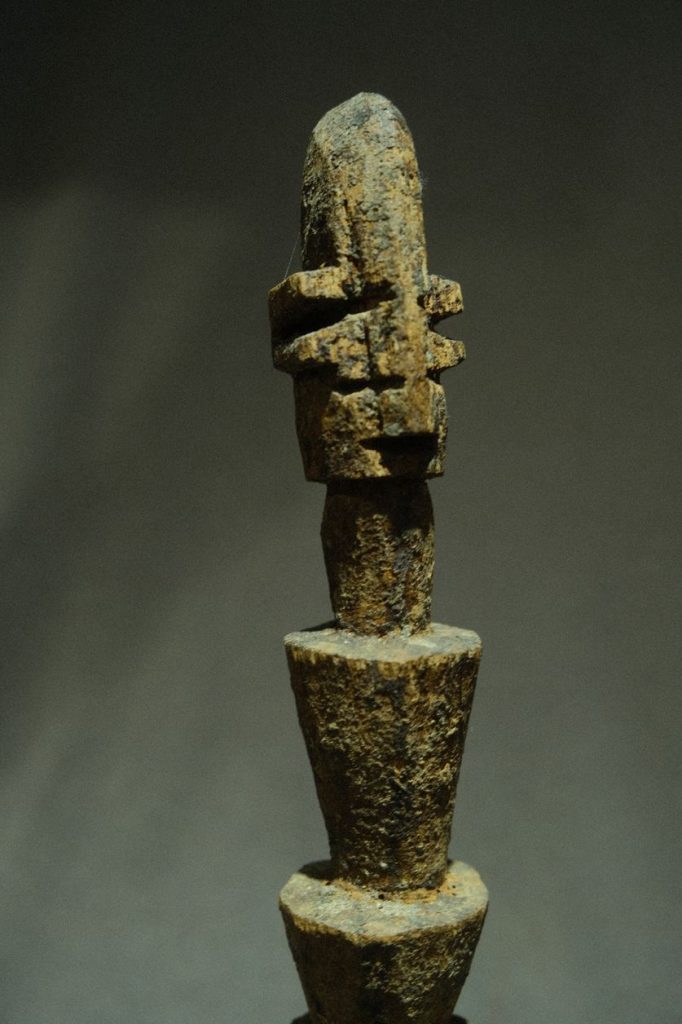
    The other, a small Lobi figure from Burkina Faso and Ivory Coast.

    The mask immediately takes control of the table.

    FXE49780African Art

    Its construction is unusually deliberate. The repeated lines above the eyes almost feel architectural, as if the face was assembled rather than carved. It reminded me of older Mbunda masks I had seen years ago — those powerful faces balancing authority and restraint.

    But what interested me most here was not the attribution.

    It was the tension.

    The mask feels calm, but not passive. The symmetry is controlled, though never rigid. Even the surface has settled in a convincing way, without the heavy-handed restoration or artificial aging one so often encounters today.

    You can view the mask here:
    Mask in the Mbunda Style — Zambia

    The small Lobi figure reacted differently.

    FXE49773African Art

    At first glance, it almost disappears next to the mask.

    But after some time, it became the piece I kept looking back at.

    The composition is extremely reduced — almost like a narrow ladder with a head placed on top. Very little is described. And yet the figure holds together remarkably well.

    There are traces of sacrificial material still attached to the surface, forming a dense encrusted patina that gives the object its physical weight and history.

    It is not a spectacular piece.

    Which may be exactly why it works.

    You can view the Lobi figure here:
    Lobi Figure — Burkina Faso / Ivory Coast

    After thirty years of handling African objects, I increasingly notice that the pieces which stay with me are not always the loudest ones.

    Often they are simply objects that continue to hold the eye after the first impression has passed.

    These two did.

    Dogon figure — Mali

    Mask in the Mbunda Style — Zambia


    Share and Enjoy !

    Shares
  • Collecting African Art Without Regret — Even in a Changing Market

    Collecting African Art Without Regret — Even in a Changing Market

    Hi  African Art collector ,

    Some dealers would like you to believe that all African art is rare and priceless.
    But we should remember that this is the art of an entire continent, home to hundreds of cultures and carving traditions — meaning there is truly something meaningful to collect at every level.

    While many of the pieces I offer are valued in the thousands of euros, today I would like to focus on a selection of small, beautiful, and affordable African antiques — all priced below €1000 — which I have personally selected.

    None of these objects were collected by me in Africa — in fact, I have never been to Africa. As I often say: “You don’t need to go to the Middle Ages to collect medieval art.”
    What matters is experience, knowledge, and careful selection.

    Over the years, many clients have become friends. I try to guide collectors in the same way I would advise someone close to me — helping them build a collection they will enjoy living with for years.

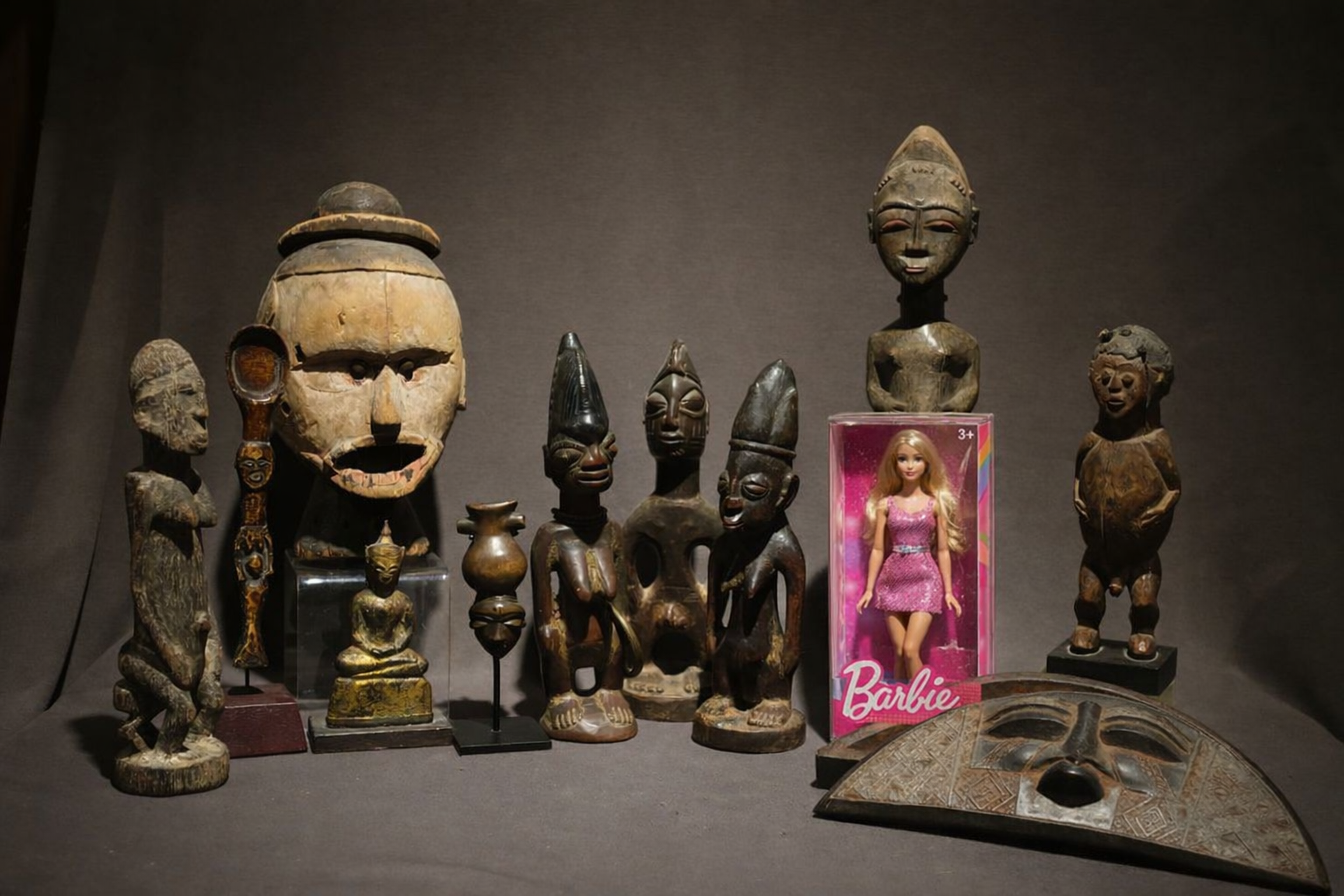
    A few years ago, a long-time client told me — half joking, half serious — that with prices rising so quickly, he might stop collecting African art altogether and start collecting Barbie dolls instead.

    At the time, the market felt overheated. Everything looked expensive. Everyone sounded confident.

    What many collectors were really afraid of wasn’t price — it was getting it wrong.

    Today, with the benefit of hindsight, something has become very clear:
    not all African art will rise, and not all African art will fall.
    Only the best pieces remain convincing, in any market.

    A strong collection is not built by buying what is cheap, but by choosing objects that create an emotional response — because you will always forget the price you paid, while the quality you chose remains.

    How these pieces are chosen

    In today’s art market, many objects pass through layers of buyers, consultants, and assistants before reaching a gallery.

    My business works differently.

    For more than 30 years, I have personally selected every object I offer. No junior buyers, no assistants sent out to source material, no anonymous purchasing trips. If a piece is here, it is because I chose it myself.

    And that matters.

    African art is not decorative production. These objects were used, handled, repaired, and lived with. Recognizing the difference between a powerful authentic object and a clever imitation takes experience — and mistakes learned from decades of looking.

    This applies just as much to an affordable object as to a major piece.

    Why affordable doesn’t mean ordinary

    Every object in my shop follows the same standards, regardless of price. Each piece comes with:

    • A confirmed tribal origin, provenance, and cultural background explaining its original use
    • Clear explanations of the traditions surrounding the object, and whenever possible historical photographs or maps
    • Over 30 years of experience behind each selection — objects must carry emotion and genuine carving skill, because an object only has a soul when it was made for a purpose, not to please passing tourists
    • All packing and shipping handled in-house, allowing me to personally ensure safe delivery

    Collector’s note

    You will always forget the price you paid — but your collection will always reflect the quality you chose.

    Below you’ll find this week’s affordable discoveries: honest objects with history, character, and craftsmanship — ready to quietly earn their place in a collection.

    See the Affordable African Art selection from this week.

    ChatGPT Image 8 feb 2026, 14 58

    Warm regards,
    David Norden
    African Antiques — Antwerp
    www.buyAfricanAntiques.com

    A Seated Dogon Figure -Mali

    Lega Rungu Bone Spoon

    Ekoi (Ejagham) Igbo/Idoma Ancestor Head – Upper Cross River Region

    Thai Gilt Bronze Seated Buddha, 19th Century (13 cm)

    Wooden Whistle with Miniature Pende Mask

    Yoruba Igbomina Ere Ibeji Female Twin Figure – Ila-Orangun, Nigeria

    Yoruba Ere Ibeji Male Twin Figure – Oyo Region Nigeria – 1930s – 26 cm

    Yoruba Ere Ibeji Female Twin Figure – Nigeria – Ritual Sculpture – 25 cm

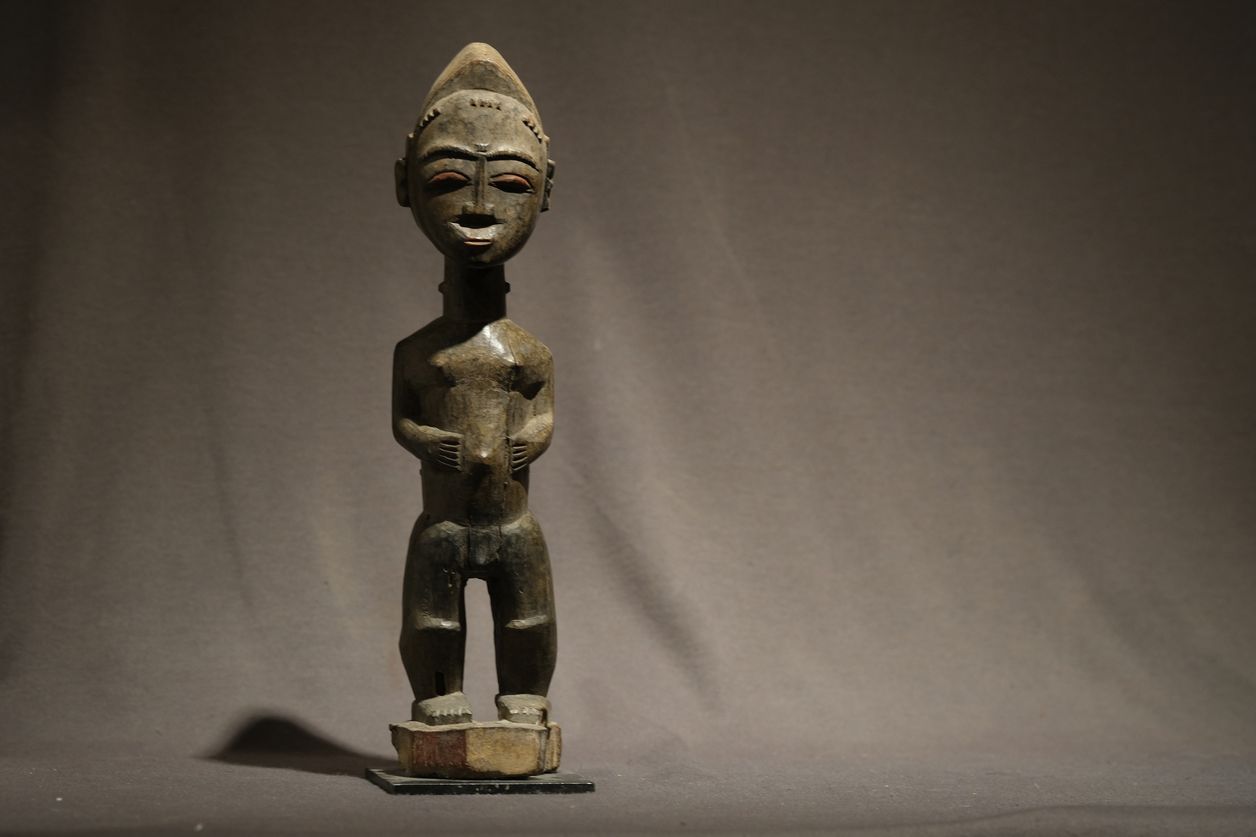
    Baule Standing Figure — 34 cm

    Ancestor Figure — Kom–Oku Region, Western Cameroon Grassfields — ca. 1930

    Kuba / Shoowa Box with Expressive Face — DR Congo

    Wishing you a happy and curious Valentine,

    David Norden

    African Antiques From Antwerp — One Eye, 30 Years of Selection
    Personally chosen with curiosity and experience — so you can collect with confidence, not guesswork.

    Share and Enjoy !

    Shares