
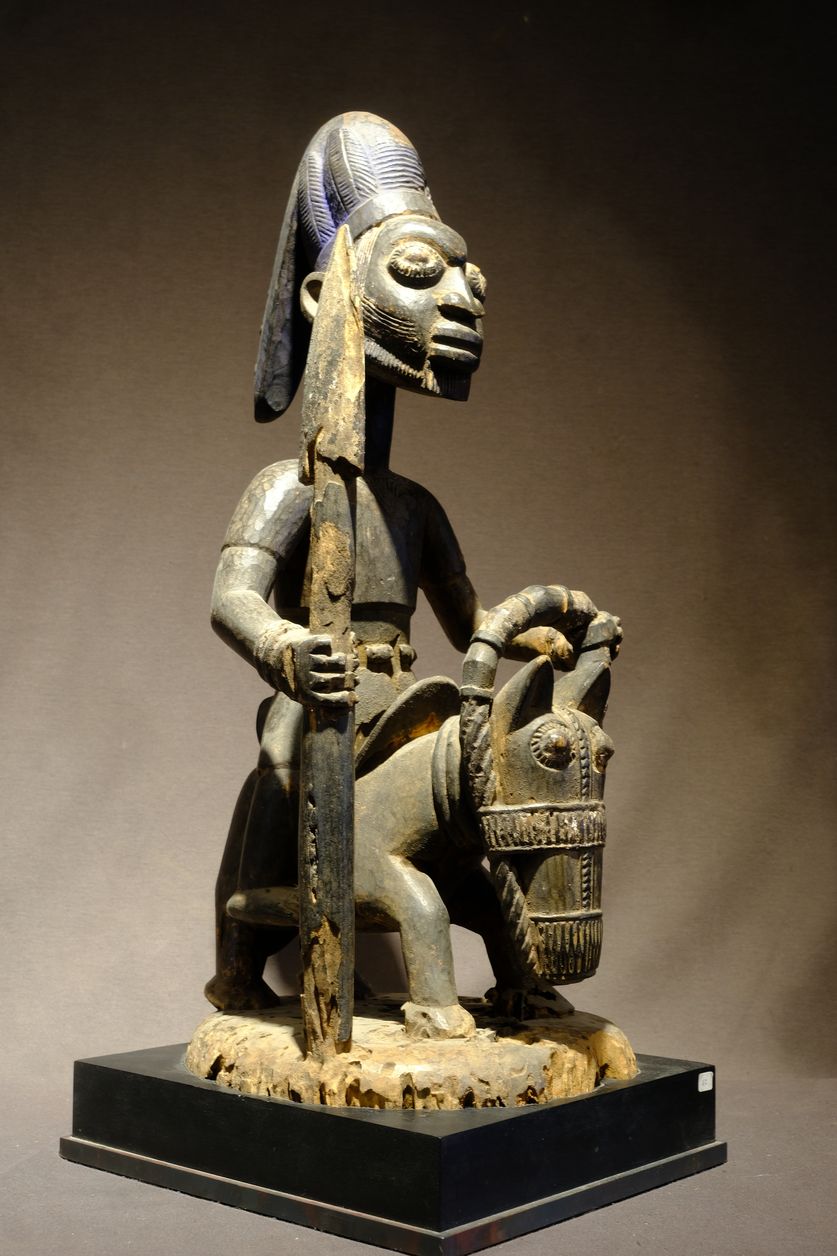
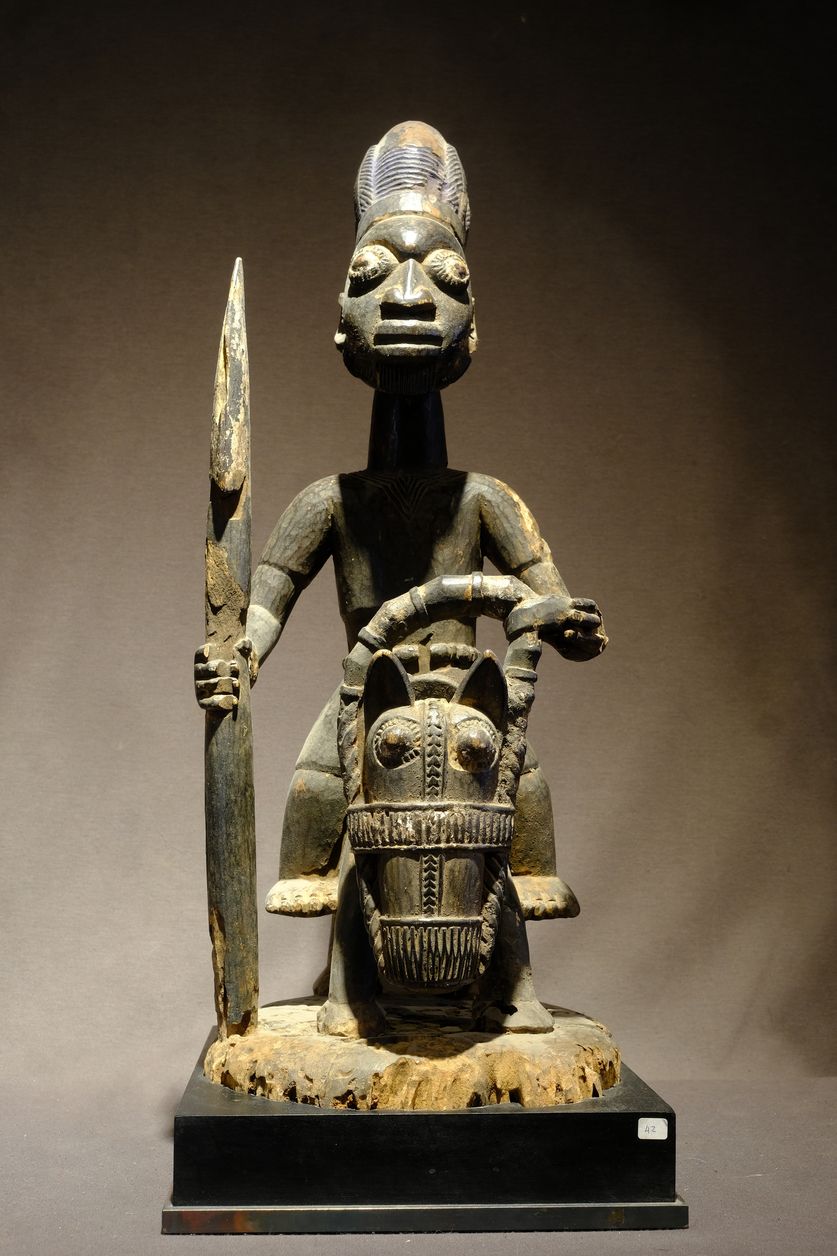
Yoruba Horseman (Elesin), Ekiti Master Tradition
Condition
Overall good condition for a sculpture of this age.
-
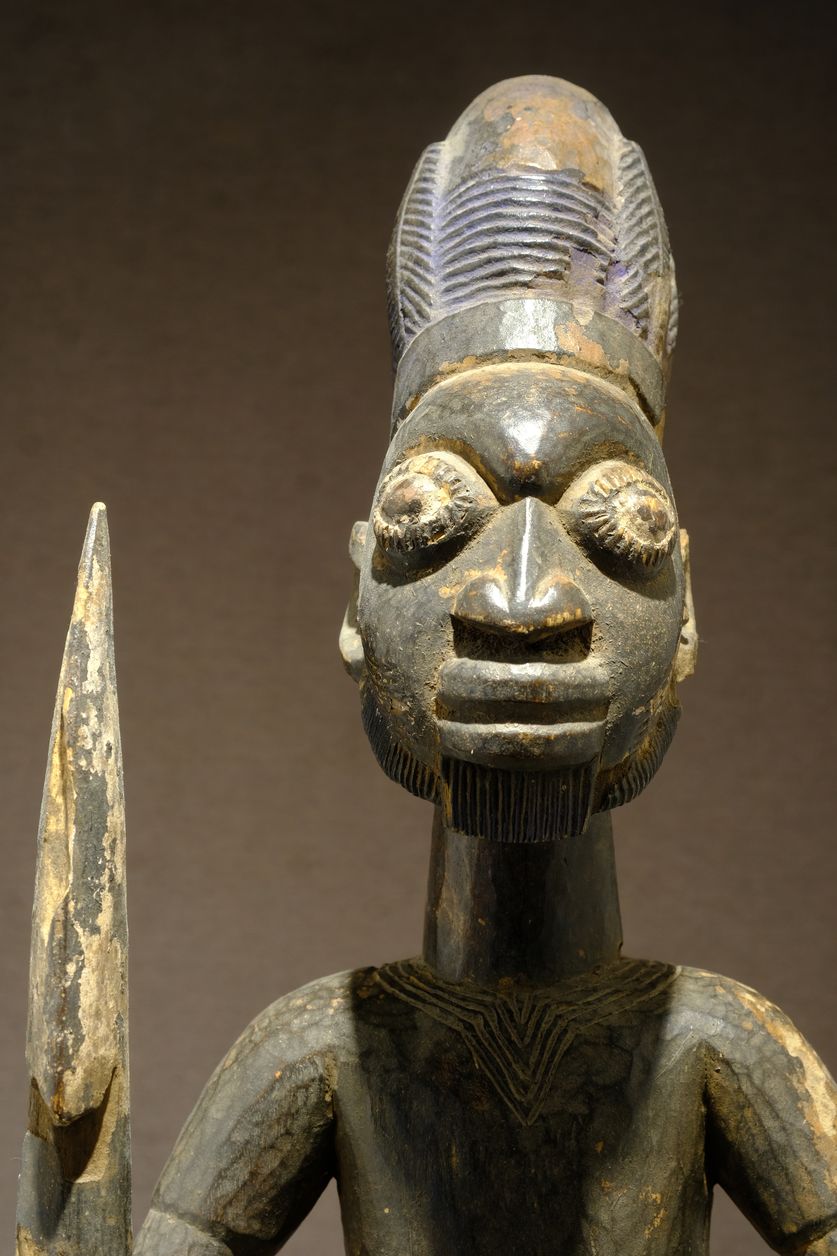
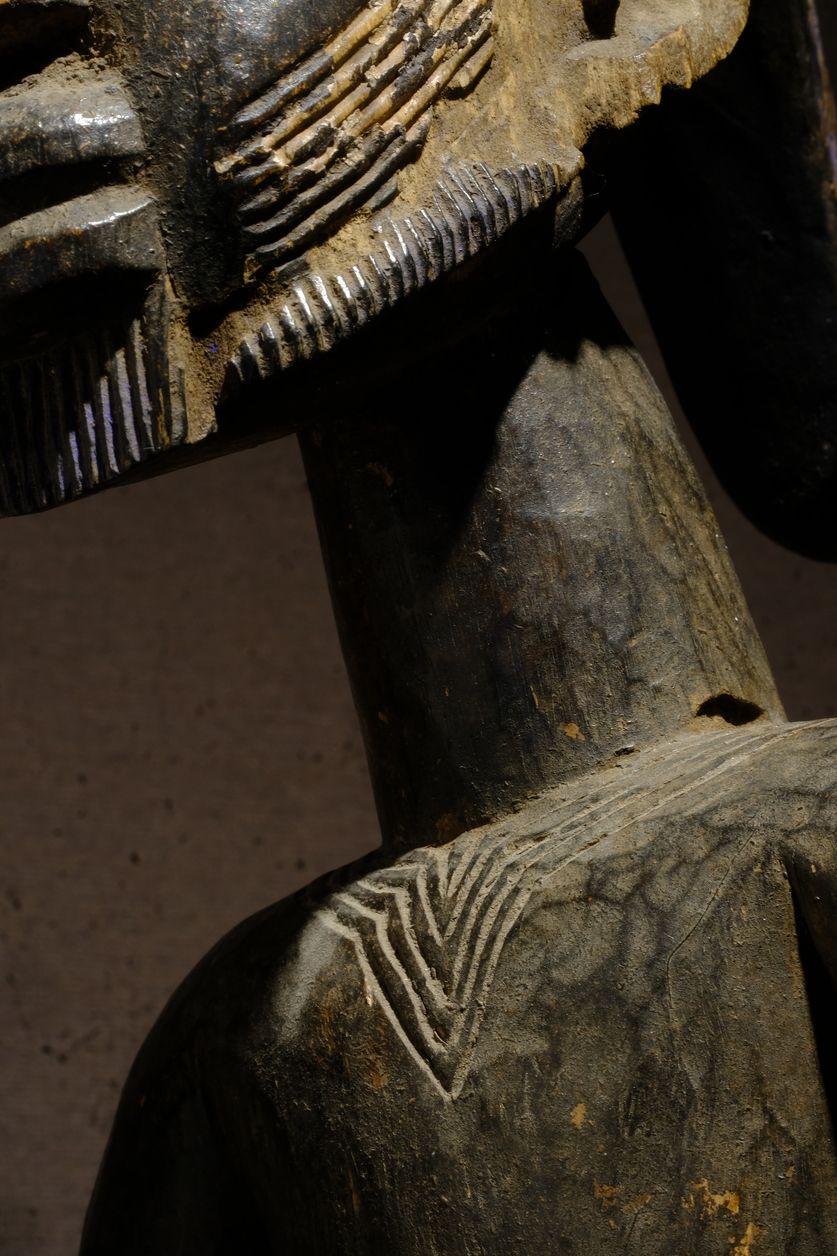
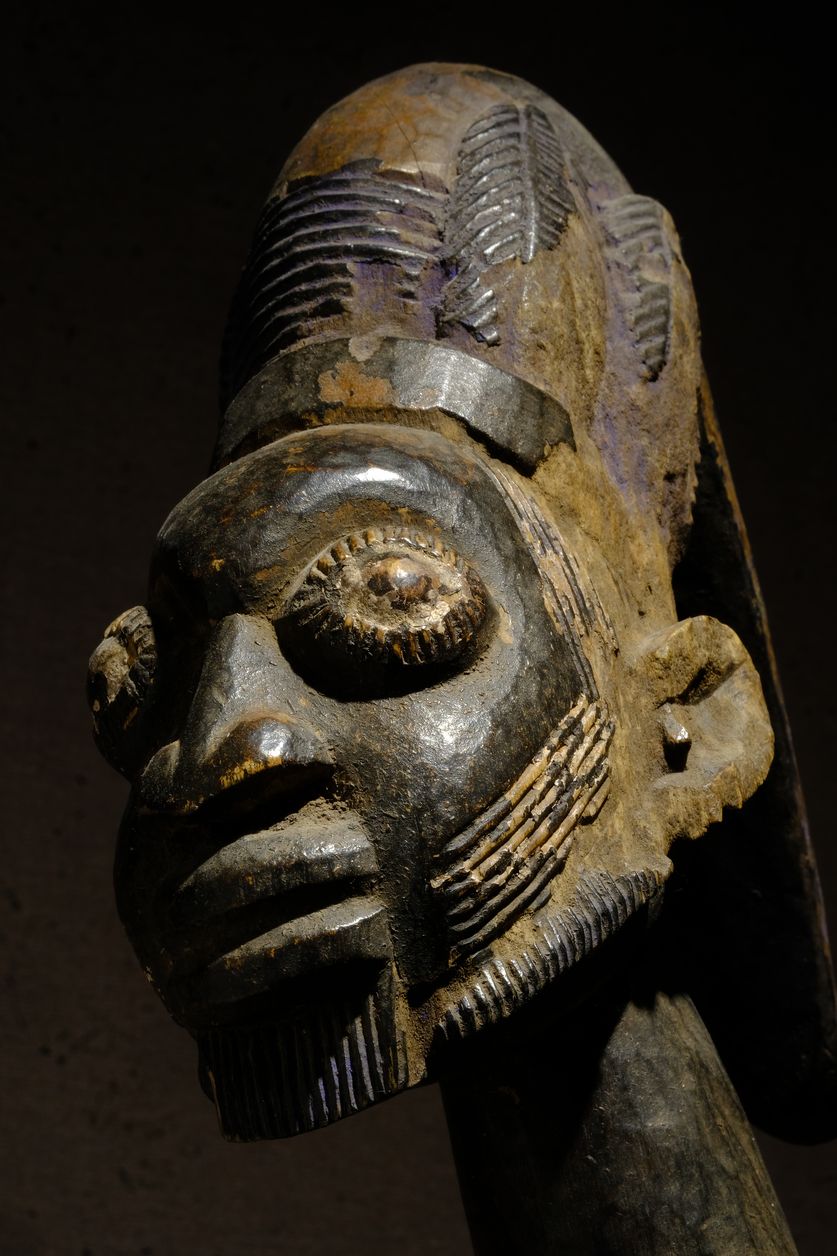
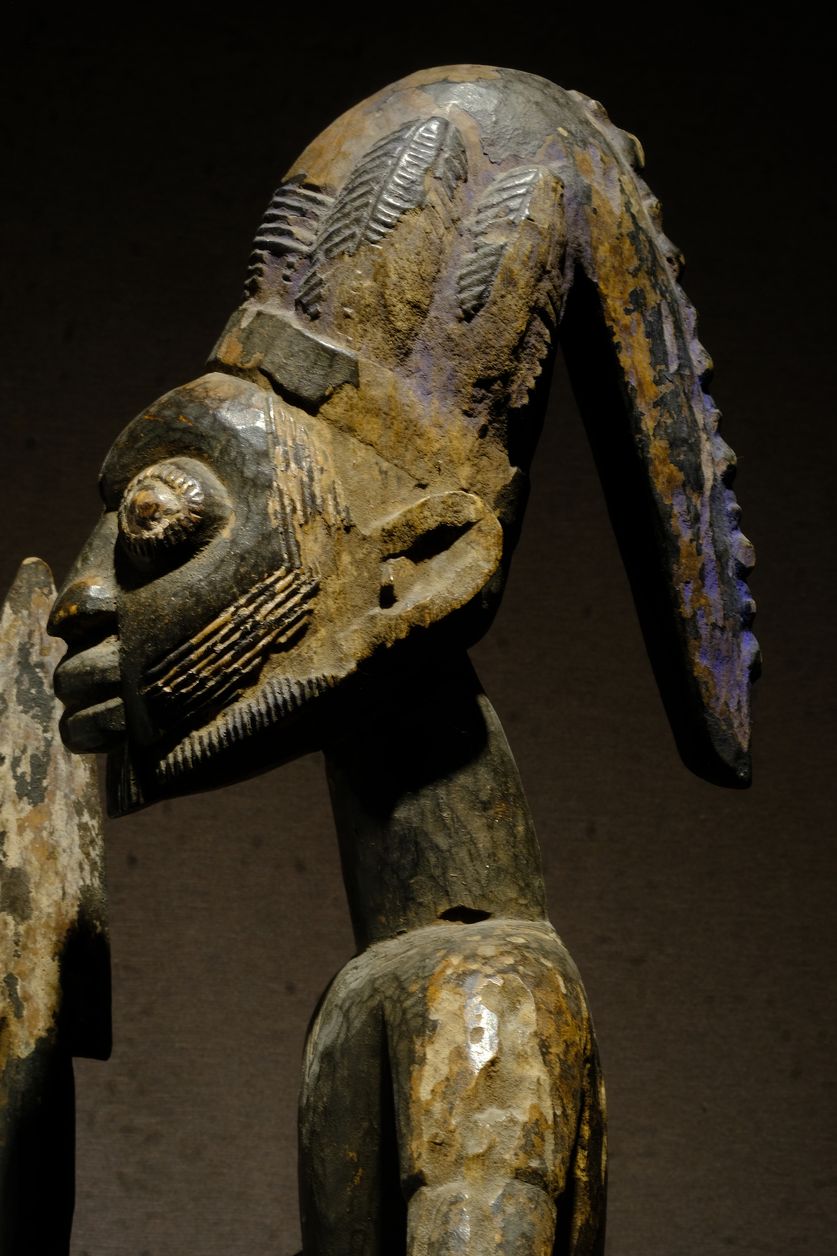
Remains of Reckitt’s blue pigment visible on the head
-
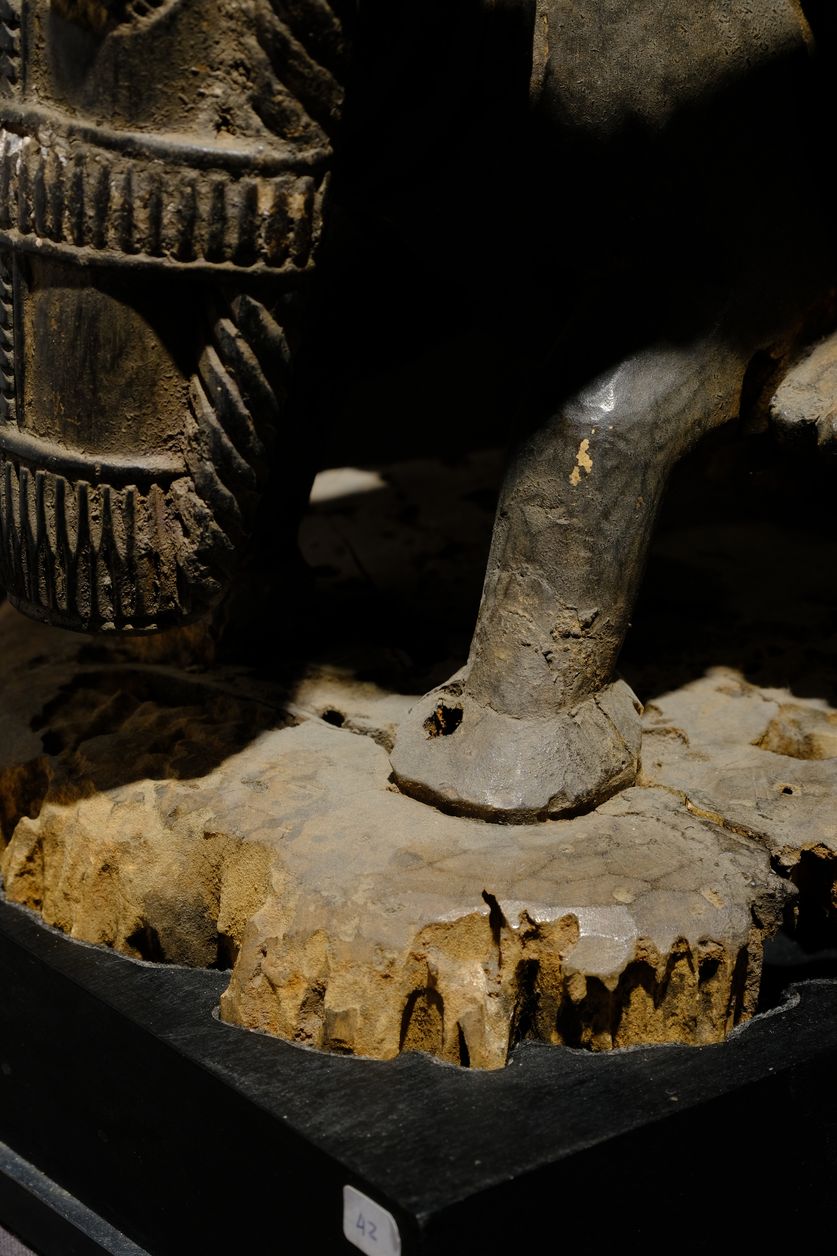
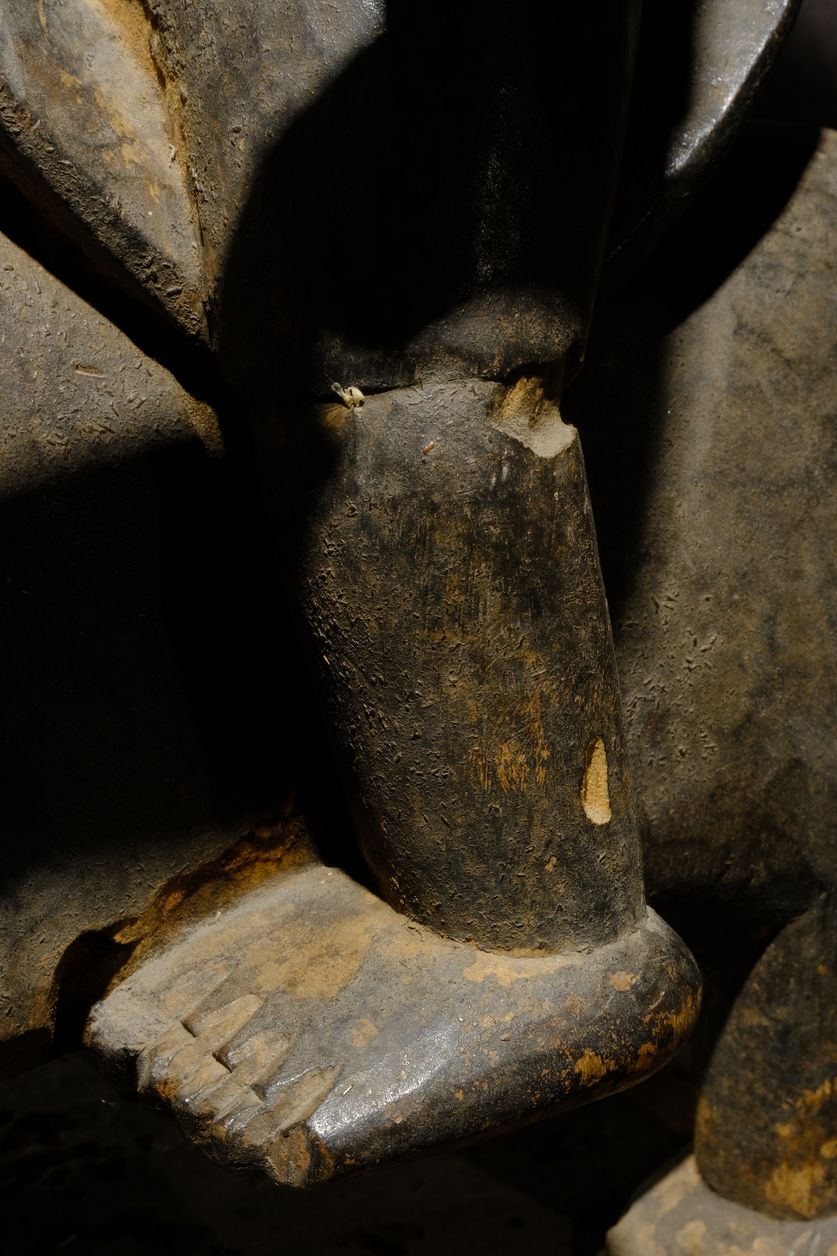
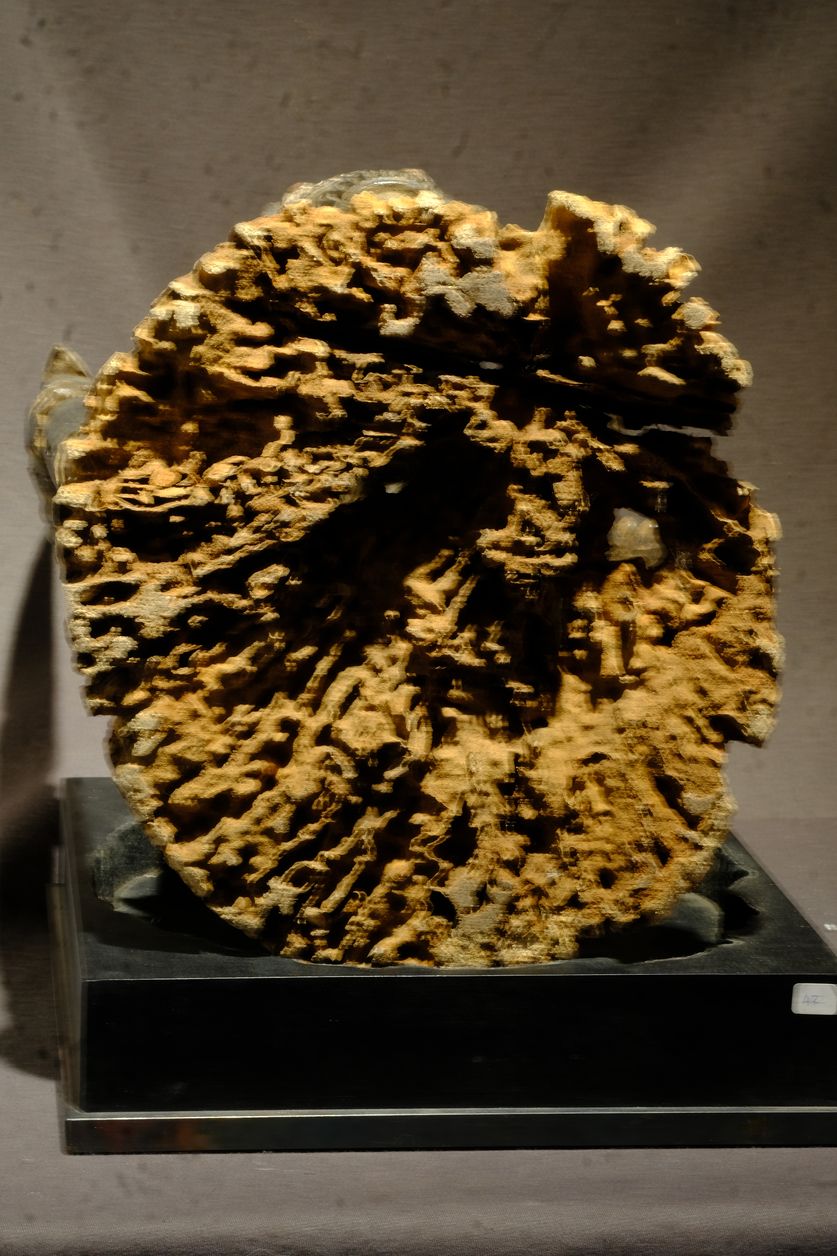
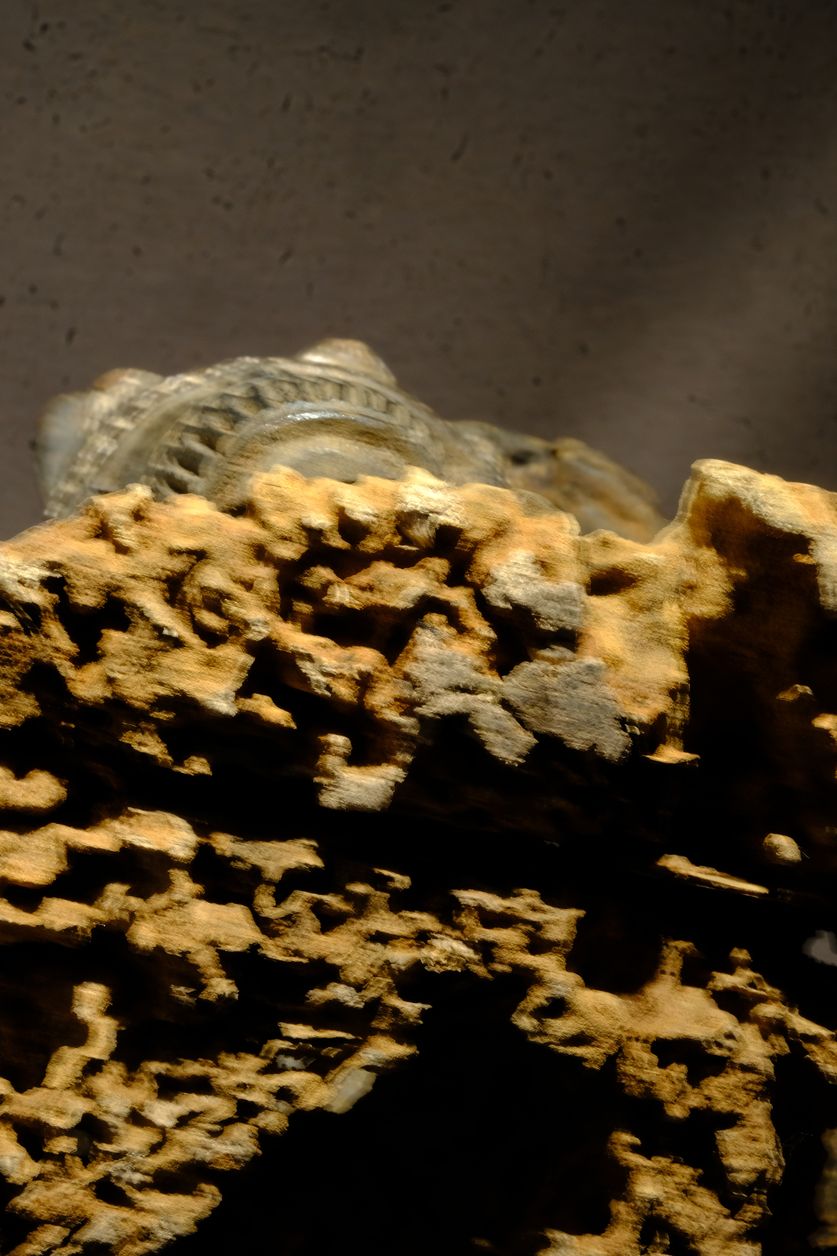
Evidence of insect activity / termite damage affecting parts of the surface
-
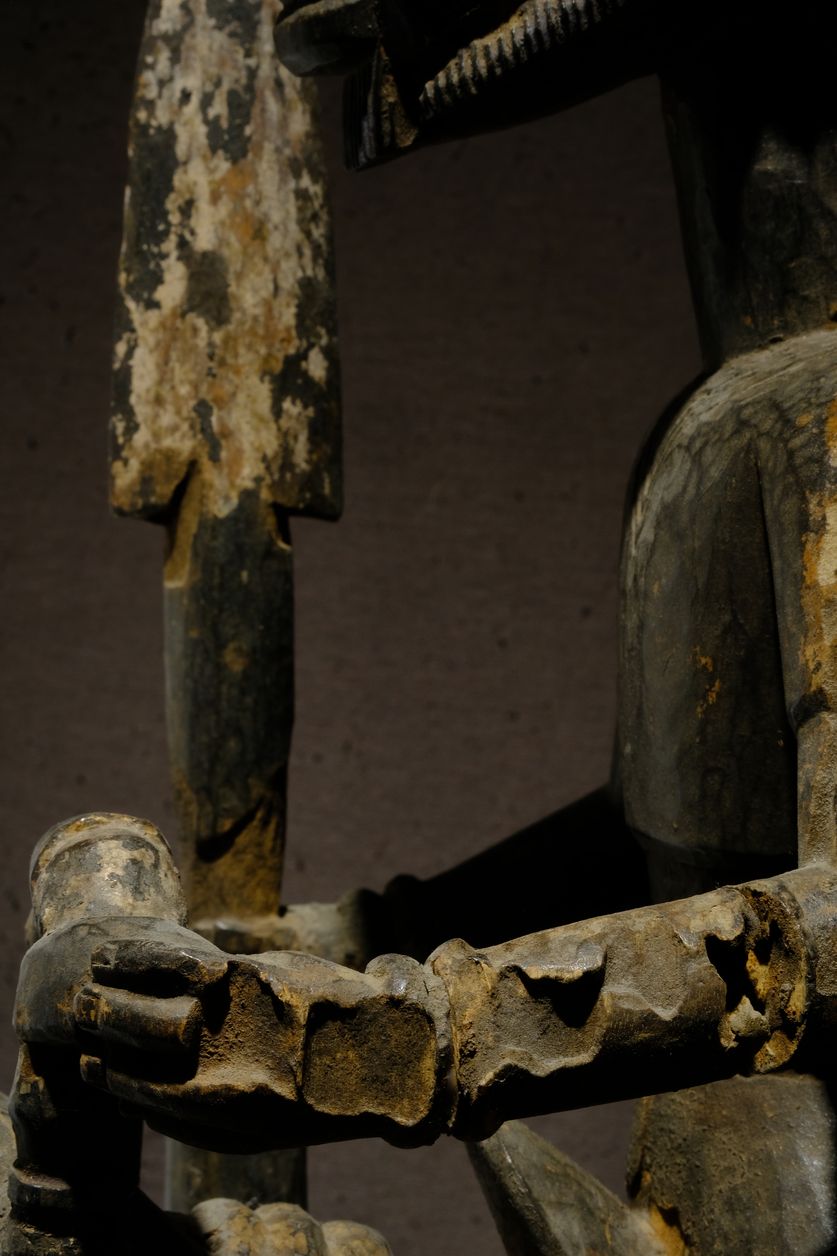
One arm restored (reattached)
-
Surface wear, small losses and patina consistent with age and use
Description
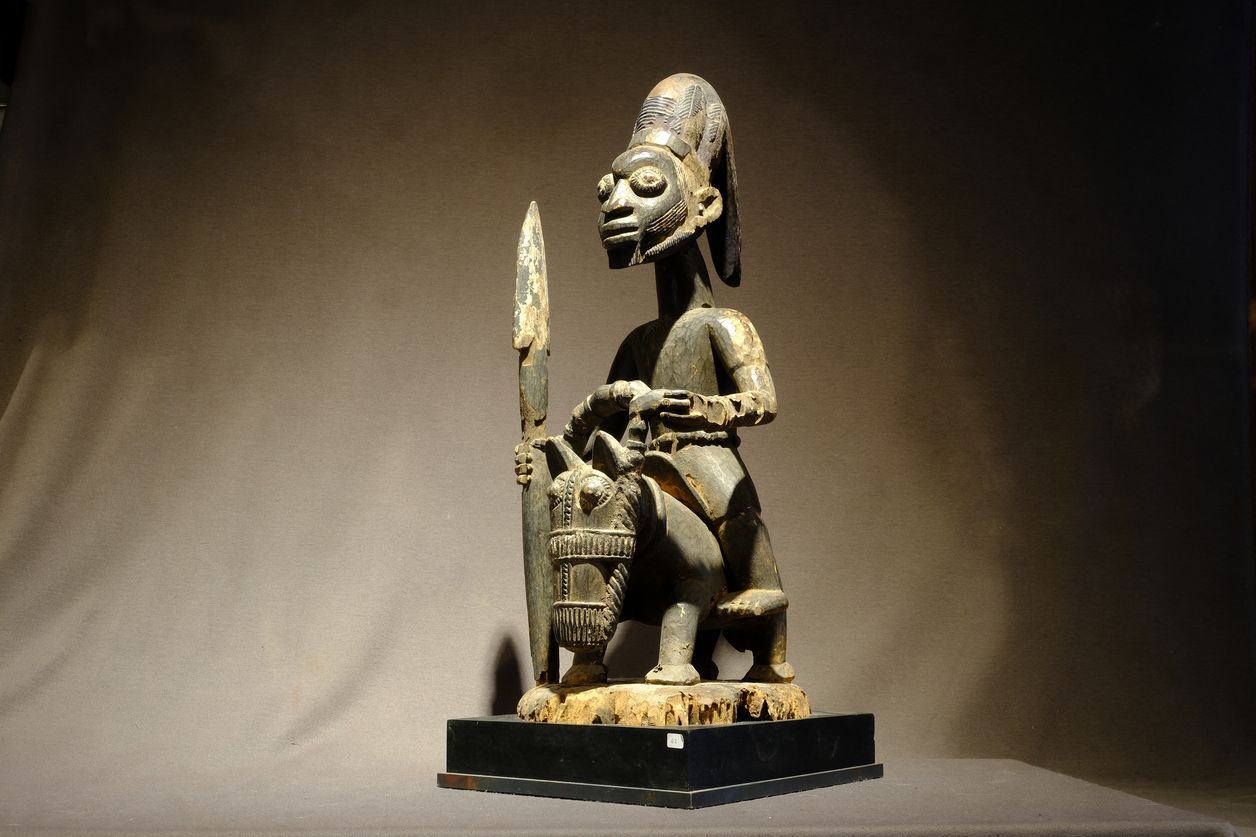
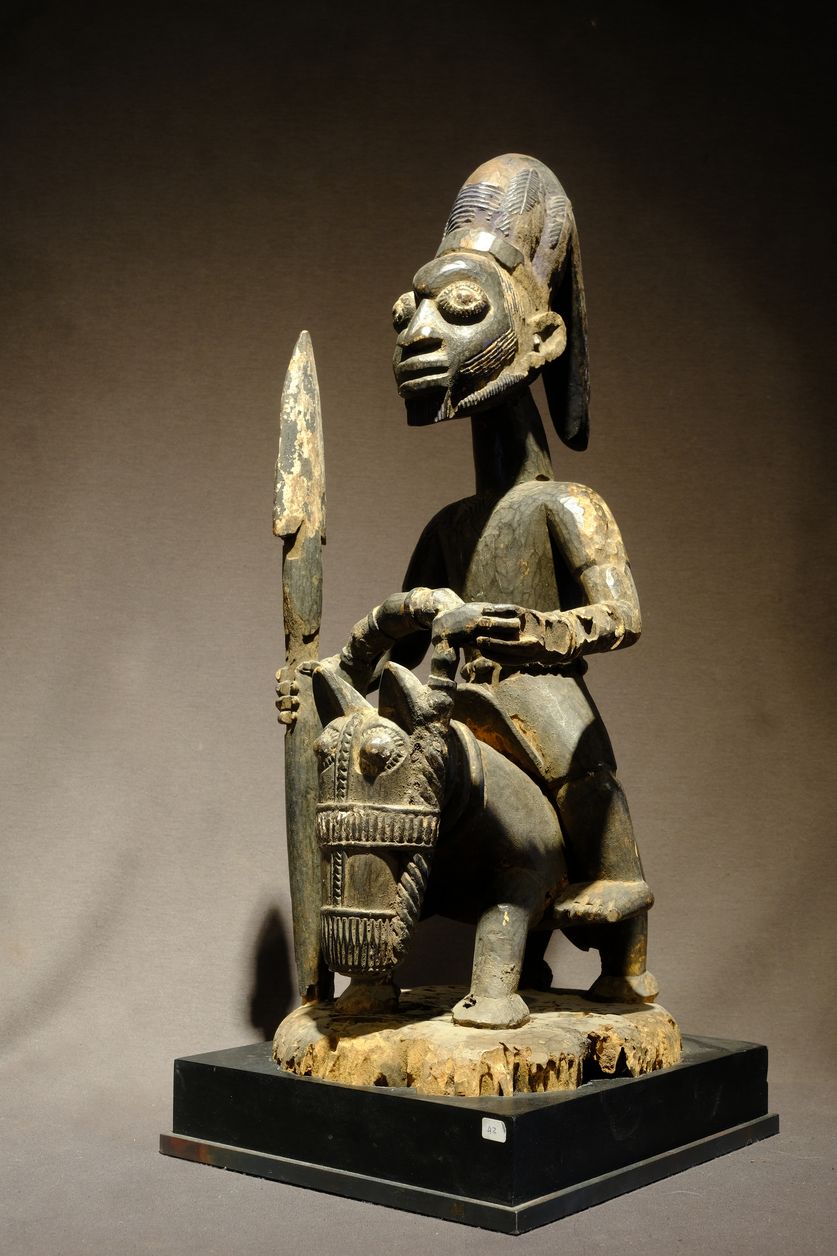
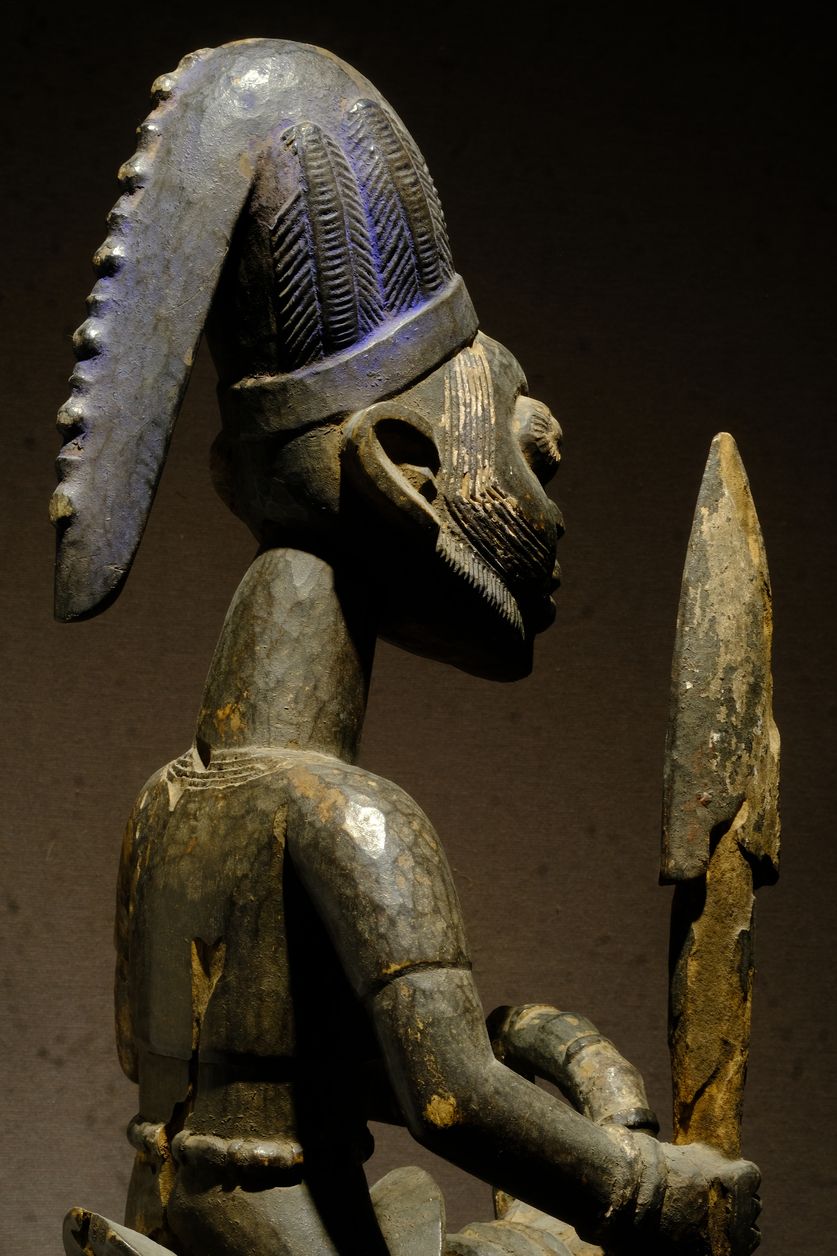
This equestrian figure represents a Yoruba elesin, an image traditionally associated with leadership, prestige and martial authority. The sculpture stands out for the strength and confidence of its carving and for the presence it conveys despite visible traces of age and use.
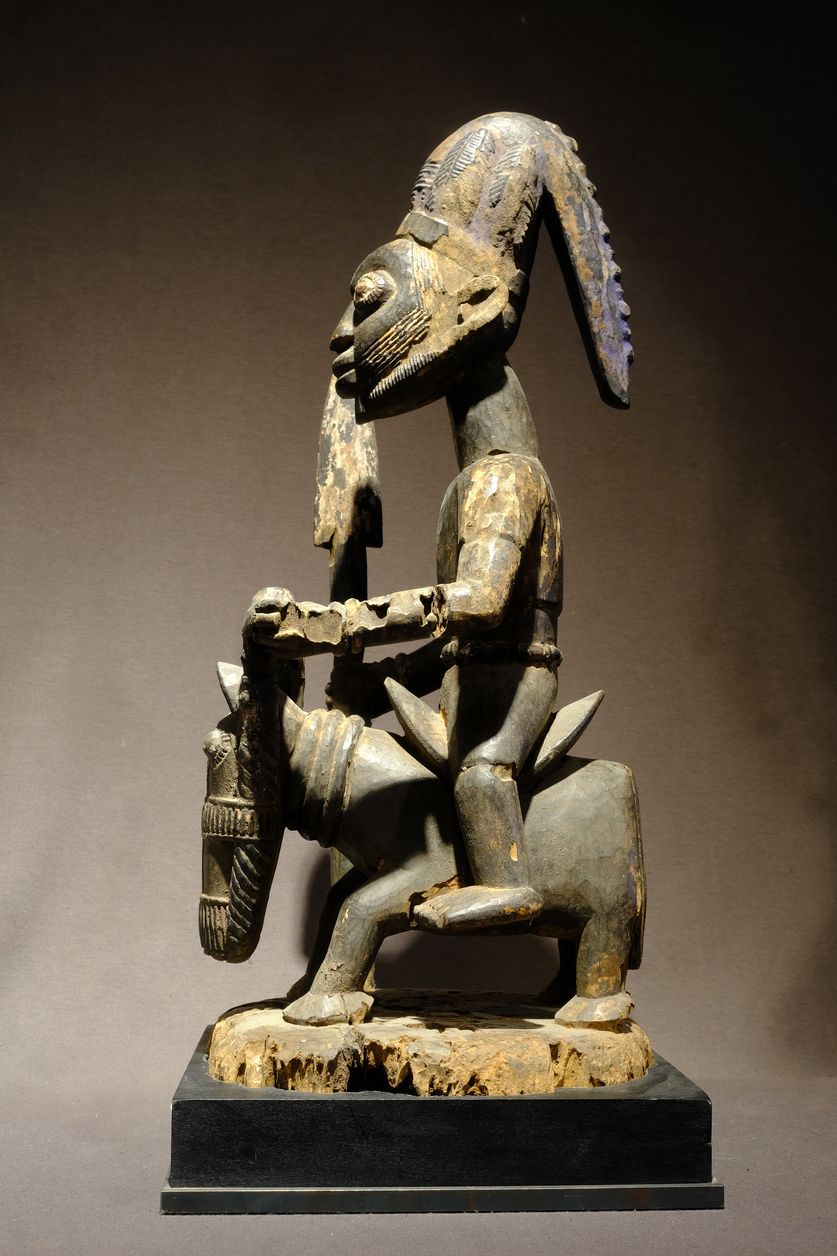
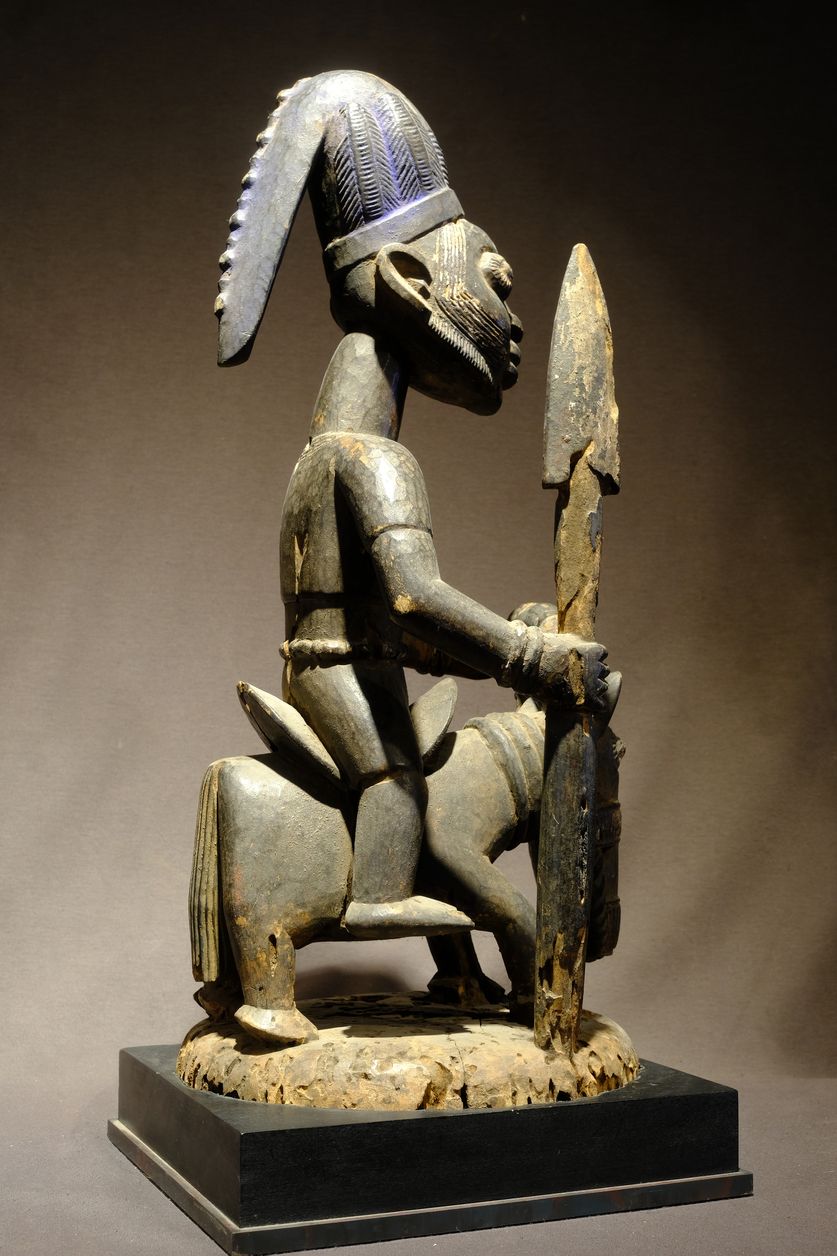
The sculptor worked with a direct and assured hand. The forms are expressive rather than overly refined, giving the figure a strong sense of vitality. The carving is confident but not overly polished, and traces of age and use remain visible. Small remains of blue pigment survive on the head, while areas of insect activity testify to the sculpture’s long life.
Yet the sculpture possesses something that more pristine examples sometimes lack: presence.
The rider sits upright on his horse holding a lance, an image of authority and leadership. Such equestrian figures held an important symbolic role in Yoruba culture, expressing power, prestige and the ability to command.
The composition follows conventions typical of Yoruba equestrian imagery: the rider dominates the composition, larger and more commanding than the horse beneath him. This hierarchical scaling reflects a Yoruba artistic principle in which importance is expressed through proportion rather than naturalistic representation.
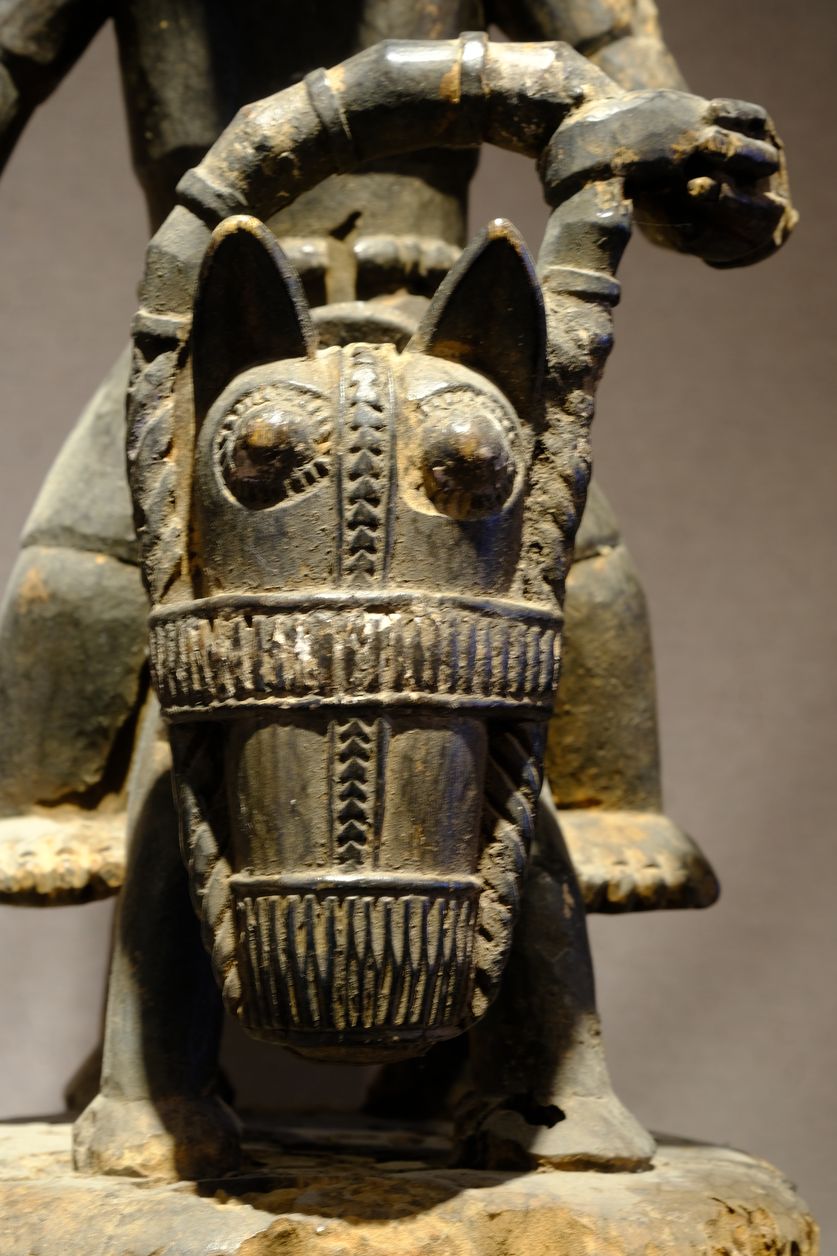
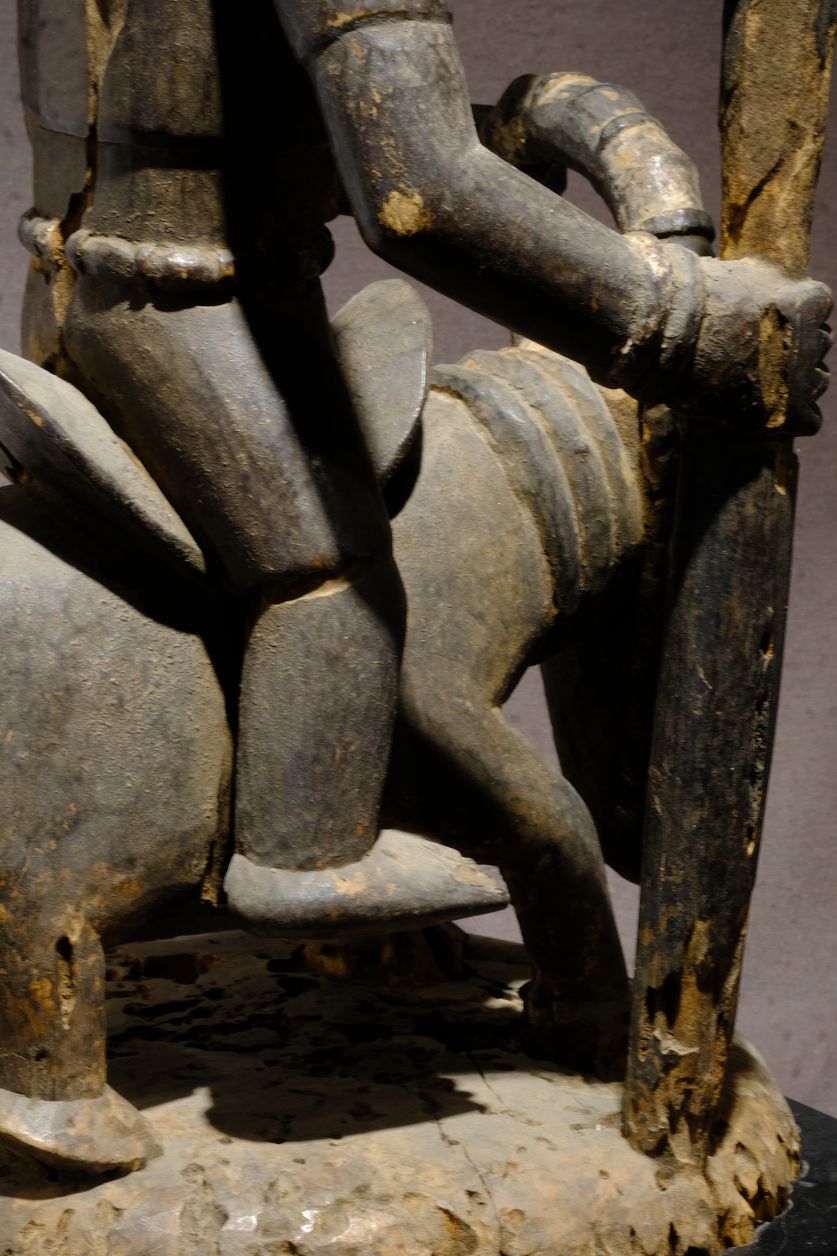
The horse is equipped with a single-rein bridle, while the rider sits without stirrups—details frequently seen in historical representations of Yoruba cavalry. The rider’s short trousers and the simplified saddle reflect local adaptations of equestrian culture introduced through contact with northern regions of West Africa.
The sculpture is organized around a strong vertical axis formed by the horse, rider and lance, reinforcing the impression of authority and stability.
Stylistically the work relates to the great Yoruba carving tradition of the Ekiti region and recalls the dynamic sculptural language associated with masters such as Olowe of Ise—elongated proportions, angular modelling and a strong sense of movement. The stylized head and tall cap reflect the Yoruba aesthetic emphasis on the head (ori) as the seat of destiny and spiritual awareness.
Historical Context
Horses were introduced to West Africa through trans-Saharan trade networks around the first millennium AD, becoming closely associated with military power and political authority in the great Sahelian kingdoms such as Ghana, Mali and Songhai. Within Yoruba culture the mounted rider consequently became a potent symbol of leadership and prestige.
Archaeological discoveries demonstrate that equestrian imagery has deep roots in the region. A tenth-century bronze hilt in the form of a horse and rider from Igbo-Ukwu in southeastern Nigeria provides early evidence for the importance of this motif long before European contact.
In Yoruba visual culture the mounted rider could evoke warriors, rulers or even divine figures, expressing ideals of courage, authority and command.
Dating
The sculpture is attributed to the late nineteenth to early twentieth century (circa 1880–1910) based on several stylistic and material observations.
A significant element is the presence of Reckitt’s blue pigment on the head. This imported laundry blue, produced in Britain and widely distributed through colonial trade networks, became available in West Africa during the late nineteenth century and was frequently incorporated into Yoruba shrine sculptures and architectural carvings.
The equestrian equipment also provides clues. The horse is shown with a single-rein bridle and simplified saddle, while the rider sits without stirrups. Such details correspond to Yoruba representations of cavalry that developed through contact with northern equestrian traditions and became increasingly common in Yoruba carving during the late nineteenth century.
The carving style further supports this dating. The elongated proportions, angular modelling and dynamic composition are characteristic of the Ekiti carving tradition, whose sculptural language flourished around the turn of the twentieth century in the broader circle of masters such as Olowe of Ise.
Taken together—the imported pigment, the iconography of the horse and rider, and the stylistic characteristics of the carving—these elements support a dating of circa 1880–1910.
Provenance
-
Maurice Joy Collection, Liverpool, United Kingdom, collected in the 1960s
-
Frederick “Harry Gordon” Hanley, Bournemouth, United Kingdom
-
Jan Kusters Collection, Netherlands
-
David Norden, Antwerp
Pieces that have passed through such collections often have a history of their own.
Comparable works offered at auction around €30,000 hammer price result in a final buyer cost of approximately €38,000 including buyer’s premium.
Personal delivery included.
Exhibition
Published and exhibited in “Magie des Formes”, Paris, 2018.
https://online.fliphtml5.com/jqqr/rnoh/#p=27


Reviews
There are no reviews yet.