Month: February 2026

  • Warsaw — reflections on scholarship, connoisseurship, and the shifting ground of African art

    Warsaw — reflections on scholarship, connoisseurship, and the shifting ground of African art
    Traveling to Warsaw to study a private African art collection reminded me once again that objects never exist in isolation. They live between people, ideas, institutions — and sometimes between different definitions of knowledge itself.

    My days there included examining a private collection, discussing objects with scholar Dariusz Skonieczko, and visiting the National Ethnographic Museum in Warsaw.

    What emerged was not simply an evaluation of objects, but a reflection on where African art stands today — between scholarship, connoisseurship, ethics, and changing museum narratives.

    Scholarship and connoisseurship — two necessary but different languages

    One of the recurring misunderstandings in African art is the idea that scholarship and connoisseurship are interchangeable. They are not.

    Scholarship builds context: archives, ethnography, historical research, documentation, and theoretical frameworks. It situates an object within a wider cultural and academic narrative.

    Connoisseurship begins elsewhere — in the object itself. It grows from decades of looking, handling, comparing, and sensing the internal logic of carving, surface, proportion, and presence.

    Scholarship asks: What does this object mean historically?
    Connoisseurship asks: What is this object actually doing in front of me?

    Both perspectives are valuable — but they answer different questions. The strongest understanding comes when they are allowed to remain distinct yet in dialogue.

    Perhaps the most challenging reality today is that certainty itself has become more complex. The line between historical objects, later traditional production, reinterpretation, and contemporary creation is not always clear-cut. This does not mean that connoisseurship disappears — only that careful looking, humility, and dialogue have become more important than ever.


    Geography still shapes collections

    Another observation that became clear during my stay concerns a simple historical reality.

    Many of the strongest African works entered Europe through countries with colonial histories such as Belgium, France, and the United Kingdom. These historical channels — however complicated and ethically charged — meant that early field-collected material accumulated there first.

    Countries without that history, including Poland, developed collections differently and often later, through dealers, secondary markets, or educational initiatives rather than early field acquisition.

    This is not a judgment. It is simply the historical trajectory of how objects travelled.

    But it does influence what one finds — and how collectors learn to see.


    Museums between ethics and knowledge

    My visit to the National Ethnographic Museum in Warsaw also highlighted a broader museum conversation that many institutions across Europe are facing today.

    The museum’s permanent exhibition “African Expeditions, Asian Ways” presents nearly 1,300 objects and explicitly reflects on how African and Asian heritage has been represented historically, including through new “interventions” that add contemporary voices and perspectives.

    Recent years have pushed institutions toward self-critical reflection — including questions around colonial narratives, representation, and provenance.

    This creates a fascinating tension:

    • ethics and representation on one side

    • object knowledge and historical reference on the other.

    Museums today increasingly collaborate with source communities and include contemporary works or voices to nuance older narratives.

    The challenge — and it is not an easy one — is maintaining depth of knowledge while reshaping the narrative.

    The central question becomes:

    When does a museum document living culture, and when does it preserve historical benchmarks that help us understand artistic development over time?

    There is no simple answer, but the conversation itself is shaping the future of ethnographic museums.


    Collaboration rather than opposition

    A meaningful aspect of this visit was the dialogue with PhD Dariusz Skonieczko, whose work focuses on education and public engagement with African art.

    Our approaches come from different traditions — academic research and object-based connoisseurship — yet conversations like these are precisely where the field becomes productive. Scholarship expands context; experience with objects grounds it.

    In my view, this dialogue is more important than ever if we want future collectors to look carefully, think independently, and remain curious.


    A quiet conclusion

    Warsaw reminded me of something simple.

    African art today lives in a space where narratives are being renegotiated — by museums, by scholars, by collectors, and by the objects themselves.

    The real challenge is not choosing between ethics or aesthetics, between scholarship or the eye. The challenge is keeping them in conversation without losing the ability to truly see.

    For me, the most rewarding part of these journeys is always the same: staying happy and curious — and allowing the objects to keep surprising us.

    I always encourage readers to look carefully and form their own impressions. Images never replace seeing objects in real life, but they can be a starting point for reflection and dialogue.

    As always, these reflections represent my personal observations as a connoisseur and dealer, based on direct engagement with objects.


    Acknowledgement

    I would like to warmly thank Ryszard Stolarski for the invitation to Warsaw, for his generous hospitality, and for supporting the opportunity to study and discuss his African art project in depth. Encounters like these — where collecting, scholarship, and curiosity meet — are always enriching.


    Further reading


    David Norden
    Happy & Curious


    Share and Enjoy !

    Shares
  • Collecting African Art Without Regret — Even in a Changing Market

    Collecting African Art Without Regret — Even in a Changing Market

    Hi  African Art collector ,

    Some dealers would like you to believe that all African art is rare and priceless.
    But we should remember that this is the art of an entire continent, home to hundreds of cultures and carving traditions — meaning there is truly something meaningful to collect at every level.

    While many of the pieces I offer are valued in the thousands of euros, today I would like to focus on a selection of small, beautiful, and affordable African antiques — all priced below €1000 — which I have personally selected.

    None of these objects were collected by me in Africa — in fact, I have never been to Africa. As I often say: “You don’t need to go to the Middle Ages to collect medieval art.”
    What matters is experience, knowledge, and careful selection.

    Over the years, many clients have become friends. I try to guide collectors in the same way I would advise someone close to me — helping them build a collection they will enjoy living with for years.

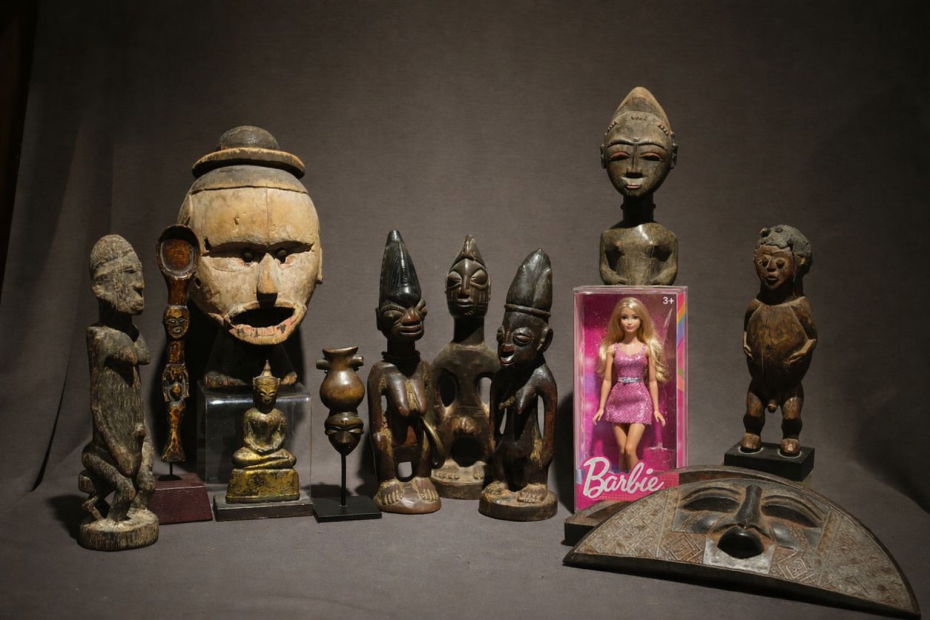
    A few years ago, a long-time client told me — half joking, half serious — that with prices rising so quickly, he might stop collecting African art altogether and start collecting Barbie dolls instead.

    At the time, the market felt overheated. Everything looked expensive. Everyone sounded confident.

    What many collectors were really afraid of wasn’t price — it was getting it wrong.

    Today, with the benefit of hindsight, something has become very clear:
    not all African art will rise, and not all African art will fall.
    Only the best pieces remain convincing, in any market.

    A strong collection is not built by buying what is cheap, but by choosing objects that create an emotional response — because you will always forget the price you paid, while the quality you chose remains.

    How these pieces are chosen

    In today’s art market, many objects pass through layers of buyers, consultants, and assistants before reaching a gallery.

    My business works differently.

    For more than 30 years, I have personally selected every object I offer. No junior buyers, no assistants sent out to source material, no anonymous purchasing trips. If a piece is here, it is because I chose it myself.

    And that matters.

    African art is not decorative production. These objects were used, handled, repaired, and lived with. Recognizing the difference between a powerful authentic object and a clever imitation takes experience — and mistakes learned from decades of looking.

    This applies just as much to an affordable object as to a major piece.

    Why affordable doesn’t mean ordinary

    Every object in my shop follows the same standards, regardless of price. Each piece comes with:

    • A confirmed tribal origin, provenance, and cultural background explaining its original use
    • Clear explanations of the traditions surrounding the object, and whenever possible historical photographs or maps
    • Over 30 years of experience behind each selection — objects must carry emotion and genuine carving skill, because an object only has a soul when it was made for a purpose, not to please passing tourists
    • All packing and shipping handled in-house, allowing me to personally ensure safe delivery

    Collector’s note

    You will always forget the price you paid — but your collection will always reflect the quality you chose.

    Below you’ll find this week’s affordable discoveries: honest objects with history, character, and craftsmanship — ready to quietly earn their place in a collection.

    See the Affordable African Art selection from this week.

    ChatGPT Image 8 feb 2026, 14 58

    Warm regards,
    David Norden
    African Antiques — Antwerp
    www.buyAfricanAntiques.com

    A Seated Dogon Figure -Mali

    Lega Rungu Bone Spoon

    Ekoi (Ejagham) Igbo/Idoma Ancestor Head – Upper Cross River Region

    Thai Gilt Bronze Seated Buddha, 19th Century (13 cm)

    Wooden Whistle with Miniature Pende Mask

    Yoruba Igbomina Ere Ibeji Female Twin Figure – Ila-Orangun, Nigeria

    Yoruba Ere Ibeji Male Twin Figure – Oyo Region Nigeria – 1930s – 26 cm

    Yoruba Ere Ibeji Female Twin Figure – Nigeria – Ritual Sculpture – 25 cm

    Baule Standing Figure — 34 cm

    Ancestor Figure — Kom–Oku Region, Western Cameroon Grassfields — ca. 1930

    Kuba / Shoowa Box with Expressive Face — DR Congo

    Wishing you a happy and curious Valentine,

    David Norden

    African Antiques From Antwerp — One Eye, 30 Years of Selection
    Personally chosen with curiosity and experience — so you can collect with confidence, not guesswork.

    Share and Enjoy !

    Shares
  • He Collected African Art for Years — Until One Comment Changed Everything

    He Collected African Art for Years — Until One Comment Changed Everything

    He Collected African Art for Years — Until One Comment Changed Everything

    A few years ago, a long‑time client sat across from me in my Antwerp gallery, visibly uneasy.

    He had been collecting African art for decades. Good eyes, serious commitment, many fine pieces. But that afternoon he wasn’t talking about masks or figures. He was talking about prices.

    “It’s getting crazy,” he said. “Everything is expensive now. I think I’ll stop collecting African art… maybe I’ll collect Barbie dolls instead.”

    He laughed — but not entirely.

    At the time, the market was running hot. Prices were rising fast, fairs were buzzing, and suddenly everyone seemed to be an expert. For seasoned collectors, that moment created a very specific fear:

    What if I buy now — and later it turns out I bought the wrong things?

    That fear is more powerful than price itself.


    The Comment That Changes Everything

    Every serious collector knows this moment.

    You’re standing in your own home. A guest — maybe another collector, maybe a curator — pauses in front of a piece you once felt proud of.

    They tilt their head and say something harmless on the surface:

    “Interesting… I’ve mostly seen these made later.”

    Nothing dramatic. No accusation.

    But something shifts.

    Suddenly the object feels different. The confidence you had when you bought it quietly drains away. You start replaying the purchase in your head.

    That single comment can undo years of collecting pleasure.

    This isn’t about money. It’s about credibility.


    Fast Forward: What the Market Actually Did

    Today, with the benefit of hindsight, that client’s anxiety tells us something important.

    Yes — prices have come down on many African artworks.
    Yes — the market corrected itself.

    But not evenly.

    What we’re seeing now is very clear:

    • Average pieces suffered
    • Decorative objects struggled
    • Works made for later demand lost momentum

    And at the same time:

    • Exceptional pieces held their ground
    • Objects with strong ethnic attribution remained desirable
    • Works with real age, use, and cultural context continued to sell well

    The market didn’t reject African art.

    It rejected uncertainty.


    What Survives When the Noise Fades

    When prices rise quickly, almost everything looks convincing.

    When the market cools, only a few things still speak clearly:

    • Quality of carving
    • Depth of patina
    • Cultural coherence
    • Internal consistency
    • Honest wear from ritual use

    These qualities have always mattered.

    They don’t call attention to themselves. They simply remain convincing over time.


    Why Experience Matters More Than Ever

    In a rising market, enthusiasm can carry you far.
    In a correcting market, experience becomes decisive.

    The collectors who are still confident today are not the ones who bought the most.
    They are the ones who bought selectively.

    They chose fewer pieces.
    Better pieces.
    Pieces that do not need excuses.


    Back to the Barbie Dolls

    I sometimes think back to that client and his half‑joking remark.

    Barbie dolls, by the way, have their own serious collectors.

    But African art was never the problem.

    The problem was buying without enough certainty in a moment when everything looked expensive and everyone looked confident.

    Today, the lesson is simpler:

    Not all African art rises.
    Not all African art falls.
    Only the best African art remains convincing — in any market.


    Collecting Without Regret

    The real goal of collecting is not to beat the market.

    It’s to live with objects you never feel the need to defend.

    Objects that, when someone pauses in front of them and asks a question, allow you to answer calmly — or say nothing at all.

    Because the piece already speaks for itself.

    That is what endures.

    And that is what I continue to look for.

    Share and Enjoy !

    Shares