Tag: Pende

  • An Exchange Between Two Ways of Looking

    An Exchange Between Two Ways of Looking

    There are collectors who acquire.

    And there are those who live with objects for a long time before letting them go.


    Not long ago, an anthropologist came to see a Dogon figure.

    He didn’t come alone.

    He came with his wife, and they spent time with the piece — quietly, without deciding.

    Nothing happened that day.

    Which, in hindsight, was already meaningful.


    Two weeks later, he returned.

    This time, not to negotiate.

    But with a different kind of proposal.

    He was ready to let go of pieces he had lived with for years, in order to take one with him.


    An anthropologist looks differently.

    Not in terms of categories or completeness.

    But in terms of use.

    How an object has been handled.
    Returned to.
    Integrated into a life.

    And over time, that changes what is kept.


    The group that came from this exchange was not assembled.

    It had already taken shape, slowly, over years.

    African, but not only African.

    Objects that lived alongside Oceanic works, Pre-Columbian pieces, and traces of archaeology.

    Not separated, but understood in relation.


    That kind of collecting leaves marks.

    Not always visible at first.

    But present in the surface.
    In the choices.
    In what was not discarded.


    Some pieces reveal themselves immediately.

    Others take longer.

    Those are often the ones that remain.


    Looking back, the exchange was simple.

    Not a transaction.

    But a moment where two ways of seeing aligned — just long enough for objects to change hands.


    Below are some of the pieces that came from that moment. (click on the images to enlarge)


    If one of these speaks to you, feel free to get in touch.

    I’ll be happy to share more images, provenance, or details.


    Happy and curious,
    David Norden

    Antique Dan Mask with Original Textile Remains

    Share and Enjoy !

    Shares
  • the Spirit of Africa

    the Spirit of Africa

    Embrace the Spirit of Africa: Discover Timeless Art with Lobi Iron Bird and Authentic Tribal Masks

    Dear Art Enthusiast,

    We invite you on a journey into the heart of African artistry, where history, culture, and craftsmanship converge in extraordinary works of art. This month, we are thrilled to showcase three exceptional pieces that embody the rich heritage of African art. Each of these items tells a unique story, reflecting the spirit and traditions of the communities that created them.

    1. Lobi Iron Bird – A Symbol of Protection

    Lobi Iron Bird

    Explore the Lobi Iron Bird

    The Lobi people of Burkina Faso are renowned for their deep connection to spiritual and protective forces. This striking Lobi Iron Bird is not just a sculpture; it is a talisman believed to ward off evil and bring good fortune to its owner. Handcrafted from iron, this bird’s minimalist yet powerful design captures the essence of Lobi artistry. Whether displayed as a statement piece in your home or part of a curated collection, this iron bird carries with it the mystique of African traditions.

    2. Dan Mask from Ivory Coast – A Masterpiece of Spiritual Craftsmanship

    Dan mask

    Discover the Dan Mask

    Originating from the Dan people of Ivory Coast, this remarkable mask stands as a testament to the profound spiritual and artistic traditions of the region. The Dan are famed for their masks, which play an integral role in their rituals, often used to invoke protective spirits or ensure successful harvests. This particular mask, with its striking features and meticulous craftsmanship, exudes a sense of mystery and reverence, reflecting the mask’s original purpose in connecting the physical and spiritual worlds.

    What sets this Dan mask apart is its storied provenance. This piece was previously featured in a prominent exhibition dedicated to West African art, where it was celebrated not only for its aesthetic beauty but also for its cultural significance. Its inclusion in this exhibition underscores the mask’s authenticity and its importance as a cultural artifact.

    Acquiring this Dan mask is an opportunity to own a piece of African history, enriched by its exhibition pedigree, making it an invaluable addition to any serious collection.

    3. Pende Mask of a Young Girl – Beauty and Virtue

    Pende mask

    View the Pende Mask

    From the Pende people of the Democratic Republic of Congo comes this exquisite mask of a young girl. The Pende are known for their vibrant masks, which play a central role in their initiation ceremonies. This particular mask represents the ideal of youthful beauty and virtue, with delicate features that convey innocence and grace. Owning this mask means embracing the cultural significance and artistic mastery of the Pende people, making it a prized addition to any serious collection of African art.

    Each of these pieces is more than just art—they are windows into the soul of Africa, offering a glimpse into the traditions and beliefs of the people who created them. Whether you are an experienced collector or new to the world of African art, these items will enrich your collection and your connection to the global cultural heritage.

    Explore these unique pieces today and bring the spirit of Africa into your home.

    Warm regards,

    David Norden
    Sint Katelijnevest 27. B-2000 Antwerp. Belgium

    Tel.: +32 3 227.35.40

    P.S. Click Here to Discover the African Art Shop

    Share and Enjoy !

    Shares
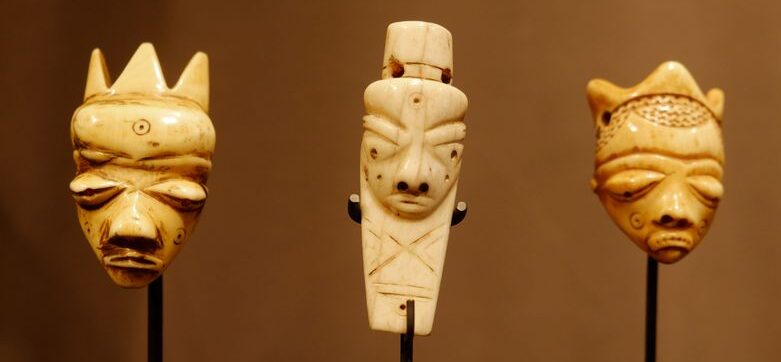
  • 3 Fine Pende Miniature masks Ikhokho’s

    3 Fine Pende Miniature masks Ikhokho’s

                                           Ikhokho 1                                                              Male Okhokho 3                                      Ikhokho 2


    3 Fine and old Pende Miniature masks Ikhokho’s ( before 1947 )

    The Central Pende from the  Democratic Republic of the Congo replicate masks in miniature form.

    Wooden versions produced by healing specialists are prescribed by diviners as remedies.

    In contrast, their ivory counterparts, ikhokho, are made by professional sculptors to be worn as decorative pendants to protect.

    While its texture and resistance to cracking make elephant ivory the material of choice, the thighbones of hippopotamuses allow artists to achieve comparable effects.

    Bodily contact through wear alters the whiteness of the pendants. Although this effect is prized by Western collectors, the Pende themselves scrub the ornament’s surface daily with water and abrasive sand in order to maintained its original color, process which blurs the features over time.


    Date: Those 3 Pende Pendants are all first half XXth century before 1947.

    Click the links to go to the sale page.

                                           Ikhokho 1                                                              Male Okhokho 3                                      Ikhokho 2

    Share and Enjoy !

    Shares