




This powerful ritual figure originates from the Vodun tradition of the Fon peoples living along the historical Benin–Togo frontier—a region where sacred practice long predates the colonial boundary established in 1912.
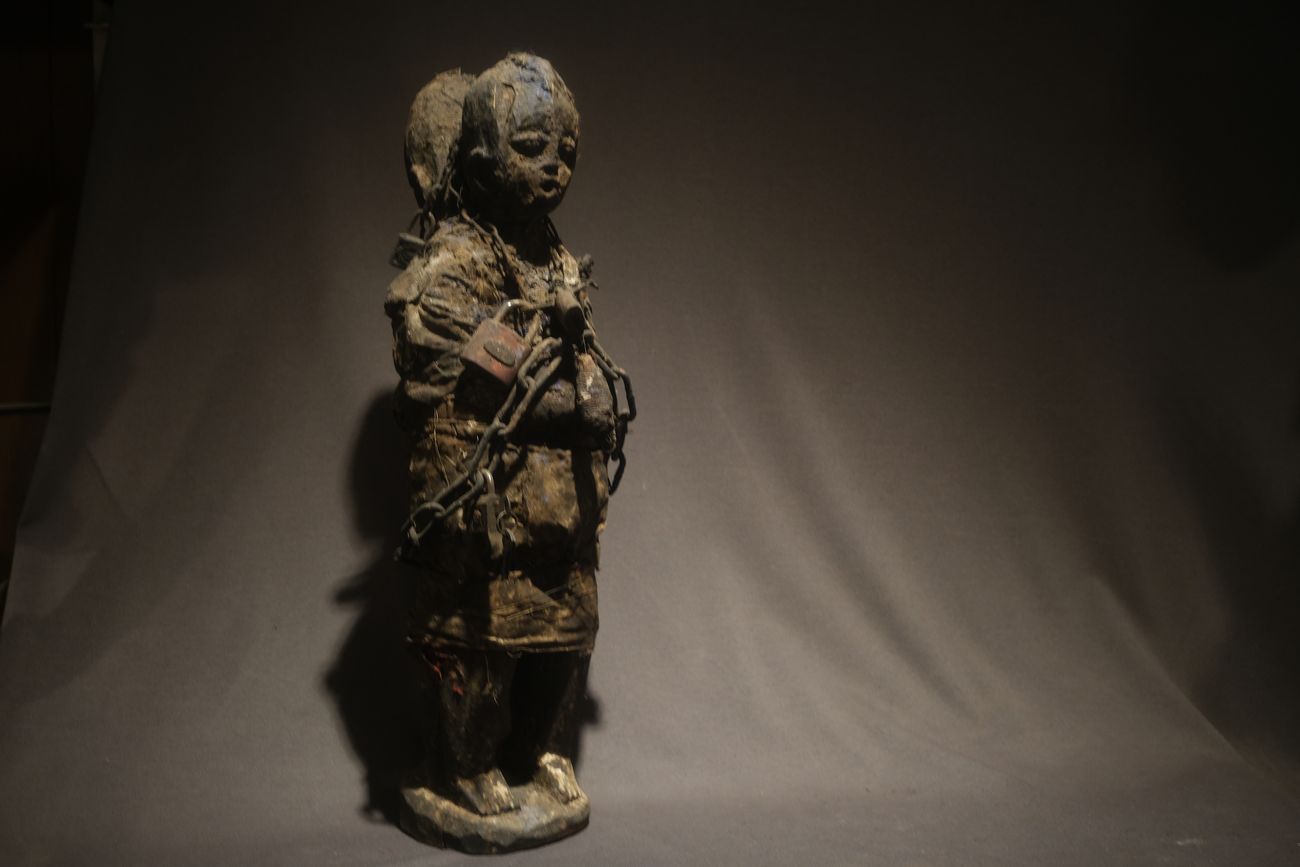
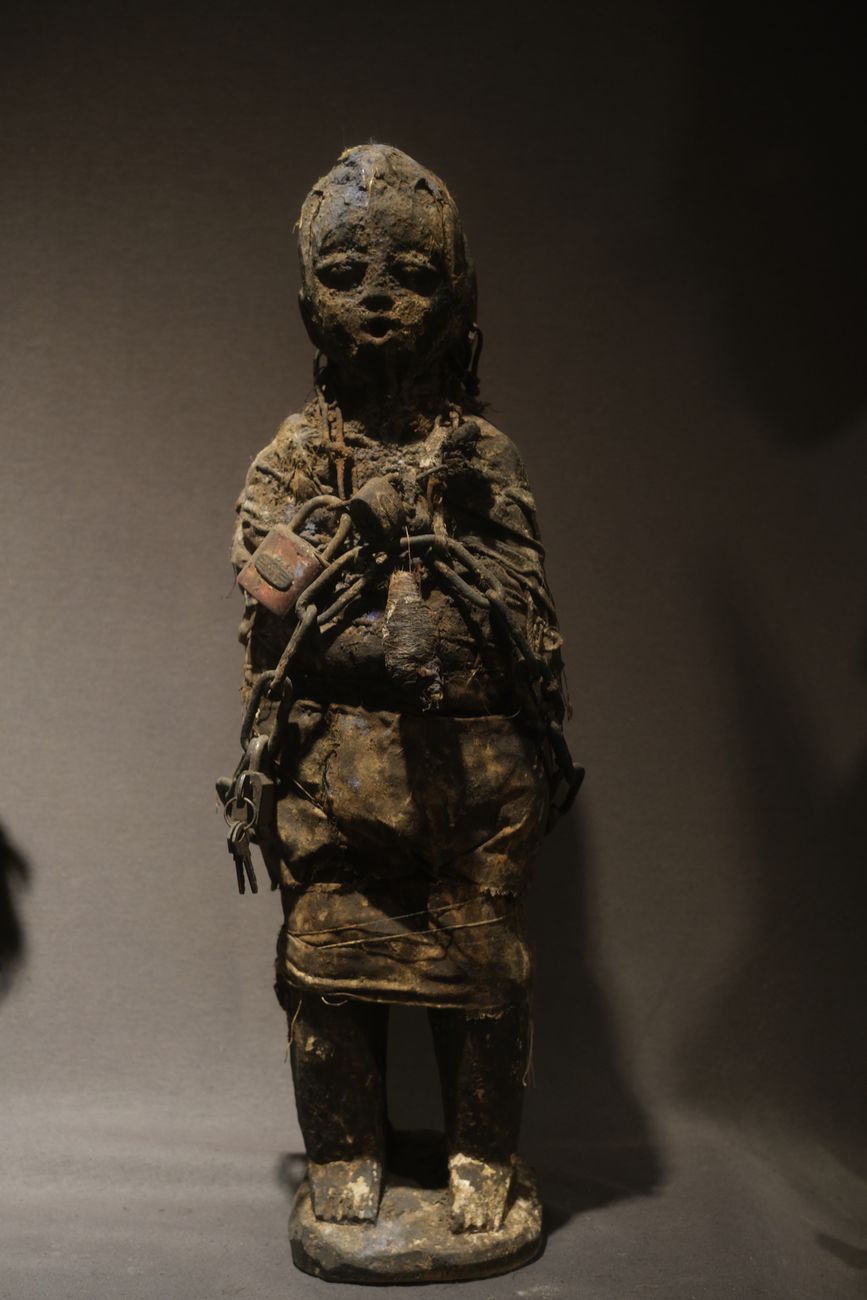
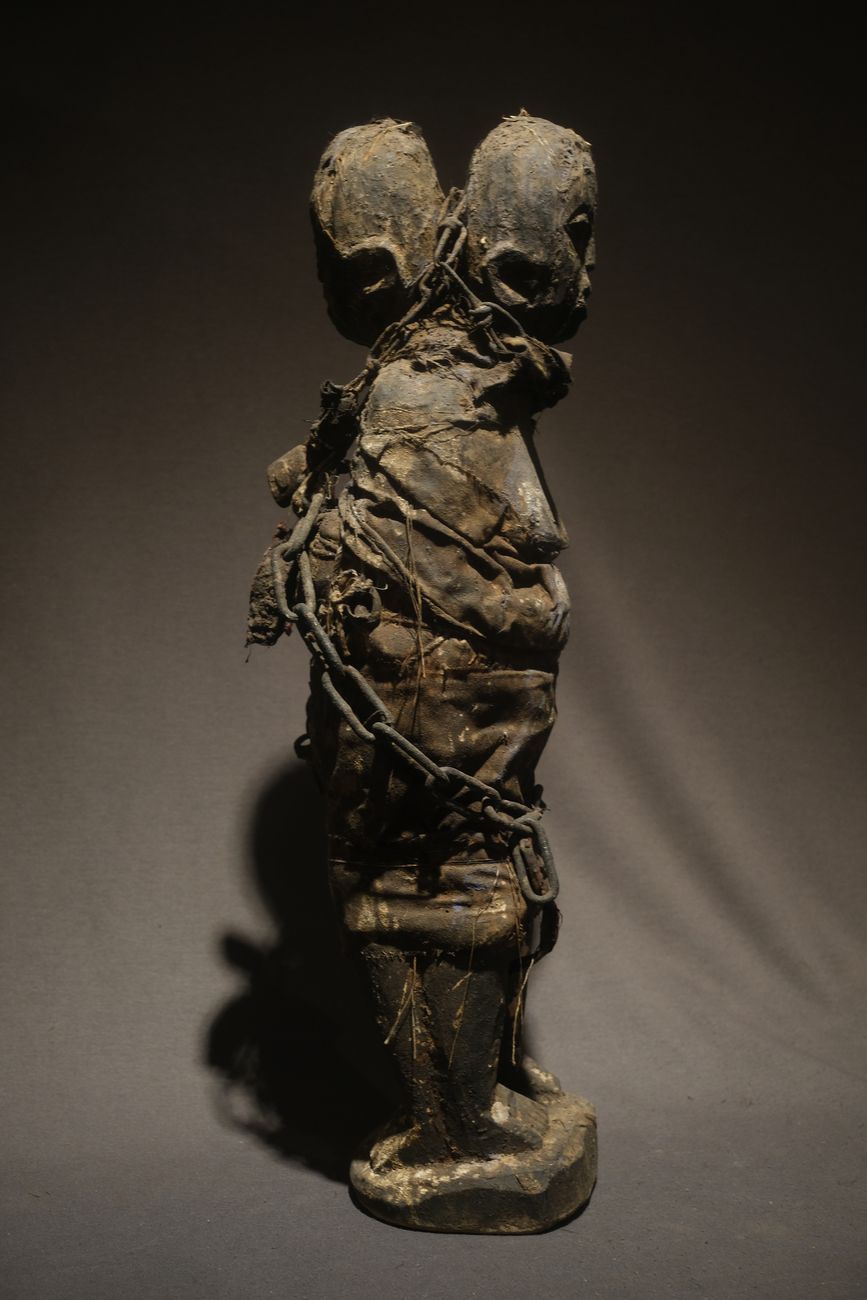
Unlike the more portable single-bodied boccio, this work is constructed as two separate human bodies tied together, positioned back to back, each with its own pair of legs. The duality is intentional and operational: the two bodies embody complementary forces and vigilance in opposing directions. They are not a single two-headed persona, but two cooperating entities, bound to address threats arising from multiple fronts.
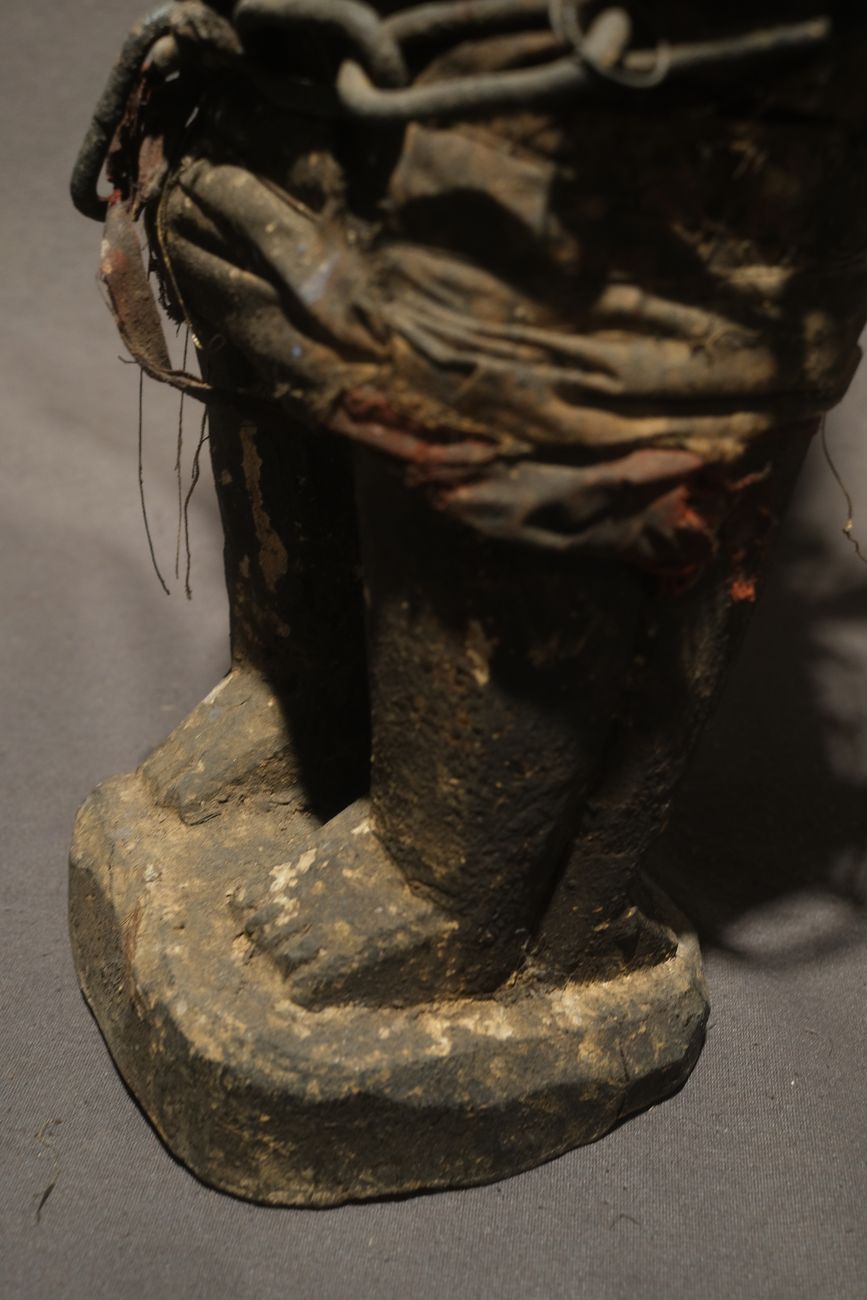
The figures are tightly wrapped in layers of ritual textiles, fiber, and medicine. Slots and cavities on the torsos and heads indicate repeated activation cycles by a Vodun specialist, likely a Fa priest. Remnants of feathers and sacrificial matter adhere to the surface, and oxidized iron chain encircles the composition, serving as a binding mechanism in Fon ritual logic—restraining hostile spirits, enforcing spiritual contracts, or sealing cures. Traces of blue pigment remain visible, a cooling and pacifying color in Vodun practice.
This is not a decorative sculpture; it is a working ritual instrument, created to protect, counter malediction, or secure justice.
Comparable Fon power figures—complex, materially charged, and double-bodied—are known from private and institutional collections, including examples in exhibitions such as Vaudou (Fondation Cartier, Paris 2011).
A striking witness to Vodun’s spiritual traditions, with meticulous artistry and rare scarcity, making it a true treasure for discerning collectors.


Reviews
There are no reviews yet.