Category: African shrine figure

  • Two African Pieces on the Table

    Two African Pieces on the Table

    This morning, before opening the shop, I placed these two next to each other.

    Not because they belong to the same tradition. They clearly do not.

    But sometimes objects begin to speak differently when they share the same space for a while.

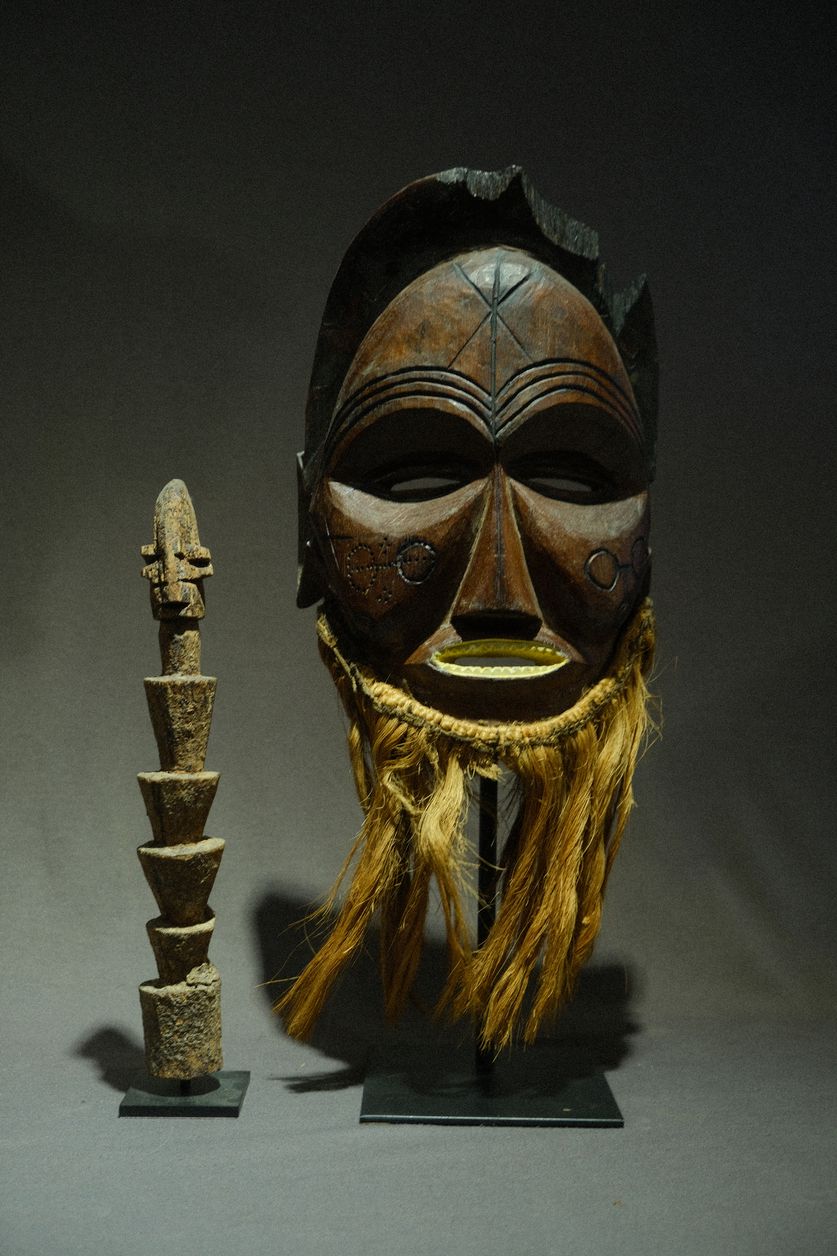
    One is a mask from Zambia, in the Mbunda style.
    The other, a small Lobi figure from Burkina Faso and Ivory Coast.

    The mask immediately takes control of the table.
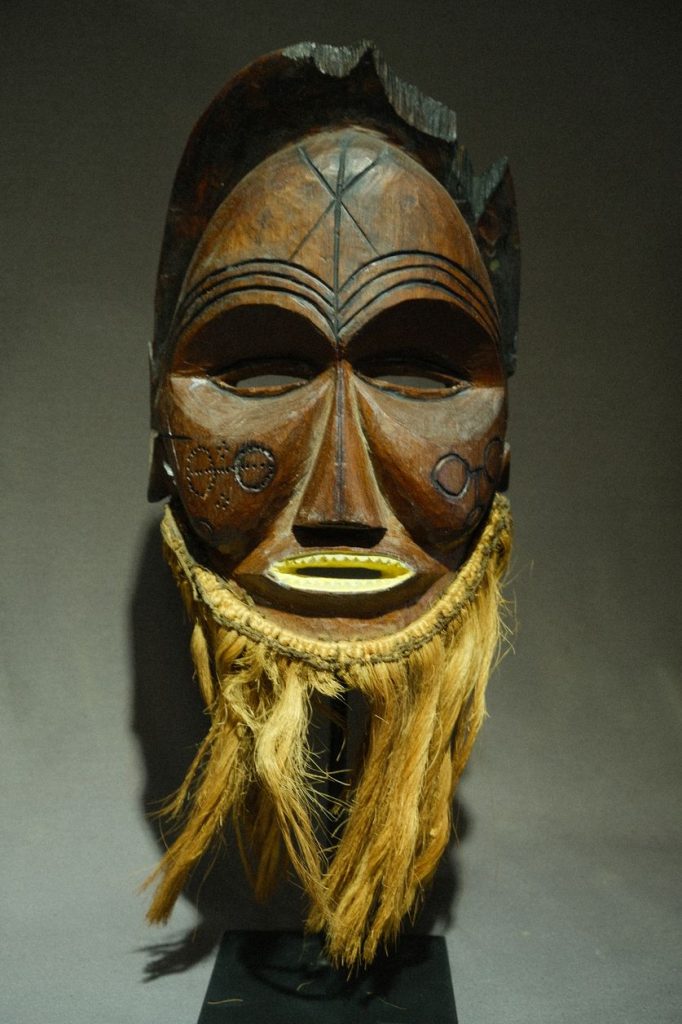
    FXE49780African Art

    Its construction is unusually deliberate. The repeated lines above the eyes almost feel architectural, as if the face was assembled rather than carved. It reminded me of older Mbunda masks I had seen years ago — those powerful faces balancing authority and restraint.

    But what interested me most here was not the attribution.

    It was the tension.

    The mask feels calm, but not passive. The symmetry is controlled, though never rigid. Even the surface has settled in a convincing way, without the heavy-handed restoration or artificial aging one so often encounters today.

    You can view the mask here:
    Mask in the Mbunda Style — Zambia

    The small Lobi figure reacted differently.
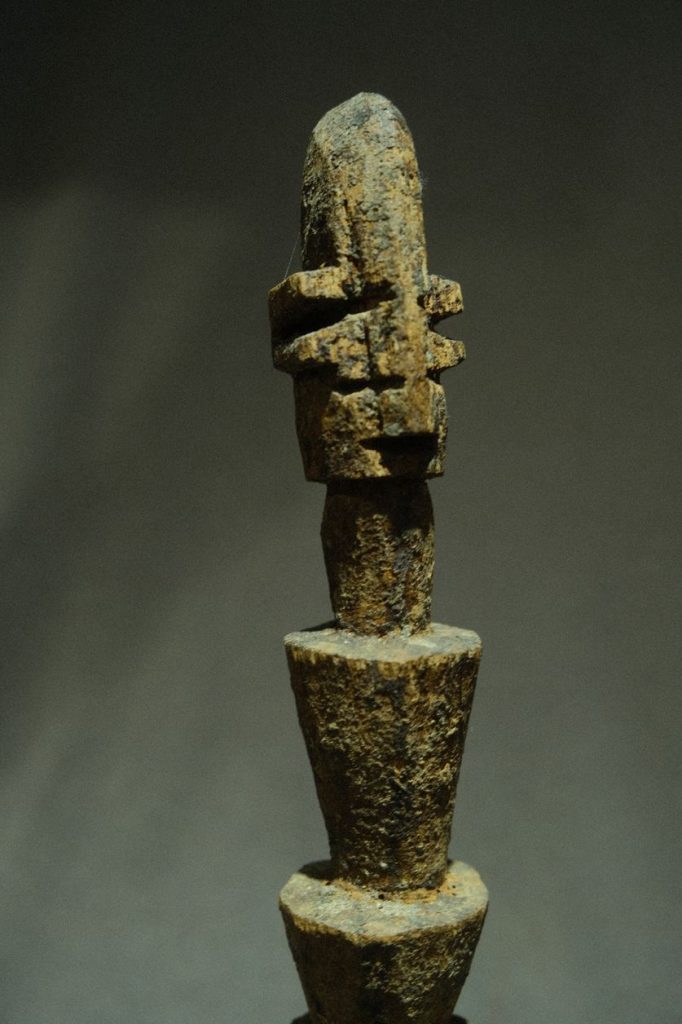
    FXE49773African Art

    At first glance, it almost disappears next to the mask.

    But after some time, it became the piece I kept looking back at.

    The composition is extremely reduced — almost like a narrow ladder with a head placed on top. Very little is described. And yet the figure holds together remarkably well.

    There are traces of sacrificial material still attached to the surface, forming a dense encrusted patina that gives the object its physical weight and history.

    It is not a spectacular piece.

    Which may be exactly why it works.

    You can view the Lobi figure here:
    Lobi Figure — Burkina Faso / Ivory Coast

    After thirty years of handling African objects, I increasingly notice that the pieces which stay with me are not always the loudest ones.

    Often they are simply objects that continue to hold the eye after the first impression has passed.

    These two did.
    Dogon figure — Mali

    Mask in the Mbunda Style — Zambia


    Share and Enjoy !

    Shares
  • The Yoruba Horseman: A Legend of the Rider

    The Yoruba Horseman: A Legend of the Rider

    A short tale inspired by the Yoruba tradition of the horse rider — a symbol of leadership, prestige and authority in West African art.

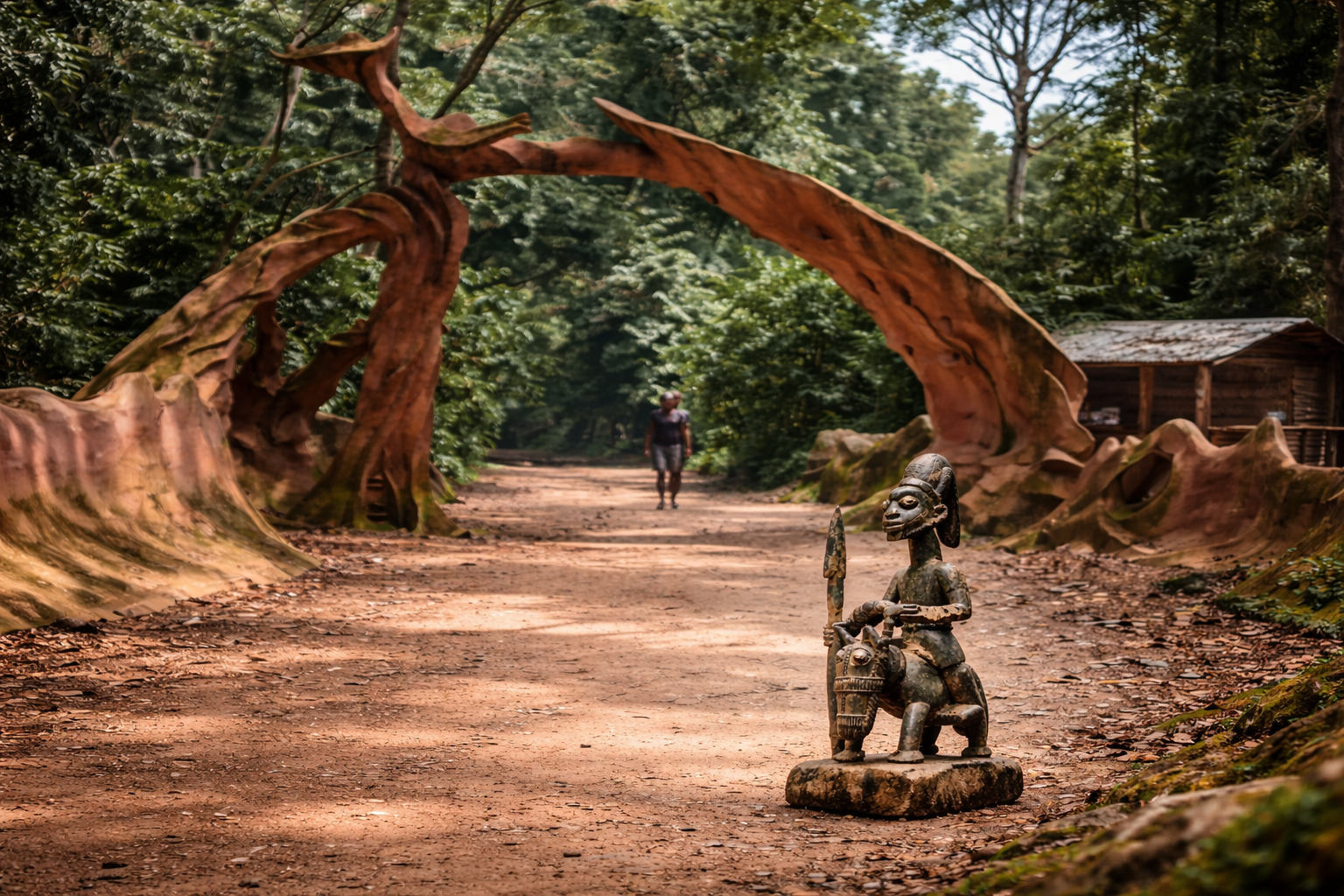
    Photo collage: Yoruba horseman in the Osun Sacred Grove, Arch of the Flying Tortoise.
    Landscape photograph by Adolphus Opara. Horseman sculpture photographed by David Norden.

    A long time ago, when the kingdoms of the Yoruba were young, the people said that a great rider sometimes appeared at the edge of the town.

    No one knew exactly where he came from.

    At dawn he would emerge from the red earth roads, seated proudly on his horse, holding a lance that caught the first light of the rising sun. Children would run to the paths to see him pass, while the elders watched in silence.

    Some said he was a warrior returning from distant lands. Others whispered that he was a messenger of the gods.

    In those days horses were rare in the forest regions of southern Nigeria. They came from the northern savannas and were precious animals, associated with kings, chiefs and powerful warriors. To ride a horse was to show authority and prestige.

    Over time the image of the mounted rider became one of the most powerful symbols in Yoruba art. Sculptors carved figures known as elesin—horsemen who embodied leadership, courage and the ability to command.

    The rider was often larger than the horse, because Yoruba artists did not aim for realism. Importance was expressed through proportion. The horse carried the rider, but the rider carried the meaning.

    Some of these figures were placed in shrines or royal spaces. Others commemorated great leaders or ancestors whose presence was believed to protect the community.

    Scholars have long noted the importance of this imagery in Yoruba culture. A beautiful example in ivory from the Dallas Museum of Art illustrates how deeply rooted the motif of the mounted rider is in the region:


    Dallas Museum of Art – Yoruba Horse and Rider

    Even earlier, archaeological discoveries such as a tenth-century bronze object from Igbo-Ukwu showing a horse and rider remind us that equestrian symbolism has deep historical roots in southern Nigeria. You can see this remarkable object, once exhibited in the Smithsonian exhibition Caravans of Gold, here:


    Igbo-Ukwu Horse and Rider – Caravans of Gold

    And perhaps that is why these sculptures still feel so alive today.

    They do not simply show a man on a horse.

    They show authority, presence, and the memory of a rider who once appeared on the road at dawn.

    Sometimes such Yoruba riders exist only in stories. And sometimes one quietly survives in wood.

    One such rider eventually found his way to my collection.

    Yoruba Horseman (Elesin), Ekiti Master Tradition

    Share and Enjoy !

    Shares
  • A Large Encrusted Lobi Figure: Why Some African Ritual Objects Are Not Easy to Sell

    A Large Encrusted Lobi Figure: Why Some African Ritual Objects Are Not Easy to Sell

    Not everything is easy to sell.
    I hesitated.

    I’ve kept this Lobi figure for many years.

    At first, very simply, because it is big.
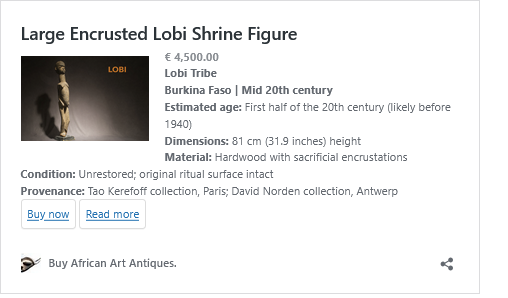
    Eighty-one centimeters high, heavy, not easy to handle. For my in-house expeditions, it was never a convenient object. It always required more space, more care, more effort.

    But that was not the real reason.

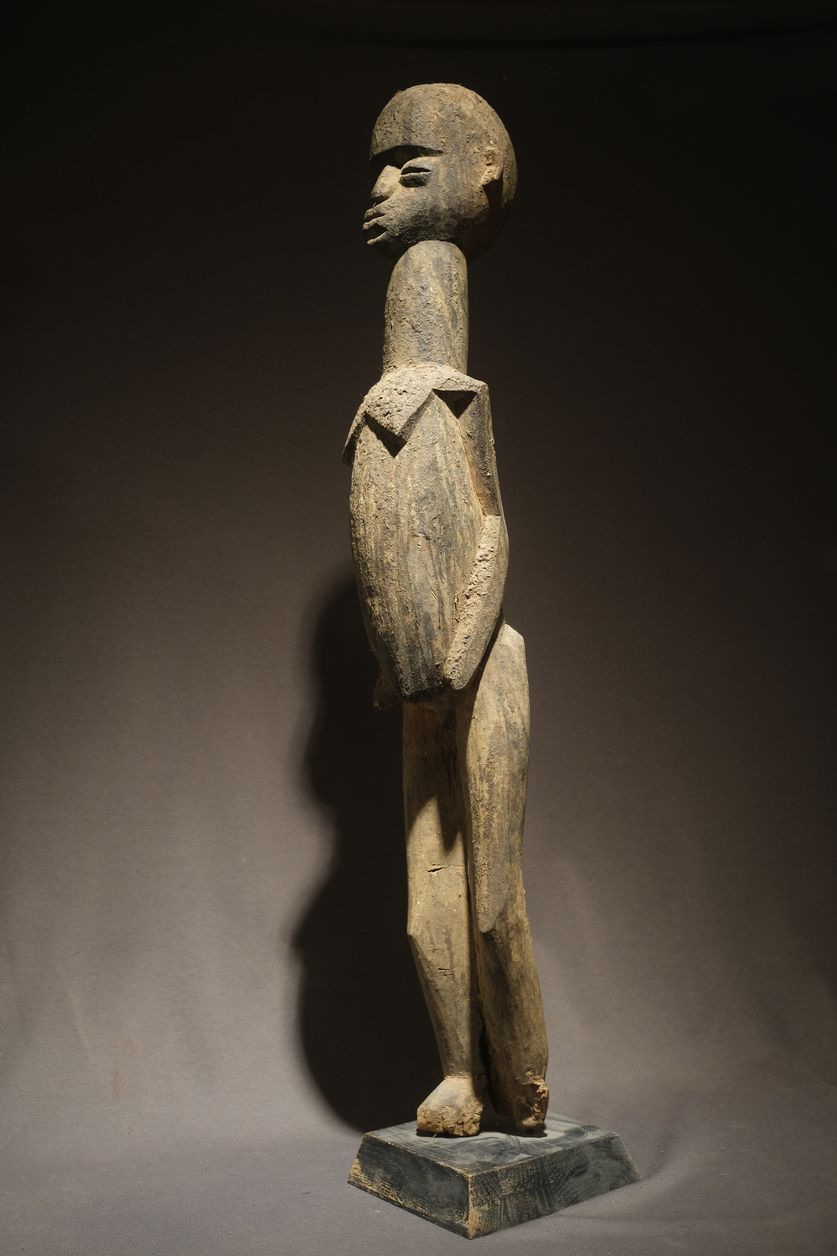
    Large encrusted Lobi shrine figure, Burkina Faso, front view

    There is an elegance in its rudeness that gave me pleasure from the beginning.
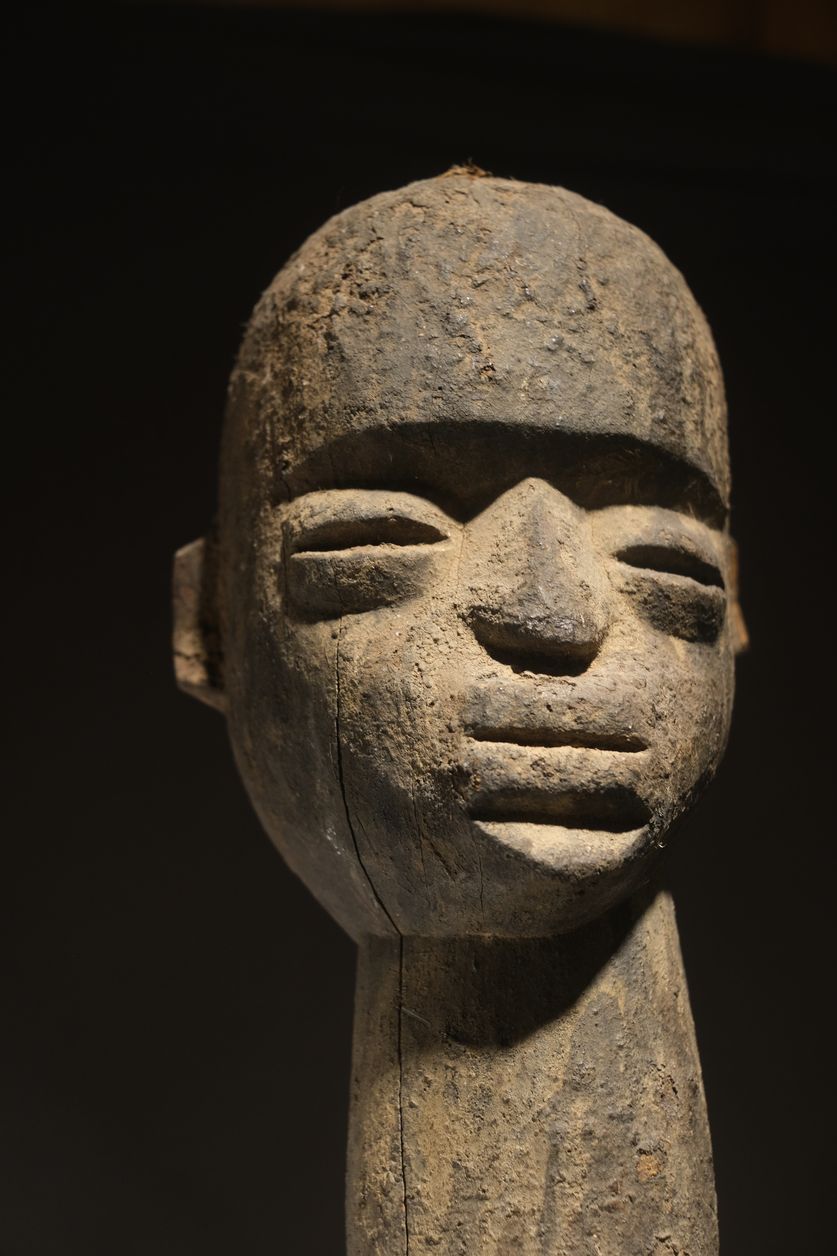
    The expression is not pleasing. The arms and legs are very thin, almost fragile, while the belly is bulging and heavy. The proportions are not meant to comfort the eye. They create tension.

    It is not an object that tries to seduce.

    Lobi African Art

    Lobi figures like this one were kept in shrine houses, usually placed slightly aside from the village. Their role was protection. These shrine houses are not clean or ordered places. They are often messy. You can feel the traces of offerings — chicken blood, residue, layers of use accumulated over time.

    This figure carries that history quietly.

    Lobi belly African Art

    I also kept it because of its authenticity.
    Because nothing here has been softened or corrected.
    Because it has not been made easier to live with.

    And yes — because living with it gave me pleasure. Not decorative pleasure, but the pleasure of presence. Of an object that resists you a little, and asks for time.

    Lobi head-African Art

    After many years, I decided it was time to let it go.

    If this Lobi figure speaks to you, you can find a link to the sales page below.
    If you prefer a more detailed approach, you can also contact me directly and I will send you a PDF with a complete description, additional images, and provenance information.

    Not everything is easy to sell.
    Some objects ask you to hesitate first.

    David Norden

    A Large Encrusted Lobi Figure

    Large Encrusted Lobi Shrine Figure

    Share and Enjoy !

    Shares