
This guide for collectors and enthusiasts reflects how I personally use museum collections as a collector and dealer to evaluate and understand African art.
It is illustrated with a selection of objects that have particularly caught my eye.
Over the years, many collectors have asked me how to distinguish genuine African art from purely decorative pieces.
In essence, it comes down to recognition — building a visual memory by studying important collections, well-curated auctions, and fairs where you can see, touch, and even smell the objects.
But above all, it comes from visiting museums.
Below is a selection of museums with significant African holdings. Some are well known, others less so, but all are worth exploring. Whenever possible, I include direct links to the online collections, which are extremely valuable for research and comparison, as well as interesting references to historical photographs taken in situ.
Major International Museums
Metropolitan Museum of Art — New York

Main website
https://www.metmuseum.org
details on the collections:
https://www.metmuseum.org/art/collection
Online african art collection
https://www.metmuseum.org/art/collection/search?q=african+art
The Metropolitan Museum houses one of the most important African art collections in the world. The recently reinstalled Michael C. Rockefeller Wing presents masterpieces from West and Central Africa including Fang reliquary figures, Yoruba sculpture and Kongo power figures. The Met’s digital collection is one of the most powerful research tools available to collectors.
Musée du Quai Branly – Jacques Chirac — Paris
Main website
https://www.quaibranly.fr
Collection database
https://collections.quaibranly.fr
The Quai Branly holds one of the largest collections of African art in Europe, with tens of thousands of objects. Its digital catalogue allows detailed searches across cultures, regions and materials.
British Museum — London
Main website
https://www.britishmuseum.org
Collection database
https://www.britishmuseum.org/collection
You can do a virtual visit of the African Art alleries, and much more (like listening to podcasts):
https://www.britishmuseum.org/collection/galleries/africa
The British Museum’s African collections include archaeological objects, sculpture, textiles and royal regalia. Particularly famous are the Benin bronzes, which continue to play an important role in discussions about cultural heritage and restitution.
National Museum of African Art — Washington D.C.
Main website
https://africa.si.edu
Collection database
https://africa.si.edu/collection
Discover also the most interesting Eliot Elisofon Photographic Archives
https://africa.si.edu/archives

Part of the Smithsonian Institution, this museum is entirely dedicated to African art. Its collection includes both traditional sculpture and modern works.
Baltimore Art Museum BMA

A spectacular early male Kifwebe mask 1984 gift of Robert and Nancy Nooter, Washington, D.C.
One of the most important collections of African art in the United States, the BMA’s African art collection features works from more than 200 African cultures in a full range of media.
https://artbma.org/collection/african-art
African Art database:
https://collection.artbma.org/collections/3197/african/objects
10 Art Museum Drive, Baltimore, MD 21218
Important European Collections
Royal Museum for Central Africa — Tervuren
Main website
https://www.africamuseum.be
Spotlight on the collections
https://www.africamuseum.be/en/discover/focus_collections

Located near Brussels, this museum holds one of the most extensive collections of Central African objects anywhere in the world, including masks, sculptures, textiles and ritual objects from the Congo basin. It is also used by everyone having an interest in the old colony of Congo resources, and is today also actively working with the diaspora
Pitt Rivers Museum — Oxford
Main website
https://www.prm.ox.ac.uk
Online collections
https://www.prm.ox.ac.uk/collections-online#/search
Collections & many research projects
https://www.prm.ox.ac.uk/collections-research-sites
Online database:
https://www.prm.ox.ac.uk/collections-online#/search

The Pitt Rivers Museum is famous for its unique display style and its enormous ethnographic holdings. The online database provides access to a wide range of African objects collected over the last century.
Sainsbury Collection at Norwich UK
on line database
https://sainsburycentre.ac.uk/?s=&aos=1&production_place=Africa
A XVIth century sceptre : https://sainsburycentre.ac.uk/art-and-objects/231-royal-sceptre/
more 3D objects from Sainsbury
https://sketchfab.com/sainsbury-centre/collections/african-art-5da6531a347c4ed594c1ac43ec44fc23
The University of East Anglia also have a good Centre for African Art and Archaeology
https://www.uea.ac.uk/groups-and-centres/centre-for-african-art-and-archaeology
Wereldmuseum — Leiden

Main website
https://www.wereldmuseum.nl
African continent Collection database
https://collectie.wereldmuseum.nl/#/query/3793eb72-4dca-4d2e-a139-8803b7e23e4d
Formerly known as the National Museum of Ethnology, the Wereldmuseum holds extensive ethnographic collections from Africa gathered during the nineteenth and early twentieth centuries.
Museum Rietberg — Zurich
Main website
https://rietberg.ch/en
Collections
https://rietberg.ch/en/collections
Africa Art Archive (Himmelheber archive)
https://africa-art-archive.ch
The Museum Rietberg in Zurich is one of the most important museums in Europe devoted to non-European art. Its African collection contains around 2,400 objects, mainly from West and Central Africa, covering more than six centuries of artistic traditions.

What makes this museum especially valuable, from a collector’s point of view, is its archive related to African art scholarship. One of the most notable is the Hans Himmelheber archive, which contains thousands of field photographs, films and documents related to African artists and workshops.
https://africa-art-archive.ch/en/

For collectors and researchers, the Rietberg museum provides an important perspective on African art history and collecting traditions in Europe.
Musée d’Ethnographie de Genève (MEG)
Collections Research
https://www.meg.ch/en/research-collections
African Art database
https://collections.geneve.ch/meg/catalogue/en/musinfo00.php?dpt=ETHAF
The MEG in Geneva houses important ethnographic collections including masks, ritual objects and ceremonial sculptures from across Africa.
Museums in Africa
Nigerian National Museum — Lagos
Nigeria’s national museum preserves important archaeological and cultural treasures including Nok terracottas and Yoruba sculptures. It plays a key role in preserving and studying Nigerian cultural heritage.
Objects in wood database:
https://lagosmuseum.ng/collections/3696c6d7-b8b0-44a7-be6a-e6d28b6d1dfd
The Théodore Monod African Art Museum (Musée Théodore Monod d’Art africain)
in Dakar, Senegal is one of the oldest art museums in West Africa. It was promoted by Léopold Senghor, the country’s first President.
The museum has more than 10,000 items, traditional and contemprary. It also host scientific events, and works with international institutions .
J. RANDLE CENTRE Yorùbá Heritage
A museum about Yoruba art, traditions and masquerades.
https://www.jrandlecentre.com
Lagos Island, Lagos 102273, Lagos. +234 807 891 8190. museum@jrandlecentre.com
See a little video about the Yoruba museum
https://www.dw.com/en/lagos-museum-highlights-yoruba-cultural-heritage/video-71392477
and if you have time read my little Yoruba Horseman Legend
The Yoruba Horseman: A Legend of the Rider
National Museum of Lubumbashi
AI Overview
The
National Museum of Lubumbashi (Musée national de Lubumbashi) is located at 750 Avenue du Musée, Lubumbashi, Democratic Republic of the Congo. It is known for its extensive collection of ethnographic, archaeological, and contemporary art, housed in a distinctive building designed by Claude Strebelle

Ethnographic Museum of Rwanda

Make a virtual visit of the museum
https://ethnographic.rwandaheritage.gov.rw/
Africa itself holds many more important museums and collections — far more than can be listed here.
Lesser-Known Museums with Valuable African Collections
Many collectors are familiar with the large institutions in Paris, London or New York, but a number of other museums also hold remarkable African objects and sometimes provide excellent online access.
For collectors and researchers, smaller museum databases often contain fascinating objects that rarely appear in publications. They can help identify regional styles, compare carving traditions, and sometimes reveal historical provenance information.
These institutions are often overlooked but can be extremely useful for research and comparison. Exploring these lesser-known collections can lead to surprising discoveries and a deeper appreciation of African artistic traditions.
Museum aan de Stroom (MAS) — Antwerp
Being based in Antwerp myself, I enjoy browsing the MAS collection regularly. It sometimes reveals objects connected to Belgium’s early collecting history and the long relationship between Antwerp and Central Africa.

Online collection database
https://search.mas.be/search/simple
The MAS museum in Antwerp has made its entire collection accessible online. More than 600,000 objects can be searched through the database, including African masks, sculptures and ethnographic material.
One particularly interesting aspect of the MAS database is that it includes not only objects currently on display but also those kept in storage.

You can search in the database for the objects from Henry (Henri) Pareyn wo started collecting and dealing in African art (mostly from the Belgian Congo) in the 1890s.
Based in Antwerp, he amassed huge collections. Two major sales took place during his lifetime: in around 1910 and notably, in 1920 when the City of Antwerp purchased 1600 ‘Congo objects of all kinds’ which formed the basis of the Antwerp Ethnography Museum’s Central African collections. After his death in 1928, his widow offered his entire collection to the City of Antwerp for 350,000 Belgian Francs. This offer was declined and the collection was put up for auction at the Grand Hotel, Antwerp in 10-15 December 1928.
This 5 day auction with almost 2,000 lots raised 2,000,000 Belgian Francs. Many of the lots were sold to external buyers, among them Sir Henry Wellcome (from whom much came to the BM). See Waterfield & King p.71 for a rumour that an English dealer had bought half the sale for Sir Henry Wellcome. The lot numbers of items in the Pareyn sale were written in ink on a white paper disc that was pasted to the front of the object; this enables many of Wellcome’s purc hases from the Pareyn sale to be recognised, like also Henry Pareyn in the Fowler museum.
Museu Nacional de Etnologia — Lisbon

Museum website
https://museudeetnologia.pt/in-english/
Portugal’s National Museum of Ethnology holds important collections from Africa, especially from former Portuguese territories such as Angola, Mozambique and Guinea-Bissau. The museum preserves valuable documentation of traditional cultures and colonial collecting history.
Museum of the Lisbon Geographical Society — Lisbon
This museum is rarely mentioned in discussions of African art but and can only be visited by appointment, but it contains remarkable historical collections gathered during Portuguese exploration and colonial expeditions. Among the highlights are impressive Congo and Chokwe materpieces objects . The museum of the Lisbon Geographical Society is one of the best-kept secrets in Lisbon. It inherited its collection from what was once the “Colonial Museum” and assumed an ethnographic focus from early on. It grew through a campaign of acquisitions and the donations of collectors and travellers who accompanied the Portuguese outposts in the former empire. Discover ceramics, sculptures, furniture, paintings, fabrics, glass, tiles and even scientific instruments from the most disparate of sources: Angola, Guinea, Mozambique, São Tomé and Príncipe, Cape Verde, Timor and Macau. A unique exhibition, which brings together art and scientific/everyday objects and which shows the habits and depictions of distant lands. Be a 21st-century explorer and travel in time at this 19th-century society.
Rua das Portas de Santo Antão, 100, 1150-269, Lisboa
Minneapolis Institute of Art — Minneapolis

Department of African Art
https://new.artsmia.org/art-artists/curatorial-departments/department-of-the-arts-of-global-africa
Online database:
https://collections.artsmia.org/search/_exists_:%22list:african-art-highlights%22
The Minneapolis Institute of Art has developed one of the strongest African art collections in the United States. The museum is known for carefully selected masterpieces and scholarly exhibitions devoted to African sculpture.
Fowler Museum at UCLA — Los Angeles
Online collections database
https://argus.fowler.ucla.edu/final/Portal/Default.aspx?lang=en-US
The Fowler Museum is highly respected among scholars of African and Oceanic art. Its digital database includes many objects from Africa some also from Henry Pareyn and often provides good photographic documentation.

I remember that I got a wonderfull and instructive private viewing from the curator during an exhibition they did in Paris in collaboratin with the Quai Branly Museum about the Lega objects from the Jay Last collection.
Fine Arts Museums of San Francisco (de Young Museum)

Collection search
https://www.famsf.org/art/collections
The de Young Museum holds a significant African art collection, particularly strong in West African sculpture. Its digital catalogue allows visitors to explore objects from many regions of the continent.
Horniman Museum — London
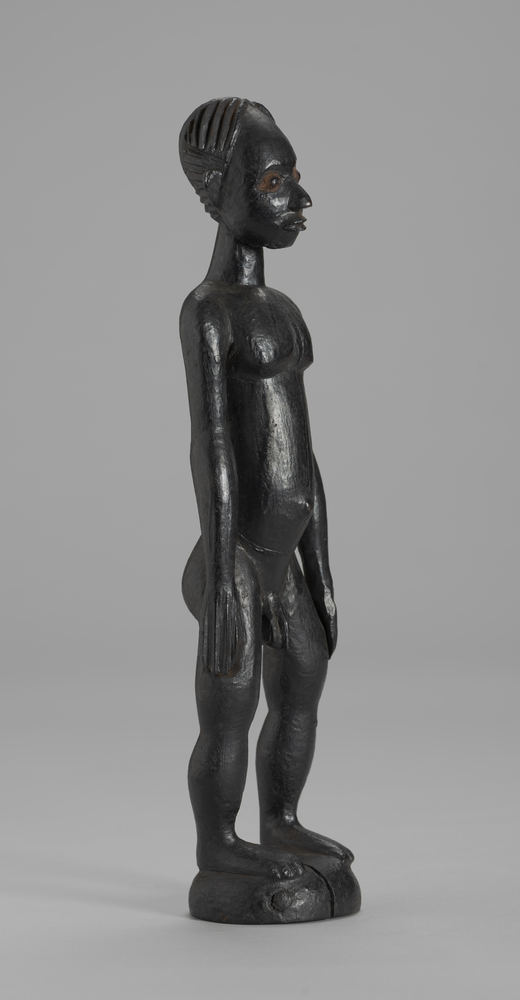
Anthropology collection
https://www.horniman.ac.uk/explore-the-collections/anthropology-collection/
The Horniman Museum has an important ethnographic collection that includes African masks, musical instruments and ritual objects collected during the late nineteenth and early twentieth centuries.
Need to discover more African Art museums around the World ?
https://en.wikipedia.org/wiki/Category:African_art_museums
Specialized Research Archives Used by Scholars and Professionals
Beyond museum collections, several digital archives are extremely valuable for serious research on African art.
Yale University Art Gallery — African Art Digital Archives
The Yale archives include the Van Rijn Archive up to 2012 for free and the Ross Archive, which contain historical photographs before 1920’s, field documentation and research material related to African art collecting and scholarship. These archives are widely used by researchers.
AHDRC — African Heritage Documentation & Research Centre
The AHDRC is one of the most important digital research platforms dedicated to African art. The archive contains thousands of historical photographs, field documentation and publications, and allows also to get access to the price history and exhibitions and publications the objects where in and has a good search engine.
Access is subscription-based (approximately €250 per year) and the platform is widely used by professional researchers, dealers and scholars.
Artkhade
Artkhade provides a digital platform for cataloguing artworks at auctions and collections and is used by museums, galleries and collectors to manage documentation and provenance information. It is increasingly used within the professional art world for price setting.
Why Museum Databases Matter for Collectors
Museum collections remain one of the most valuable resources for anyone interested in African art. They allow collectors to:
-
compare objects with documented museum examples
-
study regional styles and carving traditions
-
explore historical provenance information
-
examine high-quality photographs of important works
Many museums now provide high-definition images, and some allow images to be used for scholarly or educational purposes. These digital collections have become an essential tool for collectors, researchers and enthusiasts who wish to deepen their understanding of African sculpture.
Even after many years working with African art, I still find museum collections — both in person and online — an endless source of discovery. If you know other museum databases with strong African art collections, feel free to let me know. I am always interested in discovering new resources.
And if this article has made you curious to go further, you can explore a selection of African masks and figures — each chosen through the same eye I’ve developed over 30 years of looking:
African masks and figures in the shop.
COMMENTS
From Lockhart Murdoch


 Author