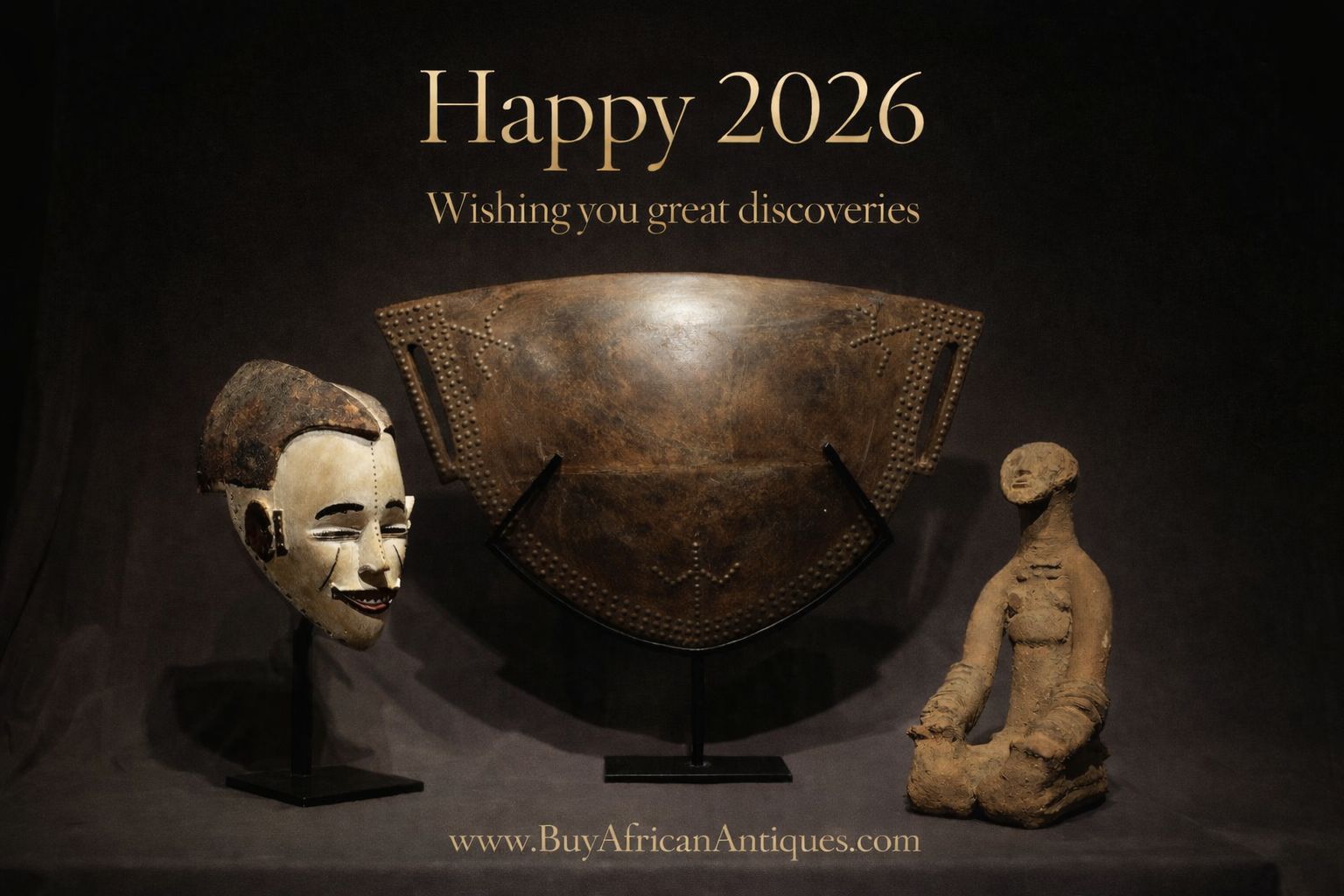
Wishing you a year of discovery, passion, and beautiful African art!
Dear African Art Lover,
As we step into 2026, I want to thank you for being part of this community of collectors, explorers, and admirers of traditional African art. May the coming year bring you joyful discoveries, meaningful finds, and deepening appreciation for the stories and spirits behind every mask, figure, and artifact.
Looking back on 2025, we shared insights and narratives that helped many of you navigate the fascinating world of authentic African antiques. Here’s a summary of the most memorable posts on BuyAfricanAntiques.com from the past year:
🧠 1. A Collector’s Guide to Traditional African Art
We explored what makes traditional African art so unique — ritual use, historical context, and cultural meaning. This guide remains a cornerstone for anyone building a serious, meaningful collection. Traditional African Art
🪶 2. Navigating the World of Authentic African Masks
In this essential piece, I shared lessons from 30 years of experience on how to distinguish authentic ritual masks from decorative or commercial pieces — invaluable for every collector. Authentic African Masks
🔱 3. What Are Popular and Expensive African Art Masks and Statues?
This post highlighted some of the highly valued African masks and statues, from Benin bronzes to Dan and Bamana Chi Wara masks, giving context to price, rarity, and cultural importance. Expensive African Art
🪓 4. A Power Vodun Figure from the Dahomean Frontier
A narrative exploration into Vodun art and one extraordinary figure with ceremonial power and historical resonance. Vodun Figure
🌍 5. Top 15 African Art Museums in the World
We shared a list of must-visit museums globally that hold spectacular traditional African collections — inspiring you both with museum highlights and objects that shaped how we see African art. Top 15 African Art Museums
2.This article explores two African works that seem strikingly “modern”: an Ibibio ritual mask with a motif resembling a Chanel logo, and a Bakongo colon figure portraying a European official. Far from appropriation, both reveal how African artists observed, interpreted, and commented on the world around them—long before contemporary debates about influence and ownership.
🥂 Cheers to a 2026 rich with heritage, stories & discoveries
Thank you for reading, collecting, and connecting with the deep traditions behind these incredible works of art. I look forward to bringing you even more insights, rare finds, and stories in 2026 — may it be your best year yet in African art collecting.
By David Norden • BuyAfricanAntiques.com • Antwerp
For more than 30 years, I’ve helped collectors discover authentic African masks, figures, and ritual objects created for social, political, and spiritual purposes. Traditional African art is one of the world’s most diverse and historically meaningful art forms — yet many collectors don’t know where to begin.
This guide will help you understand what makes these works significant, what to look for, and how to evaluate quality and authenticity. Whether you are new to collecting or deepening an established passion, learning the background of each object enriches the experience.
1. Explore as Many Works as Possible
Africa is home to hundreds of cultures, each with its own visual language and artistic traditions. But the first question to ask is: what tribe or style speaks most to you?
Examples of major traditions you’ll encounter:
• Baulé and Senufo (Ivory Coast) Refined carvings, elegant proportions, and balanced features.
• Fang and Kota (Gabon) Reliquary guardians with extraordinary spiritual charge. Historically, many of the finest pieces entered major wealthy collections — and today, authentic high-quality examples often exceed €20,000. Beginners should be aware of this before choosing these groups.
• Dogon (Mali) and Mumuye (Nigeria) Dogon figures feature elongated forms and cosmological symbolism; Mumuye works show cubistic shapes that inspired artists like Picasso.
• Yoruba (Nigeria) Ibeji twins, Shango staffs, beadwork, divination objects, and regal carvings. A very large population means many authentic objects — and many fakes — exist on the market.
The more you look — through museums, reference books, exhibitions, and curated collections — the more your eye sharpens. In my Antwerp shop and on BuyAfricanAntiques.com, I encourage collectors to compare forms, patinas, and stylistic variations to learn how each culture expresses beauty and power.
Personally, I would get bored collecting only one type of object, but for beginners it is recommended to focus on one type or one group. This helps you recognize subtle variations in quality and discover what truly moves you.
2. Materials & Techniques That Tell a Story
In African art, materials are never random. They reveal origin, use, cultural purpose, and — through wear — an approximate age.
Environmental exposure (sun, wind, humidity), offerings, handling, and ritual use all leave recognizable traces.
• Wood
The most common material in African carving.
Signs of genuine age and use include:
Deep, natural patinas formed by years of handling and ritual activity
Logical wear on edges, handles, and interior surfaces
Hand-tool marks (adze, knife, chisel, even stone carving depending on region)
Identifying local woods and tool marks is often key to determining authenticity.
• Bronze & Brass
Used for centuries in Benin, Yoruba, Akan, and other cultures through the lost-wax casting method.
Look for:
Crisp details
Age-appropriate oxidation
A weight consistent with traditional alloys
Be cautious: damaged or incomplete wax castings are sometimes intentionally produced to mimic age.
• Beads, Textiles, Shells, Pigments
These additions carry spiritual meaning and ceremonial power. Original materials surrounding a carving are often a strong sign of authenticity.
• African Terracotta & Stone
Often linked to ancient, archaeological, or ancestral contexts in Ghana (Komaland), Mali (Bankoni), Nigeria ‘Nok), etc . Authenticity here requires expertise;for more expensive items, carbon-14 testing is sometimes used when provenance is unclear.
3. Authenticity: What Makes a Traditional Piece Genuine
Because African art has been reproduced extensively for the tourist trade, discernment is essential.
Key indicators include:
Natural patinas, not artificially applied
Wear that looks natural, not exaggerated or forced
Traditional tool marks, never machine-smoothed surfaces
Cultural coherence — the object matches known forms and traditions of its ethnic group
Historical documentation:
old dealer labels
collector numbers
early photographs
museum or gallery history
publications
listings in databases such as the AHDRC
These factors increase both confidence and value.
With three decades of experience, I select each piece personally. I do not sell tourist-made or contemporary decorative pieces — only authentic, traditional works.
4. The Meaning Behind Traditional African Art
Traditional African art was almost never made for decoration. Each piece had a living function, such as:
Honoring ancestors
Initiation and coming-of-age rituals
Political or spiritual authority — whether in royal kingdoms like the Kuba, or in animistic societies
Healing practices
Divination and protection
Ensuring fertility, harmony, or good harvests
Maintaining continuity within the community
Understanding these purposes transforms your perception.
A mask becomes a performer calling for good crops or guiding youth into adulthood. A figure becomes an intermediary between the visible and invisible worlds, or a symbol of fertility or royal power.
The power of African art comes from its function first, and its beauty second. The best carvers were respected, but an object’s effectiveness — its spiritual force — was always more important than its appearance.
5. How to Start or Build Your Collection
Choose pieces that speak to you
A meaningful connection is the foundation of any collection. Ask yourself:
Do I want to collect one type of object?
One specific tribe?
A theme such as fertility, initiation, protection, or agriculture?
Do I prefer heavily used objects or crisp, “clean” sculptures?
Focus on quality
It is better to acquire one powerful, authentic piece than several mediocre ones. The price is soon forgotten — but the quality stays with you forever.
Work with experts
A trusted dealer helps you navigate authenticity, cultural context, provenance, and value — and helps you build a coherent, meaningful collection.
Collect respectfully
These objects were created with purpose. Always ask for an object’s past history and learn about its function.
Only authentic, traditional African art — selected individually
Clear cultural and historical information with each piece
A physical shop in Antwerp + an online webshop
In-house international shipping
Personal guidance for collectors at all levels
Each piece is chosen the way a curator selects for a collection: with care, knowledge, and respect.
Conclusion: The Joy of Collecting African Art
Traditional African art carries history, identity, spirituality, and a profound sense of human presence. Collectors often tell me that once they hold their first authentic mask or figure, they feel an immediate connection — as if they’re touching a living tradition.
My mission is to help you discover pieces that inspire that connection. You can begin your exploration in my online shop: 👉 www.BuyAfricanAntiques.com/shop
But to see my full inventory and truly get to know my approach, I recommend visiting me in Antwerp — or simply sending me a private message to share your collecting goals. I’ll be happy to guide you personally.