Tag: African art collecting

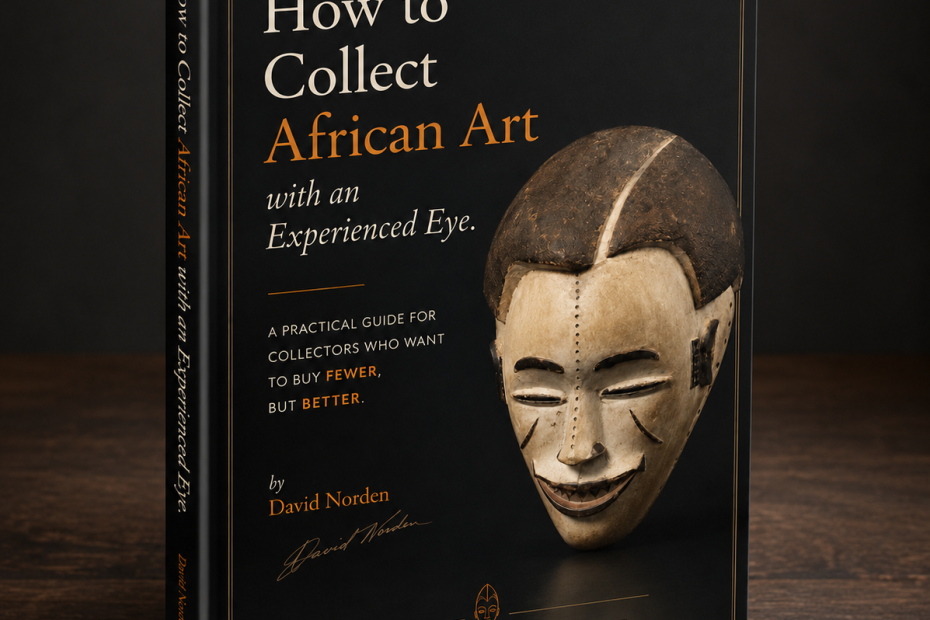
  • How to Collect African Art with an Experienced Eye – David Norden

    How to Collect African Art with an Experienced Eye – David Norden

    Welcome To the African Art World.

    How to collect African Art with an experienced Eye

    Most people begin collecting African art by asking the wrong questions.

    They ask about the tribe, the age, the provenance, or the price. Those things certainly matter, but they are not where true connoisseurship begins.

    The first question should always be: Is this a good piece of sculpture?

    After more than thirty years of handling thousands of African objects, visiting museums across Europe, studying important collections, and making both good and bad buying decisions, I have learned that exceptional works reveal themselves in ways that photographs, labels, and certificates alone never can. Quality lives in proportion, balance, surface, craftsmanship, expression, and the subtle presence that only the finest objects possess.

    An experienced eye is not a gift. It is something that can be developed through careful observation, comparison, and patience.

    That is the purpose of this experienced eye book.

    Rather than presenting a catalogue of ethnic groups or historical facts, this guide focuses on how to see. You will learn practical methods for judging craftsmanship, recognizing authentic age and patina, understanding what separates an ordinary object from an exceptional one, and avoiding many of the mistakes that beginning collectors often make.

    One of the most valuable ways to train your eye is by studying the very best examples. Throughout this guide we therefore examine masterpieces from major museum collections, including remarkable Fang, Baule, Djennenké, Kota, Bangwa, Kongo, Songye, and Yoruba sculptures. These objects are not included simply because they are famous, but because they demonstrate the qualities that collectors should learn to recognize wherever they encounter African art.

    Whether you are considering your very first mask or building a serious collection, the principles remain the same. The goal is not to buy more objects, but to buy better ones—pieces that continue to reward careful study for years to come.

    This is an Early Edition of How to Collect African Art with an Experienced Eye. At present it contains 45 illustrated pages, but it is intended to grow into a much more comprehensive guide. New chapters, museum case studies, photographs, and collecting insights will be added regularly as the project develops. As the content expands, the retail price will gradually increase, while everyone who already owns a copy will receive all future updates free of charge.

    My hope is that this book becomes more than an illustrated collector’s guide. I hope it helps you cultivate the most valuable tool any collector can possess: an experienced eye.

    David Norden

    African Art Dealer, Antwerp

    Since 1992

    How to collect African Art with an experienced Eye

    Share and Enjoy !

    Shares
  • How to Train Your Eye in African Art: 3 Practical Tips for Collectors

    How to Train Your Eye in African Art: 3 Practical Tips for Collectors

    Chibinda Ilunga figure, Chokwe, Angola — Museum RietbergThis article is based on a recent newsletter I sent to collectors. 


    Over the years, I’ve noticed that most collectors are not lacking interest — they are lacking orientation.

    Where do you look?
    What do you trust?
    And how do you train your eye?

    In this guide, I share three practical directions that I personally use — and that can quietly transform the way you see African art.


    1. Train Your Eye: Use Museum Collections

    Figure of the culture hero Chibinda Ilunga, Workshop of the Chokwe region, Angola, around 1850 Wood, Museum Rietberg, 2007.1, Gift acquired through Novartis 5 2007.1

    If there is one habit I would recommend to any collector, it is this: spend time with museum collections.

    Not only in person — but also online.

    Today, many major institutions offer access to thousands of documented objects. You can study proportions, surfaces, patina, and even small details that rarely appear in books.

    In the guide below, you’ll find direct and active links to museum databases, along with a selection of objects that I personally find particularly interesting.

    Over time, something shifts — you begin to recognise what feels right… and what doesn’t.

    → Explore museum collections

    Collector insight:
    The more time you spend with strong, documented objects, the more confident your decisions become when a good piece appears.


    2. Understand What You Are Really Looking At

    One of the most common mistakes I see is confusion between authentic objects and decorative pieces.

    The difference is not always obvious — especially at the beginning.

    But authentic objects tend to have a certain internal coherence:
    the proportions make sense, the wear follows use, the surface has depth, and the object carries a presence that is difficult to imitate.

    In the article below, I explain how I approach this distinction in practice:

    → Read the article on authenticity

    Collector insight:
    Once you have seen enough authentic pieces, decorative ones start to feel strangely empty — even when they look convincing at first glance.


    Ibibio chanel mask

    Ibibio “Chanel” mask — Nigeria

    A Piece That Caught My Eye

    While writing this, I was reminded of a mask I have kept in the collection for some time — an Ibibio “Chanel” mask.

    At first glance, it may seem unusual or even playful. But if you take a closer look, you begin to see the coherence in the carving, the balance in the proportions, and the way the surface has evolved through handling and use.

    It is also a good example of how African artists could absorb and reinterpret external influences, while remaining rooted in their own visual language.

    This is exactly the kind of object where experience matters — not because it is obvious, but because it reveals itself over time.

    → View the Ibibio mask


    3. Be Careful with Labels

    African art is often simplified — sometimes too much.

    Certain names are used so loosely that they can become misleading.

    Take the Kuba, for example.

    Behind this single label lies a complex network of workshops, styles, and neighbouring cultures. Not everything labelled “Kuba” is what you might expect — and understanding that can completely change how you evaluate an object.

    In the article, I also touch on the figure traditionally associated with the founding of the Kuba Kingdom, and why that history still matters when looking at objects today.

    If you want to look beyond the label and discover the story behind it:

    → Read the Kuba article

    Collector insight:
    Collectors who rely too much on names often miss good objects — or overpay for average ones.


    A Final Thought

    Collecting is not about owning many objects.

    It is about learning to recognise the right ones — and having the confidence to act when you see them.

    Even after 30 years, I still return to museum collections, compare objects, and refine my eye.

    If you would like to explore pieces selected through that same process:


    Happy and curious,
    David Norden

    African Antiques From Antwerp — One Eye, 30 Years of Selection
    Personally chosen with curiosity and experience — so you can collect with confidence.

    Share and Enjoy !

    Shares
  • Collecting African Art Without Regret — Even in a Changing Market

    Collecting African Art Without Regret — Even in a Changing Market

    Hi  African Art collector ,

    Some dealers would like you to believe that all African art is rare and priceless.
    But we should remember that this is the art of an entire continent, home to hundreds of cultures and carving traditions — meaning there is truly something meaningful to collect at every level.

    While many of the pieces I offer are valued in the thousands of euros, today I would like to focus on a selection of small, beautiful, and affordable African antiques — all priced below €1000 — which I have personally selected.

    None of these objects were collected by me in Africa — in fact, I have never been to Africa. As I often say: “You don’t need to go to the Middle Ages to collect medieval art.”
    What matters is experience, knowledge, and careful selection.

    Over the years, many clients have become friends. I try to guide collectors in the same way I would advise someone close to me — helping them build a collection they will enjoy living with for years.

    A few years ago, a long-time client told me — half joking, half serious — that with prices rising so quickly, he might stop collecting African art altogether and start collecting Barbie dolls instead.

    At the time, the market felt overheated. Everything looked expensive. Everyone sounded confident.

    What many collectors were really afraid of wasn’t price — it was getting it wrong.

    Today, with the benefit of hindsight, something has become very clear:
    not all African art will rise, and not all African art will fall.
    Only the best pieces remain convincing, in any market.

    A strong collection is not built by buying what is cheap, but by choosing objects that create an emotional response — because you will always forget the price you paid, while the quality you chose remains.

    How these pieces are chosen

    In today’s art market, many objects pass through layers of buyers, consultants, and assistants before reaching a gallery.

    My business works differently.

    For more than 30 years, I have personally selected every object I offer. No junior buyers, no assistants sent out to source material, no anonymous purchasing trips. If a piece is here, it is because I chose it myself.

    And that matters.

    African art is not decorative production. These objects were used, handled, repaired, and lived with. Recognizing the difference between a powerful authentic object and a clever imitation takes experience — and mistakes learned from decades of looking.

    This applies just as much to an affordable object as to a major piece.

    Why affordable doesn’t mean ordinary

    Every object in my shop follows the same standards, regardless of price. Each piece comes with:

    • A confirmed tribal origin, provenance, and cultural background explaining its original use
    • Clear explanations of the traditions surrounding the object, and whenever possible historical photographs or maps
    • Over 30 years of experience behind each selection — objects must carry emotion and genuine carving skill, because an object only has a soul when it was made for a purpose, not to please passing tourists
    • All packing and shipping handled in-house, allowing me to personally ensure safe delivery

    Collector’s note

    You will always forget the price you paid — but your collection will always reflect the quality you chose.

    Below you’ll find this week’s affordable discoveries: honest objects with history, character, and craftsmanship — ready to quietly earn their place in a collection.

    See the Affordable African Art selection from this week.

    ChatGPT Image 8 feb 2026, 14 58

    Warm regards,
    David Norden
    African Antiques — Antwerp
    www.buyAfricanAntiques.com

    A Seated Dogon Figure -Mali

    Lega Rungu Bone Spoon

    Ekoi (Ejagham) Igbo/Idoma Ancestor Head – Upper Cross River Region

    Thai Gilt Bronze Seated Buddha, 19th Century (13 cm)

    Wooden Whistle with Miniature Pende Mask

    Yoruba Igbomina Ere Ibeji Female Twin Figure – Ila-Orangun, Nigeria

    Yoruba Ere Ibeji Male Twin Figure – Oyo Region Nigeria – 1930s – 26 cm

    Yoruba Ere Ibeji Female Twin Figure – Nigeria – Ritual Sculpture – 25 cm

    Baule Standing Figure — 34 cm

    Ancestor Figure — Kom–Oku Region, Western Cameroon Grassfields — ca. 1930

    Kuba / Shoowa Box with Expressive Face — DR Congo

    Wishing you a happy and curious Valentine,

    David Norden

    African Antiques From Antwerp — One Eye, 30 Years of Selection
    Personally chosen with curiosity and experience — so you can collect with confidence, not guesswork.

    Share and Enjoy !

    Shares
  • A Large Encrusted Lobi Figure: Why Some African Ritual Objects Are Not Easy to Sell

    A Large Encrusted Lobi Figure: Why Some African Ritual Objects Are Not Easy to Sell

    Not everything is easy to sell.
    I hesitated.

    I’ve kept this Lobi figure for many years.

    At first, very simply, because it is big.
    Eighty-one centimeters high, heavy, not easy to handle. For my in-house expeditions, it was never a convenient object. It always required more space, more care, more effort.

    But that was not the real reason.

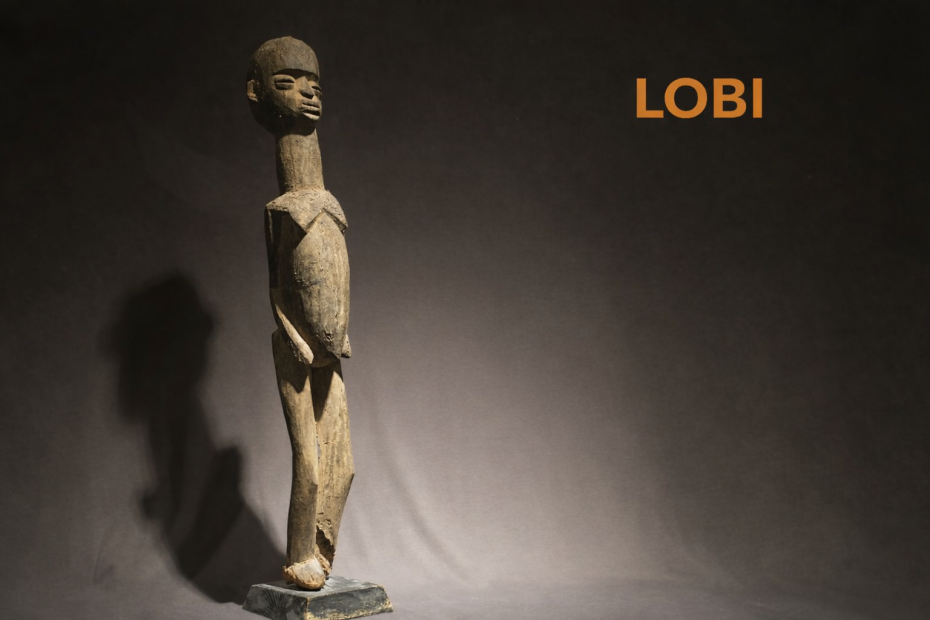
    Large encrusted Lobi shrine figure, Burkina Faso, front view

    There is an elegance in its rudeness that gave me pleasure from the beginning.
    The expression is not pleasing. The arms and legs are very thin, almost fragile, while the belly is bulging and heavy. The proportions are not meant to comfort the eye. They create tension.

    It is not an object that tries to seduce.

    Lobi African Art

    Lobi figures like this one were kept in shrine houses, usually placed slightly aside from the village. Their role was protection. These shrine houses are not clean or ordered places. They are often messy. You can feel the traces of offerings — chicken blood, residue, layers of use accumulated over time.

    This figure carries that history quietly.

    Lobi belly African Art

    I also kept it because of its authenticity.
    Because nothing here has been softened or corrected.
    Because it has not been made easier to live with.

    And yes — because living with it gave me pleasure. Not decorative pleasure, but the pleasure of presence. Of an object that resists you a little, and asks for time.

    Lobi head-African Art

    After many years, I decided it was time to let it go.

    If this Lobi figure speaks to you, you can find a link to the sales page below.
    If you prefer a more detailed approach, you can also contact me directly and I will send you a PDF with a complete description, additional images, and provenance information.

    Not everything is easy to sell.
    Some objects ask you to hesitate first.

    David Norden

    A Large Encrusted Lobi Figure

    Large Encrusted Lobi Shrine Figure

    Share and Enjoy !

    Shares