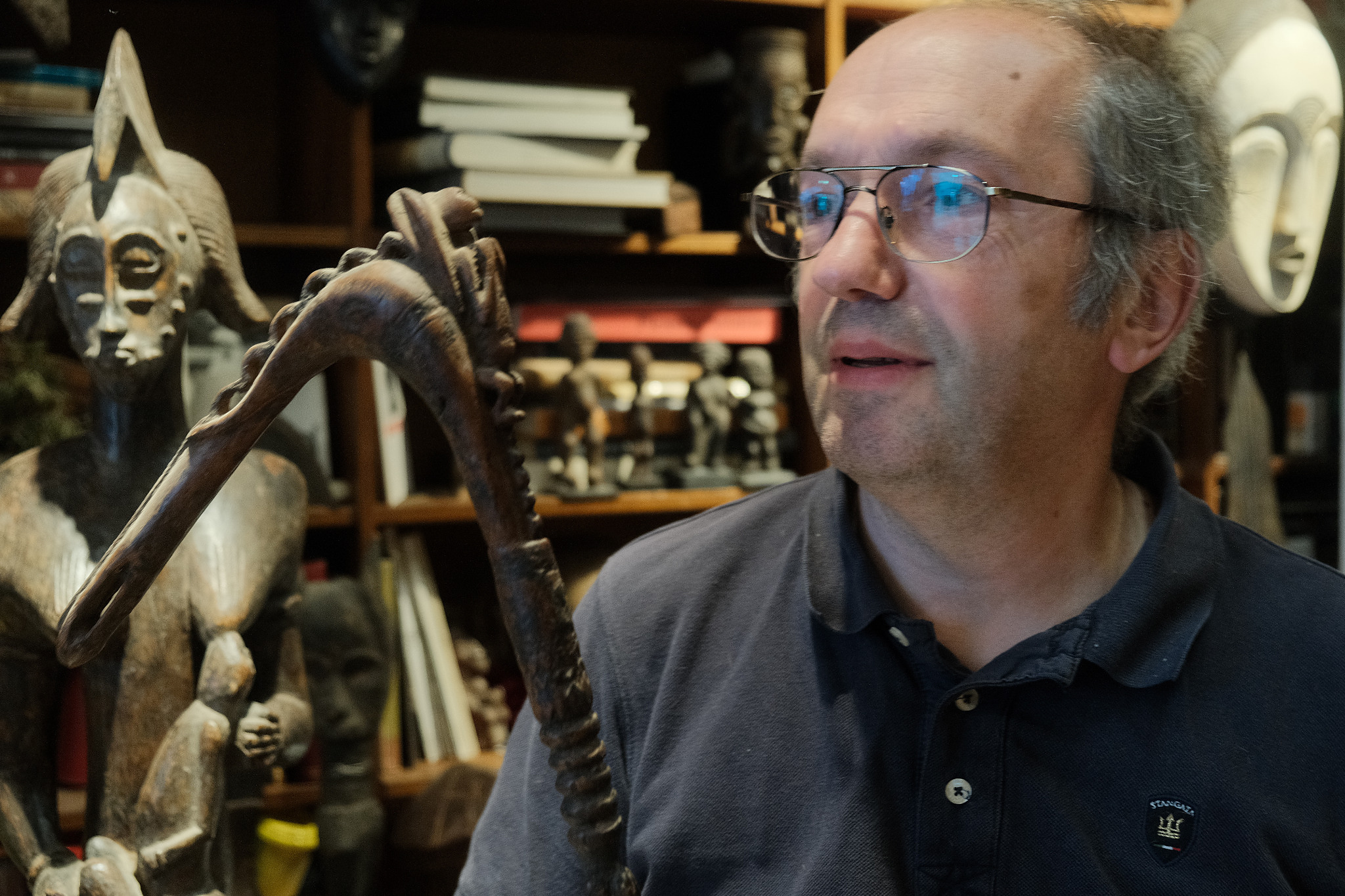
How I Look at African Art
When an African object comes into my hands, I rarely begin by asking myself how much it is worth.
The first question is much simpler:
Does it make me stop?
After many years of looking at African art, I have learned that the most interesting objects do not always announce themselves immediately. Sometimes an object looks impressive at first sight, but the longer I look at it, the less convinced I become. Other times, an apparently modest piece slowly reveals qualities that make it much more interesting.
So, what am I actually looking for?
There is no single formula. But there is a process.
First, I look without knowing too much
This may sound strange, but I often prefer to look at an object before reading everything that is written about it.
I want to see what the object itself tells me.
I look at the proportions, the way it has been carved, the balance of the composition, the treatment of the surface and, perhaps most importantly, the personality of the sculpture.
Does it have presence?
Does the artist seem to have been in control of what he was doing, or was he just making a fast copy of something he had seen in a museum catalogue?
Is there something unexpected in the way the forms have been handled, or hidden shapes in the sculpture that only become apparent after looking longer?
These are difficult things to put into a catalogue description. Yet they are often the first things that separate an ordinary object from an exceptional one.
Then I start looking closer
Once an object has caught my attention, I become much more suspicious.
I look at the wood and its surface. Is the patina layered and genuine, or does it look too uniform and unnaturally forced?
I look at the areas that have been handled, touched or exposed over many years. I look for signs of age, but I do not simply equate age with quality. Some objects may be old and authentic, but without much real presence.
An old object can be mediocre.
A younger object can be extraordinarily good and original.
This is one of the first lessons I would give to anyone beginning to collect African art:
Old does not automatically mean valuable, and valuable does not necessarily mean old.
Then comes the uncomfortable question: is it authentic?
This is where things become more complicated.
Authenticity is rarely established by one detail. It is usually a combination of observations.
The carving, the material, the surface, the wear, the construction and the information about where the object has been can all contribute to the picture.
Sometimes everything seems to fit together naturally.
Sometimes one small detail makes me stop and ask another question. And sometimes the most honest conclusion is simply:
I need to know more.
I think that is an important part of dealing in African art. A specialist should not only know how to recognise an interesting object. The knowledge gained from seeing many objects over the years allows him to recognise what feels authentic, original and fine.
But he should also know when he does not yet know enough. He has to remain humble, acknowledge that he cannot know everything, and keep a natural curiosity about discovering new shapes, new objects and new artistic traditions.
I also believe that a collector should keep objects that continue to have a conversation with him.
Real African objects have a kind of soul. Copies are death; they do not speak to you in the same way.
Then I follow the object’s history
This is where the object starts to become much more than a sculpture. A good provenance can enhance the value of a piece dramatically, but it can also completely change the way I look at it.
I usually start by questioning the previous owner and then try to follow whatever leads I can find in books, catalogues, archives and online resources. Sometimes the information is surprisingly easy to trace. At other times, one small piece of information leads to another, and suddenly an old collection name, a photograph or a catalogue reference opens up a completely different story.
Who owned the object before? Was it already in Europe or America decades ago? When did it leave Africa? Has it appeared in an old exhibition or catalogue? Perhaps there are photographs of it, or of closely related pieces, that can tell us something about where it came from or how it was originally used.
I also like to know something about the people who collected these objects before us. Sometimes the history of the collector is almost as interesting as the history of the object itself.
Of course, not everything that can be found on the internet is reliable. Information has to be questioned and, whenever possible, independently checked.
Provenance does not automatically make an object good. But good provenance can transform our understanding of an object.
An object with a documented history has a story.
And sometimes that story is almost as fascinating as the object itself.
Then I ask: how rare is it?
This is more complicated than it sounds.
“Rare” is a word that is used rather freely in the art market, sometimes simply to increase the perceived value of an object. And rarity has little to do with whether a particular tribe happens to be fashionable or appears on a dealer’s or auction house’s “most wanted” list.
What interests me is how unusual the object is within its own artistic tradition.
I want to know how many comparable pieces actually exist, but also what those pieces are like. If there are twenty examples, but only two have the same quality, those two are rare in a much more meaningful sense.
Sometimes it is a particular form or detail that makes a piece unusual. Sometimes it is the combination of several characteristics that I have never seen together before.
And eventually I come back to a very practical question:
If I sold this object today, how difficult would it be to find another one like it?
That tells me much more than simply counting objects in auction catalogues.
And then there is quality
This is perhaps the hardest thing to explain.
Two objects can come from the same region, belong to the same tradition and even have a similar age — yet one can be vastly more interesting than the other.
Why?
Because quality is not simply a checklist.
It can be the confidence of the carving. The intelligence of the proportions. The economy of the forms and the way an artist has managed to express something with surprisingly few lines or shapes.
Sometimes the quality is immediately apparent. With other objects, I need to spend more time with them before I really understand what makes them special. I have found pieces that can remain fascinating for twenty years and still reveal something I had not noticed before.
That is one of the reasons I enjoy African art so much. There is a huge variety, and it is never boring.
Finally, I put everything together
Only after looking at the object itself, its condition, authenticity, provenance, rarity, quality and cultural context do I start thinking about its position in the market.
And even then, price is not an exact science.
The dealer’s market can tell us something, while auction results can tell us something different.
Looking at comparable objects can be useful, but none of these things can replace judgement.
The best objects are often the ones where several things come together:
quality, rarity, authenticity, history and cultural importance.
When these elements reinforce each other, an object can become much more than an attractive piece of African art.
It can become something worth preserving.
So what am I really looking for?
After all these years, I think the answer is surprisingly simple.
I am looking for an object that has something to say.
Something that has survived its original context, travelled through history, passed through the hands of collectors, and still has the power to make someone stop and look.
That is also why I believe that buying African art from a specialist should be about more than simply finding an object.
The photographs and the object itself are only the beginning.
The real added value lies in the research, the experience, the questions that have been asked, the things that have been discovered — and sometimes the things that have deliberately not been claimed because they cannot be proven.
For me, that is part of what makes dealing in African art so interesting.
You are not simply buying an African art object; you are acquiring a living piece of history.
And the more you understand that history, the more valuable the object can become — not only financially, but also in the way you see, understand and appreciate what you own.
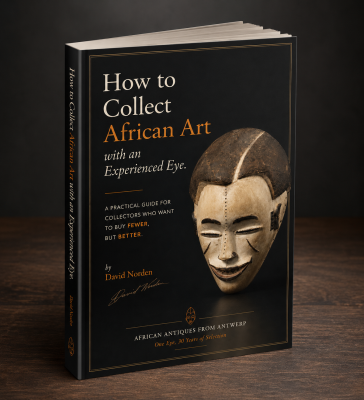
If you enjoyed this way of looking at African art, you may also enjoy my e-book, written for collectors and enthusiasts who want to understand African art beyond the object itself.
Leave a Reply
You must be logged in to post a comment.