Month: November 2025

  • Navigating the World of Authentic African Masks: Lessons From 30 Years in the Field

    Navigating the World of Authentic African Masks: Lessons From 30 Years in the Field

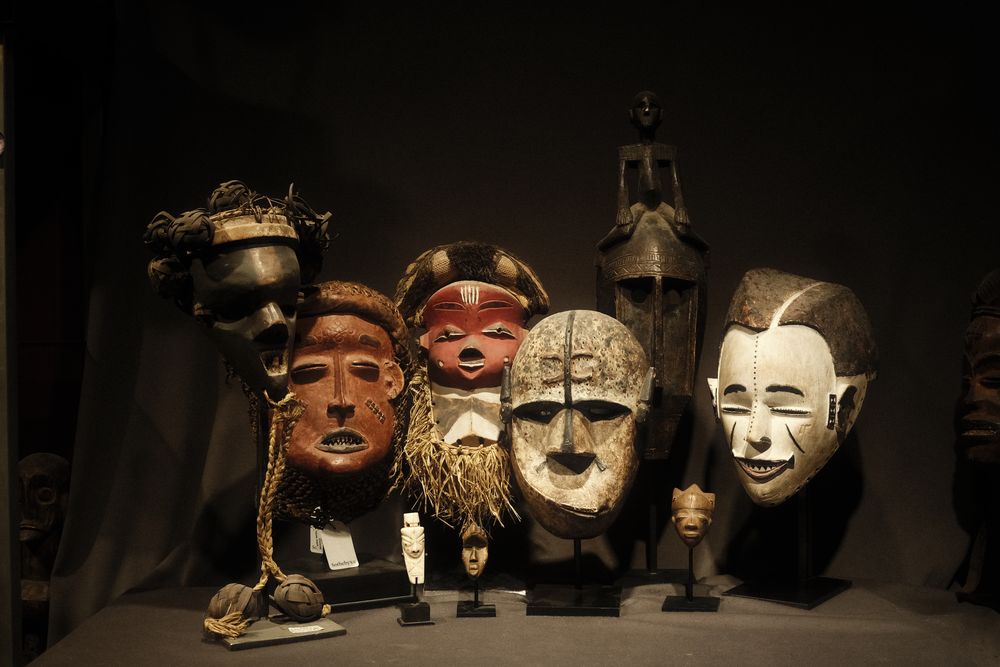
    Photo: A fine Suku Mask fom David Norden’s collection.

    Over the past weeks, several collectors have told me how difficult it is to navigate the world of African masks online.
    Too many choices, too many claims of “authenticity,” and far too many pieces that were never used in ritual at all.

    I understand the frustration.
    When I began 30 years ago, I made my share of mistakes too. Today, I’ve handled thousands of traditional masks, and I’ve seen the entire spectrum—from sacred instruments of ceremony to tourist replicas built to deceive.

    That experience is exactly why I wrote my latest article: to help you feel confident, informed, and inspired when you add a mask to your collection.

    What New and Experienced Collectors Should Know

    In simple terms, here are a few key points I cover:

    ✔️ Why authentic masks are meaningful

    Real masks were not created for decoration. They were made to serve the community—whether to honor ancestors, guide initiates, invoke protection, or embody spirits. This gives them a presence that modern copies simply cannot reproduce.

    ✔️ Which types are most heavily reproduced today

    Masks from popular ethnic groups—Baule, Dan, Songye, and Fang—are often copied because of demand. The reproductions might look pleasing at first glance, but they lack the subtle traits of long use: wear from handling, smoke absorption, repairs, ritual additions, and layers of history.

    ✔️ Regions that offer safer pathways for new collectors

    Certain areas of Central and West Africa still retain strong traditions and offer well-documented masks on the market. Understanding regional practices can help you recognize which pieces are more likely to be genuine.

    ✔️ What true age, patina, and use really look like

    Authentic masks show earned surface details—not artificially rubbed, sanded, or chemically aged textures. A true layered patina tells a story of sweat, dust, ritual substances, smoke, and human hands. It doesn’t feel “designed”; it feels lived.

    ✔️ Why provenance matters more than people think

    Provenance is not a luxury—it is protection. Knowing who collected the mask, when, where, and under what circumstances is essential. As a dealer, I expect the same proof I would demand if I were the buyer myself. And remember, provenances can also be faked, so use your sellers wisely.

    If you haven’t seen real masks in museums or international vetted fairs, I think you’ll enjoy my African Art Shop. Descriptions are clear, honest, and based on decades of working with real traditional pieces, not workshop replicas.


    The Personal Side: Why I Continue Searching

    Many people believe African masks are mainly decorative.
    But once you hold an authentic one—one that has danced, protected, instructed, or comforted its community—you feel the difference immediately.

    These are not just objects.
    They carry memory, presence, and dignity.

    This is the reason I continue to search for them, study them, and bring them to collectors who honor their origins. Finding a mask that has served its community is a privilege. Preserving it is a responsibility.


    Explore Authentic Masks

    If you’re thinking about adding a mask to your collection—or if you simply want to see what authentic examples look like—feel free to explore the selection on my webshop.

    👉 Browse authentic African masks and more: BuyAfricanAntiques.com/shop

    Every mask I offer is carefully chosen, described in detail, and accompanied by the provenance I would expect myself as a collector.

    If you ever have questions—need a second opinion, want guidance, or simply want to discuss a piece—reach out.
    I’m always happy to help.

    Warm regards,
    David Norden
    30 years of dealing in authentic African art
    Antwerp — BuyAfricanAntiques.com
    Share and Enjoy !

    Shares
  • A Power Vodun Figure from the Dahomean Frontier

    A Power Vodun Figure from the Dahomean Frontier

    At the old border between Benin and Togo, the landscape changes little, but belief changes everything. The line we know today—704 kilometers of straight segments, river bends and coastal lagoons—was not drawn by the Fon priests who worked with spirits. It was the product of 19th-century European treaties between France and Germany, and a precise delimitation in 1912. The boundary endured, even after the Great War stripped Germany of Togoland. In 1960, when Benin and Togo became independent, they inherited the line that had already cut through an older, shared spiritual territory.

    It is in this region—the Dahomean heartland of Vodun—that the figure I present today was born.

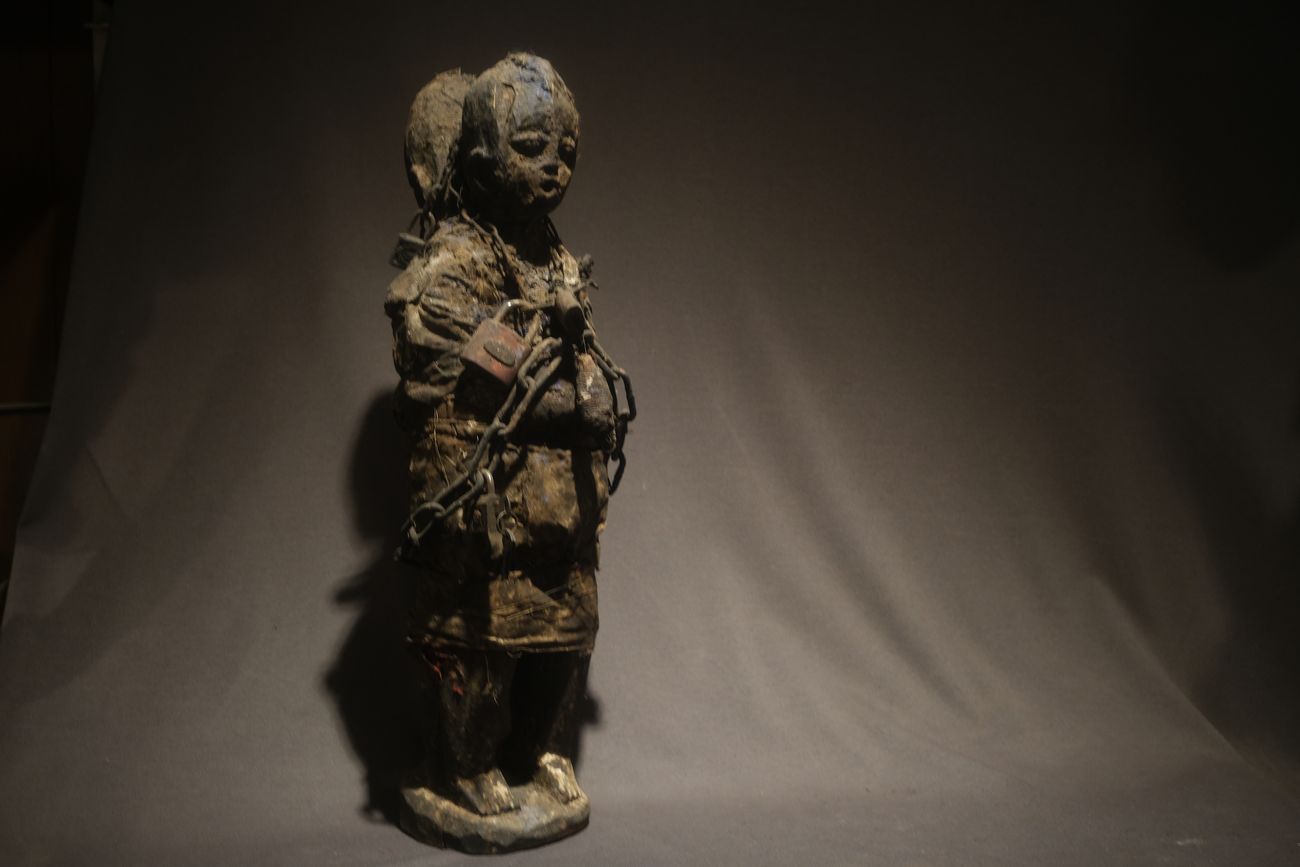
    Unlike the small, easily portable boccio often commissioned for domestic protection, this example belongs to a stronger tradition: a commanding Bo—a ritual mechanism of power. Standing 53 cm high, wrapped in layers of cloth, fiber, and sacrificial matter, this double-headed figure bears the unmistakable signs of long activation. The Fon do not “decorate” their sculptures. They feed them. They bind them. They coax or force invisible entities to work on behalf of the living.

    FXE48426Fon Boccio african art

    One head appears male, the other female. This polarity is purposeful. In Fon cosmology, a single perspective protects only part of the self. A second head grants more than vision—it grants balance, complementarity, and symmetry of spiritual forces. What one side cannot see or endure, the other can guard or absorb.

    The surface of the figure is a vocabulary of ritual history:

    • Slots and cavities cut into the torso and heads—made for the insertion of medicines, fetish charges, and pharmaco-magical matter.

    • Feathers and residue of offerings—mute records of sacrifices that nourished the spirit within.

    • Blue discoloration, rare and telling—blue is a cooling, pacifying color in Vodun. It tempers anger, diminishes sorcery, and calms destructive spirits.

    • Iron chain, aged and oxidized—iron is the realm of Ogun, a binding metal that traps intrusion, neutralizes malediction, and seals contracts with spirits.

    Objects like this are never simply “carved.” They are negotiated into existence by a Vodun priest—often a Fa diviner—who mediates between human need and the spirits’ price. They begin as wood, and only become sacred when charged with what the Fon call bo—the active ingredient of agency. Once animated, they are not touched casually. They are installed, fed, and consulted like an elder or an ally.

    Unlike the more portable single-bodied boccio, this work is constructed as two separate human bodies tied together, positioned back to back, each with its own pair of legs. The duality is intentional and operational: the two bodies embody complementary forces and vigilance in opposing directions. They are not a single two-headed persona, but two cooperating entities, bound to address threats arising from multiple fronts.

    This figure comes from a South French private collection, far from the shrines or communal spaces where it once stood. Its textile wrappings have hardened into a second skin, and the patina of offerings remains untouched. Nothing about it was made for tourists, salons, or the polite art market. It existed to act.

    Collectors who gravitate toward the elegant refinement of Baule figure or the sculptural serenity of Luba figures often pause before a Bo like this one. It asks something different of us. It does not beautify life—it defends it. It does not commemorate the dead—it confronts the living challenges of jealousy, illness, conflict, or injustice.

    In the Dahomean world, art and spirit are inseparable. A Boccio or Bo is not a statue with a story; it is the story—an object that has already worked, already taken risks, already absorbed blows meant for its owner.

    If you would like to explore this figure further,  Please discover more details  and images in the webshop:

    Fon Power Figure (Bo / Boccio), Benin–Togo Border Region — Double Figure, Ritual Use

    See a video tour of the Vaudou exhibition in Paris with objects from the same quality:

    or see it in person in Antwerp, make an appointment by email.

    FXE48425Fon Boccio african art
    Some African Art works remind us that art was once asked to fight.

    Share and Enjoy !

    Shares
  • Masques africains à vendre

    Masques africains à vendre

    Masques africains à vendre : comment choisir des masques authentiques et éviter les contrefaçons

    Lorsque vous recherchez des masques africains à vendre, vous trouverez une multitude d’options en ligne. Mais distinguer un masque décoratif, un objet touristique ou une véritable pièce rituelle provenant d’une communauté africaine traditionnelle n’est pas toujours évident.

    Avec plus de 30 ans d’expérience dans l’art tribal, je vous explique comment faire un choix éclairé et quelles erreurs éviter.


    Pourquoi les masques africains sont-ils si prisés ?

    Les masques traditionnels sont utilisés lors de rituels, d’initiations, de funérailles, de cultes des ancêtres ou de cérémonies de sociétés secrètes.
    Ils ne sont pas de simples objets d’art : ce sont des vecteurs culturels porteurs de :

    • symbolisme

    • structures sociales

    • protection spirituelle

    • traditions historiques

    Quiconque collectionne un masque africain authentique constitue une collection de véritable valeur ethnographique.


    Masques africains populaires : magnifiques mais souvent contrefaits

    Certains masques du Gabon et du Congo sont très recherchés dans le monde entier — et donc parmi les plus contrefaits. Notamment :

    • Masques Fang (Gabon)

    • Masques Punu (Gabon)

    • Figures reliquaires Kota et Fang

    • Masques Songye et Luba (Congo)

    Ces masques sont esthétiques, largement publiés dans les musées et emblématiques dans l’imaginaire occidental.
    En conséquence, les exemplaires authentiques sont très coûteux et présentent un risque élevé de falsification.

    Pour ceux qui recherchent un masque décoratif, cela n’est pas problématique.
    Mais pour ceux qui souhaitent constituer une collection authentique, la prudence est indispensable.


    Meilleures options pour débuter : des ethnies avec moins de falsifications

    Masque Africain Igbo

    Exemple : un masque de jeune fille Igbo provenant de la collection de David Norden.

    Les débutants qui souhaitent éviter les contrefaçons onéreuses ont souvent intérêt à choisir des masques provenant de groupes ethniques où :

    • plus de matériel traditionnel est encore disponible

    • les styles sont moins spéculatifs

    • circulent moins de faux

    Groupes recommandés pour des masques fiables et de qualité :

    • Masques Dan (Côte d’Ivoire)

    • Masques Bassa (Liberia / Côte d’Ivoire)

    • Masques Mossi (Burkina Faso)

    • Masques du Nigeria (Igbo, Yoruba, Ibibio, etc.)

    • Masques de Côte d’Ivoire en général (Senufo, Baoulé, Guro)

    Ce sont d’excellents points d’entrée pour bâtir une collection authentique sans les prix élevés et les risques liés aux pièces gabonaises ou congolaises.


    Que faut-il vérifier avant d’acheter un masque africain ?

    1. Origine et attribution ethnique

    Un vendeur fiable doit toujours indiquer :

    • le groupe ethnique

    • la région

    • la fonction traditionnelle

    2. Patine et traces d’usage

    Éléments essentiels :

    • marques de fumée (les vieux masques n’ont souvent plus d’odeur)

    • couches de pigments naturelles

    • raffia vieilli (plus fin, plus fragile)

    • traces d’usure et de manipulation (attention aux usures artificielles !)

    3. Matériaux et techniques

    Les masques authentiques sont généralement :

    • sculptés à la main dans des bois durs

    • pigmentés naturellement

    • décorés de perles, coquillages ou matériaux traditionnels

    • sans vernis moderne, peinture synthétique ou patine chimique

    4. Description écrite (indispensable !)

    Toujours demander :

    • une description écrite

    • une estimation d’âge

    • une provenance ou historique de collection

    C’est particulièrement crucial pour les masques coûteux du Gabon et du Congo.

    5. Consulter un spécialiste pour les pièces majeures

    Pour l’achat de masques Fang, Punu, Songye, Luba ou autres pièces importantes :

    • demander un second avis

    • acheter uniquement auprès de marchands reconnus

    • éviter les achats impulsifs en ligne

    Il vaut mieux payer un peu plus pour un masque fiable que d’être trompé deux fois.


    Masques africains à vendre ? Achetez avec connaissance et confiance

    Que vous recherchiez des masques décoratifs ou que vous souhaitiez constituer une collection de qualité, une bonne compréhension de la provenance, de l’âge et du marché vous évitera bien des déceptions.

    Sur ma boutique en ligne BuyAfricanAntiques.com/shop, vous trouverez une sélection soignée de masques africains authentiques — toujours accompagnés de descriptions claires, de provenance et d’expertise.

    Share and Enjoy !

    Shares
  • African Masks for Sale

    African Masks for Sale

    African Masks for Sale: How to Choose Authentic Masks and Avoid Counterfeits

    When you search for African masks for sale, you’ll find an overwhelming amount of options online. But distinguishing between decorative masks, tourist pieces, and authentic ritual objects from traditional African communities is often challenging.

    With over 30 years of experience in tribal art, I explain how to make an informed choice—and which traps to avoid.


    Why African Masks Are So Highly Valued

    Traditional masks are used during rituals, initiations, funerals, ancestor veneration, and secret society ceremonies. They are not just art objects; they are cultural vehicles carrying:

    • symbolism

    • social structure

    • spiritual protection

    • historical traditions

    Anyone who collects an authentic African mask is building a collection with real ethnographic value.


    Popular African Masks: Beautiful but Often Counterfeited

    Certain masks from Gabon and Congo are highly sought after worldwide—and therefore the most frequently faked. Especially:

    • Fang masks (Gabon)

    • Punu masks (Gabon)

    • Kota and Fang reliquary figures

    • Songye and Luba masks (Congo)

    These masks are aesthetically powerful, widely published in museums, and iconic in the Western imagination.
    As a result, authentic examples are very expensive and come with the highest risk of forgery.

    For buyers seeking decorative masks, this is not necessarily a problem.
    But anyone wishing to build an authentic collection must proceed with caution.


    Better Options for Beginning Collectors: Tribes with Fewer Forgeries

     african art igbo mask

    Example: An Igbo girl’s spirit mask from a David Norden collection.

    Collectors who want to start their collection without falling into the trap of costly counterfeits are often better off choosing masks from ethnic groups where:

    • more traditional material is still available

    • styles are less commercially targeted

    • fewer forgeries circulate

    Recommended tribes for high-quality and reliable masks:

    • Dan masks (Ivory Coast)

    • Bassa masks (Liberia/Ivory Coast)

    • Mossi masks (Burkina Faso)

    • Nigerian masks (Igbo, Yoruba, Ibibio, etc.)

    • Masks from Ivory Coast in general (Senufo, Baoulé, Guro)

    These are excellent entry points for building an authentic African mask collection without the extreme prices and risks associated with Gabonese or Congolese works.


    What to Look for When Buying African Masks

    1. Origin and Ethnic Attribution

    A trustworthy dealer will always specify:

    • the ethnic group

    • the region

    • the traditional function

    2. Patina and Wear

    Key indicators include:

    • smoke marks (older pieces often no longer smell of smoke)

    • layered pigments consistent with age

    • raffia showing natural aging (older raffia is often finer and more fragile)

    • wear from handling and dance use (but beware of artificially created “wear”)

    3. Materials and Techniques

    Authentic masks are typically:

    • hand-carved from durable woods

    • colored with natural pigments

    • decorated with beads, shells, or traditional materials

    • not coated with modern varnishes, paint, or synthetic patinas

    4. Written Description (Essential!)

    Always ask for:

    • a written description

    • an estimated age

    • provenance or collecting history

    This is especially important for expensive masks from Gabon and Congo.

    5. Consult a Specialist for High-End Pieces

    When purchasing Fang, Punu, Songye, Luba, or other major works:

    • always ask for a second opinion

    • buy only from reputable dealers

    • avoid impulsive online purchases

    It is better to pay more once for a reliable piece than to be deceived twice.


    African Masks for Sale? Buy with Knowledge and Confidence

    Whether you’re looking for decorative African masks or want to build a high-quality collection, a solid understanding of provenance, age, and the market will help you avoid disappointment.

    On my webshop BuyAfricanAntiques.com/shop, you’ll find a carefully curated selection of authentic African masks—always with clear descriptions, provenance, and expertise.

    Share and Enjoy !

    Shares
  • Afrikaanse maskers te koop

    Afrikaanse maskers te koop

    Afrikaanse maskers te koop: hoe kies je authentieke maskers en vermijd je vervalsingen?

    Do you prefer reading in English:African Masks for Sale

    Wanneer je zoekt naar Afrikaanse maskers te koop, vind je online een overvloed aan aanbod. Maar tussen decoratieve maskers, toeristenwerk en authentieke rituele stukken uit traditionele Afrikaanse gemeenschappen is het verschil vaak moeilijk te zien.
    Met meer dan 30 jaar ervaring in tribale kunst leg ik uit hoe je een doordachte keuze maakt en welke vallen je moet vermijden.


    Waarom Afrikaanse maskers zo gewaardeerd worden

    Traditionele maskers worden gebruikt tijdens rituelen, initiaties, begrafenissen, voorouderverering en geheime genootschappen. Ze zijn niet enkel kunstobjecten, maar culturele dragers van:

    • symboliek

    • sociale structuren

    • spirituele bescherming

    • historische tradities

    Wie een authentiek Afrikaans masker verzamelt, bouwt een collectie op met echte etnografische waarde.


    Populaire Afrikaanse maskers: prachtig maar vaak vervalst

    Bepaalde maskers uit Gabon en Congo zijn wereldwijd geliefd — en daardoor ook het vaakst vervalst. Vooral:

    • Fang-maskers (Gabon)

    • Punu-maskers (Gabon)

    • Kota- en Fang-reliquairefiguren

    • Songye en Luba maskers (Congo)

    Deze maskers zijn esthetisch sterk, museaal bekend en gevangen in de westerse verbeelding.
    Daardoor zijn authentieke exemplaren erg duur én vormen ze de grootste risicocategorie voor vervalsingen.

    Voor wie decoratieve maskers zoekt, is dit niet per se een probleem. Maar voor wie een authentieke collectie wil opbouwen, vereist dit veel voorzichtigheid.


    Betere keuzes voor beginnende verzamelaars: stammen met minder vervalsingen

    Fxe48074 african art igbo mask
    An Igbo meisje geesten masker uit David Norden verzameling.

    Wie zijn collectie wil starten zonder in de val van dure vervalsingen te lopen, kiest vaak beter voor maskers uit etnische groepen waar:

    • meer traditioneel materiaal beschikbaar is

    • minder gevraagde stijlen zijn

    • minder vervalsingen circuleren

    Aanbevolen stammen voor kwaliteitsvolle én betrouwbare maskers:

    • Dan-maskers (Ivoorkust)

    • Bassa-maskers (Liberia/Ivoorkust)

    • Mossi-maskers (Burkina Faso)

    • Nigeria maskers ( Igbo, Yoruba, Ibibio, etc…)
    • Maskers uit de Ivoorkust in het algemeen (Senufo, Baoulé, Guro)

    Dit zijn uitstekende toegangspunten voor een authentieke Afrikaanse maskerverzameling, zonder de extreme prijzen en risico’s van Gabonese of Congolese stukken.


    Waar moet je op letten bij Afrikaanse maskers te koop?

    1. Herkomst en etnische toeschrijving

    Een betrouwbare verkoper vermeldt altijd:

    • de stam of etnische groep

    • de regio

    • de traditionele functie

    2. Patina en gebruikssporen

    Ook in meervoud blijft dit essentieel:

    • rooksporen (oude maskers verliezen hun geur met de tijd)

    • pigmentlagen (overeenkomend met hun leeftijd)

    • raffia die ouderdom toont (oud raffia is vaak fijner geweven)

    • slijtagesporen en zweet sporen door dansgebruik (pas op als ze onnatuurlijk eruit zien, zijn ze waarschijnlijk ook vervalst)

    3. Materiaal en technieken

    Handgesneden hout (echte maskers zijn vaak, maar niet altijd in hardere hout soorten) met de juiste instrumenten gesneden, natuurlijke pigmenten, kralen, schelpen, dierlijke materialen — geen moderne coatings.

    4. Schriftelijke beschrijving (essentieel!)

    Vraag altijd om:

    • een schriftelijke beschrijving

    • een geschatte ouderdom

    • provenance of herkomstgeschiedenis

    Dit is vooral cruciaal bij duurdere maskers uit Gabon en Congo.

    5. Raadpleeg een specialist bij topstukken

    Bij aankoop van Fang-, Punu-, Songye- of andere topmaskers:

    • altijd een tweede opinie vragen

    • enkel kopen bij erkende handelaars

    • geen impulsieve online aankopen doen

    Een betrouwbaar masker is beter eenmalig duurder dan tweemaal bedrogen.


    Afrikaanse maskers te koop? Kies met kennis en vertrouwen

    Of je nu decoratieve Afrikaanse maskers zoekt of een hoogwaardige verzameling wilt opbouwen: een goed begrip van herkomst, ouderdom en marktwerking voorkomt teleurstellingen.

    Op mijn webshop BuyAfricanAntiques.com/shop vind je een zorgvuldig geselecteerd aanbod van authentieke Afrikaanse maskers, altijd mét duidelijke beschrijving, herkomst en expertise.

    Share and Enjoy !

    Shares